Question
1. Man suffers from a distorted complex. He always considers animals as inferior beings only fit for exploitation. Man has been using domestic and wild animals for his selfish ends. Many animal lovers joined together to form the ‘Society for Prevention of Cruelty to Animals’.

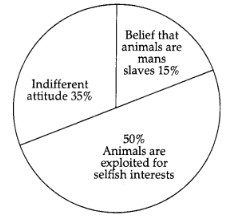
2. The society has been working for the well-being and welfare of animals for many years. Its main aim is to change the attitude and thinking of people towards animals. It is quite sad that animals continue to be ill-treated, tortured and killed according to the whims of the people. About 15% of the people entertain the belief that animals are man’s slaves. They use, misuse and torture them accordingly. About 50% of the people exploit animals for selfish ends.
Image
3. Horses and oxen are used for transport, carrying loads and in agricultural activities. Dogs, cats and many birds are domesticated for fun, entertainment and convenience. Wild animals like elephants, tigers, lions and deer are victims of poaching and killing. Animals are forced to do acrobatic feats in circus shows. Unfortunately, about 35% of people don’t think about the animals at all. They are totaLly indifferent to them. 4. The Government and the animal lovers must work together to bring a change in the attitude of the people. Animals should not be killed and poached for fun, furs or financial gains. They should be treated with kindness, care and sympathy. Cruelty towards animals must be legally punished.

Answer the following questions, based on the passage above.

(i) Complete the sentence appropriately.

The Society for Prevention of Cruelty to Animals aims to ___________

(ii) Fill in the blanks with an appropriate response.

Animals such as horses and oxen are used for ___________.

(iii) Justify the following statement: “Animals should be treated with kindness, care, and sympathy.”

(iv) What is the role of the government in addressing animal cruelty according to the passage?

(v) Infer from the passage: How might the formation of the “Society for Prevention of Cruelty to Animals” impact the treatment of animals?

(vi) In the line “………………. fit for exploitation”, the word ‘exploitation’ does not refer to:
(A) abuse
(B) ill-treatment
(C) oppression
(D) utilisation

(vii) What is the paradoxical behaviour observed in some people regarding animals, as mentioned in the passage?


(viii) For what activities do people use horses and oxen?
(A) Carrying loads
(B) Transport
(C) Agricultural activities
(D) All of these
Answer

(i) The Society for Prevention of Cruelty to Animals aims to change the attitude and thinking of people towards animals.

(ii)
Animals such as horses and oxen are used for transport, carrying loads, and in agricultural activities.

(iii)
The statement can be justified based on the information provided in the passage, which highlights the exploitation, ill-treatment, and cruelty faced by animals. The passage emphasises the need to change people’s attitudes towards animals and advocates for their well-being and welfare. The mention of the Society for Prevention of Cruelty to Animals and the call for legal punishment for cruelty further supports the importance of treating animals with kindness, care, and sympathy.

(iv) The role of the government is to work together with animal lovers to bring about a change in people’s attitudes towards animals and ensure that cruelty towards animals is legally punished.

(v) The formation of the “Society for Prevention of Cruelty to Animals” suggests that there is a need for intervention to address the exploitation and ill-treatment of animals. It implies that the society’s efforts could potentially bring about awareness and change in people’s attitudes towards animals, leading to improved treatment and welfare.

(vi) (D) utilisation

(vii) The paradoxical behaviour observed is that while 15% of people consider animals as man’s slaves and exploit them, about 35% of people are completely indifferent towards animals, showing no concern or regard for their well-being.

(viii)
(D) All of these

Need a full question paper?

Generate a complete, print-ready paper with questions like this in minutes — across 16+ boards, with answer keys.

Start Generating Free

Similar questions

1. Natural calamities generally bring death and disaster on a large scale. Tsunami waves, earthquakes, floods, droughts and epidemics have taken a heavy toll of human lives, particularly the children. The children who survive these disasters suffer the most. They are condemned to lead a life full of misery, insecurity, want and fear. Only the concerted efforts of the Government and the agencies involved in disaster management can help them lead normal lives again.

1,093 – live in general fear
16 – don’t speak
839 – fear water and sound
110 – withdrawn socially
460 – can’t sleep at night
43 – become asthmatic
20 – become deaf
21 – become blind
566 – have frequent headache and stomach ache
1,164 – can’t concentrate
117 – refuse to go to school
276 – are in shock

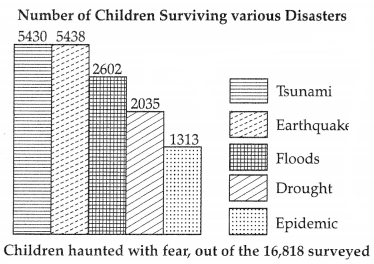
2. The natural calamities have tragically affected the lives of about 15,000 children in recent years in India. The tsunami waves and earthquakes created havoc on a large scale. About 5,430 children became homeless due to the tsunami and 5,438 were the victims of the earthquakes. Floods displaced 2,602 and droughts affected 2,036 children. Epidemics affected 1,313 children.

Out of these figures, 1,093 children live constantly in general fear; 110 children have withdrawn socially; 20 children have become deaf and 16 of them can’t speak any more. More than 450 children can’t sleep at night while 1,164 can’t concentrate on anything. The tragedy is that 21 of them have become blind, 43 asthmatic and 276 are still in shock. 566 suffer from frequent headache and stomach ache. About 850 children fear water and sound and 117 have refused to go to school.
Image
3. Disaster management programmes have not proved up to the mark and up to the task. The Government and the concerned agencies should provide comprehensive aids and help to the survivors, particularly the children. They must provide nutritious food, clothes, shelters and medical aids to them. More efforts should be made to wipe out the scars left by these disasters.

Answer the following questions, based on the passage above. (i) Complete the sentence appropriately. The children who survive natural calamities are condemned to lead a life full of misery, insecurity, want, and fear unless ___________.

(ii) Fill in the blanks with an appropriate response.
The tragedy is that among the affected children, 21 have become blind, 43 are asthmafic, and 276 are still in shock, indicating the ___________.

(iii) Justify the statement that disaster management programs in India have not been up to the mark and up to the task, as mentioned in the passage.

(iv) As per the histogram, what is the most disastrous natural calamity for children?"

(v) Based on the information provided in the passage, what can be inferred about the long-term effects of natural calamities on children’s mental health?

(vi) Who should be responsible for providing the disaster affected children with nutritious food, clothes, shelters and medical aids?
(A) The Government
(B) The concerned agencies
(C) Both (A) and (B)
(D) Neither (A) nor (B)

(vii) In the context of the passage, what is the significance of the number 117 mentioned?

(viii) The number of children suffering from frequent headache and stomach ache is:

(A) 839
(B) 1,164
(C) 110
(D) 566
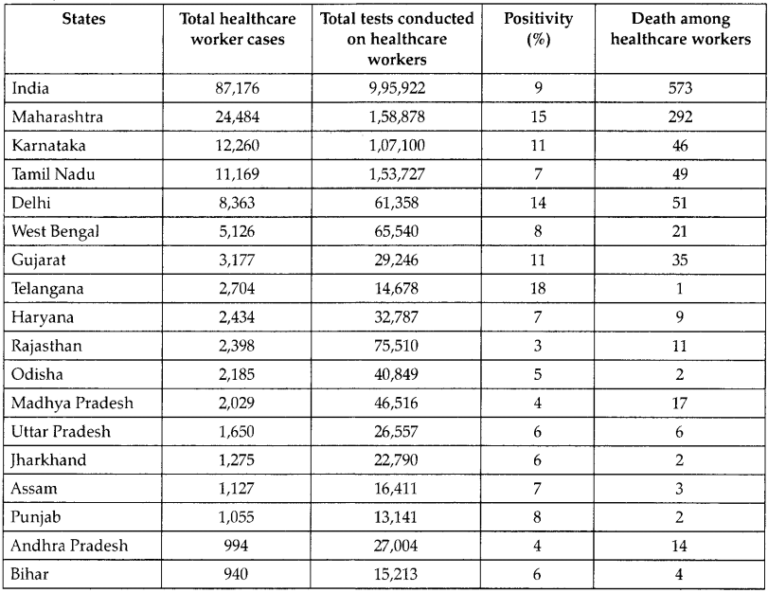
1. More than 87,000 healthcare workers have been infected with Covid-19, with just six states – Maharashtra, Karnataka, Tamil Nadu, Delhi, West Bengal and Gujarat – accounting for three-fourths (around 74%) of the case burden and over 86% of the 573 deaths due to the infection, official data showed. Maharashtra alone, with the highest number of over 7.3 lakh confirmed Covid cases so far, accounts for around 28% of the infected healthcare workers and over 60% of the total deaths, according to the data.

2. While Maharashtra, Karnataka and Tamil Nadu had tested over one lakh healthcare workers each till August 28, Karnataka reported only 12,260 infected healthcare workers – almost half the burden in Maharashtra.Tamil Nadu reported 11,169 cases that included doctors, nurses and Asha workers. The three states together accounted for 55% of the total cases among health workers. Risk to frontline workers can jeopardise India’s Covid fight – the three states also reported the highest number of deaths in healthcare professionals, though with a wide gap between Maharashtra and the other two. While Maharashtra reported 292 deaths among healthcare workers, Karnataka and Tamil Nadu had 46 and 49 deaths, respectively.

Image

3. A large number of infections and even deaths of healthcare workers in particular states is being viewed with concern by officials and public health experts, who say risks to frontline workers can jeopardise India’s fight against the pandemic. The issue, discussed in a review meeting headed by the cabinet secretary on Thursday, saw the Centre cautioning states about the need to protect a crucial resource. The possible factors responsible for high infections, officials said, were lax infection control in hospitals and the need for stringent containment measures in areas where health professionals reside to safeguard them.

4. Despite the high number of cases, the government has received only 143 claims since April under the 50 lakh Covid-19 insurance scheme for healthcare workers engaged in Covid mitigation activities. Official sources said the wide gap between the number of deaths and claims could be because all the casualties may not be eligible under the scheme. Besides, the claims are a bit slow in coming as families of the dead take time to apply and do the required paperwork.

5. ‘Solidarity with health workers cannot be met with mere words of encouragement but by concerted efforts to strengthen the health workforce. Safety net for their families should be provided including a term insurance cover of overt 2 crore, with the government as sole guarantee/ said Giridhar Babu, epidemiologist at the Public Health Foundation of India. ‘Protecting healthcare workers is of paramount importance to make sure we have a large enough force to take care of patients who need their services’, said Dr H Sudarshan Ballal, chairman, Manipal Hospitals, who said such workers may be at risk because of a large number of asymptomatic patients and lack of proper use of PPEs.

Answer the following questions, based on the passage above.

(i) Complete the sentence appropriately.
Among the six states mentioned in the passage, __________ alone accounts for around 60 % of the total deaths among infected healthcare workers.

(ii) Fill in the blanks with an appropriate response.
The wide gap between the number of deaths and claims under the Covid-19 insurance scheme for healthcare workers could be due to the fact that __________.

(iii) Justify the statement that protecting healthcare workers is crucial for India’s fight against the pandemic, as discussed in the passage.

(iv) On how many healthcare workers have COVID-19 tests been conducted in Punjab?

(v) Based on the information provided in the passage, what can be inferred about the response of healthcare workers’ families towards the Covid-19 insurance scheme?

(vi) Based on your understanding of the passage, choose the option that lists the factors responsible for high infection in healthcare professionals.
1. Careless infection control in hospital
2. Negligence by healthcare professionals
3. Lack of stringiest containment measure
4. The lack of healthcare professionals
(A) 1 and 2
(B) 2 and 4
(C) 1 and 3
(D) 3 and 4

(vii) Considering the high number of Covid-19 cases among healthcare workers, what could be a potential reason behind the relatively low number of claims received under the Covid-19 insurance scheme?

(viii) Choose the option that lists statement that is NOT TRUE.
(A) Maharashtra was the worst sufferer of Covid-19.
(B) Karnataka had less number of Covid-19 cases as compared to Maharashtra and Tamil Nadu.
(C) The deaths of healthcare workers are disregarded by officials.
(D) 50 lakh under Covid-19 insurance scheme.
1. Though the Covid-19 situation seems to be under control and the overall positivity rate has remained between 0.08% and 0.12% in the past one week, New Delhi has reported the highest positivity rate of 0.29% among all 11 districts. While North West and South West have reported a positivity rate of 0.21 % and 0.19% , respectively, all other districts have comparatively lower numbers. North East district has nil cases and a zero positivity rate. While there is no clear indication of Covid-19 cases rising again in the capital, the numbers are rising in some parts of the country. Delhi also needs to be on alert because the recent highest positivity rate of 0.12%, (85 new cases) over the past 24 days was reported on 1st August, 2021.

2. According to the district-wise performance report, on July 31, Central district reported six cases with a positivity rate of 0.09 %, East had five cases and 0.08 % positivity rate, New Delhi 19 cases and 0.29 %, North seven cases and 0.13 %, North West 12 cases and 0.21 %, Shahdara two cases and 0.03 %, South four cases and 0.06 %. South East seven cases and 0.11 %,, South West 15 cases and 0.19 %, and West nine cases and 0.12 %, positivity rate. All districts are conducting 4,000 to 6,000 tests every day, a majority of them being RT-PCR.

3. A health department official said the positivity rate was far lower than the target of 5%, that the districts were supposed to maintain. “It’s difficult to pinpoint the reasons behind some districts reporting a higher positivity rate than others. Only experts can highlight the causes after a detailed analysis,” added the official.

4. Officials from the districts reporting higher positivity rates said they were conducting a maximum number of tests in places like containment zones, slums, middle-class areas and villages. A government hospital doctor involved in Covid-19 management said, “If more tests are conducted in containment zones and adjoining dusters and among the contacts of Covid-positive people, then the positivity rate is likely to be slightly higher. More tests in super-spreader areas also pushes up the positivity rate. It has been observed that more tests conducted in slums and under privileged areas throw up a lower positivity rate. That is why it is suggested to use mixed locations for carrying out the tests.”


Answer the following questions, based on the passage above.

(i) Complete the sentence appropriately.
According to the district-wise performance report, on July 31, Central district reported ____________ cases with a positivity rate of ____________%.

(ii) Fill in the blanks with an appropriate response.
It has been observed that more tests conducted in ____________ and underprivileged areas throw up a ____________ positivitv rate.

(iii) What evidence from the passage justifies the statement that conducting more tests in containment zones and adjoining clusters, as well as among the contacts of Covid-positive people, can lead to a slightly laigher positivity rate?

(iv) According to the above passage, officials were conducting a maximum number of tests in places like containment zones, slums, middle-class areas and villages. What does it reveal?

(v) Based on the information provided in the passage, what can be inferred about the suggested strategy of conducting tests in mixed locations for Covid-19?


(vi) Based on the graphical chart in the passage, choose the option that correctly depicts the number of positive cases in North West Delhi and West Delhi.

Image

(A) Option (1)
(B) Option (2)
(C) Option (3)
(D) Option (4)

(vii) Why is it important for Delhi to remain on alert despite no clear indication of rising capital?

(viii) In the line “If more tests are conducted in containment zones and adjoing clusters clusters’ refers to:
(A) areas which have Covid-19 positive cases.
(B) the villages nearby a village which has Covid-19 positive case(s).
(C) the areas nearby an area which has Covid-19 positive case(s).
(D) the buildings in which there is a person with Covid-19 positive.

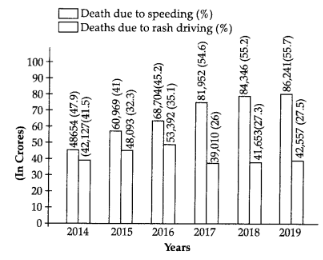
1. Over 80% of fatalities in road accidents in India happened due to speeding and dangerous or driving a comparative analysis of National Crime Records Bureau (NCRB) data since 2014 shows. While this careless corroborates the popular perception of how people drive on the road in a country where getting a driving licence is often said to b be too easy. Experts said most of the fatal accidents are recorded by police under speeding and dangerous driving categories in the FIR as there are no other provisions in the Indian Penal Code (IPC) for such offences.

2. According to the latest NCRB report on accidental deaths, 83.2% of road fatalities were on account of these two types of violations and the rest 16.8% of fatalities were due to reasons including drunk driving, bad weather conditions and mechanical defect. In 2014, when such causes of fatal crashes were first compiled, 89.4% of the deaths were due to speeding and dangerous or careless driving as per the police records and this was the highest ever.

3. “We face a host of challenges ranging from poor system of issuing driving licences to almost zero scientific investigation of fatal crashes, which are provided in the law. Most of our national highways and state highways, which pass through villages, have no pedestrian crossings. On the top of this, in all fatal cases, police automatically registers them under section 279 (negligent driving resulting death) of the IPC,” said mad safety expert Rohit Baluja, who has been a regular guest faculty at Indian Police Academy, Hyderabad.4. Confirming this, traffic adviser in Punjab, government, Navdeep Asija said in case of all fatal accidents, the provisions of IPC are slapped. “In IPC, any crime or offence has to be lodged against a human being and hence there cannot be any charge against a road, vehicle or any other object. That’s why police data may not indicate the exact reason of crashes. But it is also a fact that violation of traffic rules is rampant on roads and only electronic surveillance can put a check on them,” he added

Image

5. Baluja said there is a need to define what is dangerous driving and the norms for fixing speed limits. “In Delhi, the speed limit is same across major roads, residential areas and markets during day lean time and at night as well. No authorities are held responsible for deficiencies on their part,” he pointed out. Though the amended Motor Vehicle Act has included a provision to hold road owning agencies, contractors and consultants in case of fatal accidents due to faulty road construction or design, the government is yet to notify the process for this.

(i) Complete the sentence appropriately.
According to the latest NCRB report on accidental deaths, _____________ % of road fatalities were due to speeding and dangerous driving, while the remaining _____________ % were attributed to other factors such as drunk driving, bad weather conditions, and mechanical defects.

(ii) Fill in the blanks with an appropriate response.

In all fatal cases, the police automatically registers them under section 279 of the IPC, which pertains to _____________ resulting in death.

(iii) Justify the statement that poor system of issuing driving licenses and lack of scientific investigation of fatal crashes contribute to road fatalities in India, as mentioned in the passage.

(iv) As per the amended Motor Vehicle Act, who among these are also held responsible for fatal road accidents?

(v) Based on the information provided in the passage, what can be inferred about the need for electronic surveillance to curb the rampant violation of traffic rules on Indian roads?

(vi) According to the latest NCRB report, what percentage of total fatal road accidents occur due to high-speed driving and rash driving?
(A) 16.8%
(B) 32.3%
(C) 27.5%
(D) 83.2%

(vii) According to the passage, why might the police data on road fatalities not provide the exact reason for crashes?

(viii) According to NCRB, which of these factors is/are responsible for fatal road accidents?
(A) High speed driving
(B) Rash driving
(C) Both (A) and (B)
(D) Neither (A) nor (B)