MCQ
$\frac{1+2\text{i}+3\text{i}^2}{1-2\text{i}+3\text{i}^2}$ equals:
  • A
    i
  • B
    -1
  • -i
  • D
    4

Answer

Correct option: C.
-i
Let $\text{z}=\frac{1+2\text{i}+3\text{i}^2}{1-2\text{i}+3\text{i}^2}$
$\Rightarrow\text{z}=\frac{1+2\text{i}-3}{1-2\text{i}-3}$
$\Rightarrow\text{z}=\frac{-2+2\text{i}}{-2-2\text{i}}\times\frac{-2+2\text{i}}{-2+2\text{i}}$
$\Rightarrow\text{z}=\frac{(-2+2\text{i})^2}{(-2)^2-(2\text{i})^2}$
$\Rightarrow\text{z}=\frac{4+4\text{i}^2-8\text{i}}{4+4}$
$\Rightarrow\text{z}=\frac{4-4-8\text{i}}{8}$
$\Rightarrow\text{z}=\frac{-8\text{i}}{8}$
$\Rightarrow\text{z}=-\text{i}$

Need a full question paper?

Generate a complete, print-ready paper with questions like this in minutes — across 16+ boards, with answer keys.
Start Generating Free

Similar questions

Consider conic $C\,\,:\,\,25{\left( {x - 1} \right)^2} + \,25{\left( {y + 1} \right)^2} = \,{\left( {3x\, - \,4y} \right)^2}$ . If curve $E$ is locus of point of intersection of perpendicular tangents to the conic $C$ , then minimum distance between curve $E$ and point $(2,-1)$ is
A point moves in such a way that the sum of square of its distance from the points $A(2,0)$ and $B( - 2,0)$ is always equal to the square of the distance between $A$ and $B$. The locus of the point is
A bag contains $16$ coins of which two are counterfeit with heads on both sides. The rest are fair coins. One coin is selected at random from the bag and tossed. The probability of getting a head is
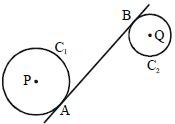
In the figure shown, radius of circle $C_1$ be $ r$ and that of $C_2$ be $\frac{r}{2}$ , where $r= \frac {1}{3} PQ,$ then length of $AB$ is (where $P$ and $Q$ being centres of $C_1$ $\&$ $C_2$ respectively)
If a hyperbola passes through the point $\mathrm{P}(10,16)$ and it has vertices at $(\pm 6,0),$ then the equation of the normal to it at $P$ is
Let $A =\{ x \in R :| x +1|<2\}$ and $B=\{x \in R:|x-1| \geq 2\}$. Then which one of the following statements is NOT true ?
The line $(3x - y + 5) + \lambda (2x - 3y - 4) = 0$ will be parallel to $y$-axis, if $\lambda$ =
Let $(1+2 x)^{20}=a_0+a_1 x+a_2 x^2+\ldots+a_{20} x^{20}$.Then $3 a_0+2 a_1+3 a_2+2 a_3+3 a_4+2 a_5+\ldots+2 a_{19}+3 a_{20}$ equals
If the coordinates of the points $A $ and $B$ be $ (3, 3) $ and $(7, 6)$, then the length of the portion of the line $AB$ intercepted between the axes is
From a pack of $52$ cards two are drawn with replacement. The probability, that the first is a diamond and the second is a king, is