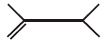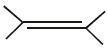
MCQ
$\,$
  • A


  • C

  • D
    None of these

Answer

Correct option: B.

b

Need a full question paper?

Generate a complete, print-ready paper with questions like this in minutes — across 16+ boards, with answer keys.

Start Generating Free

Similar questions

The $IUPAC$ nomenclature of an element with electronic configuration $[ Rn ] 5 f ^{14} 6 d ^{1} 7 s ^{2}$ is.
The statements

$(i) $ in filling a group of orbitals of equal energy, it is energetically preferable to assign electrons to empty orbitals rather than pair them into a particular orbital.

$(ii)$  When two electrons are placed in two different orbitals, energy is lower if the spins are parallel.are valid for

Bond angles $104^o, 117^o$ and $180^o$ are associated with
Which of the following compound $CANNOT$ act as a Lewis base ?
For the reaction, $2N_2O_5(g) \to 4NO_2(g) + O_2(g)$ , the rate of formation of $O_2$ is $0.032\,g\,h^{-1}$ , then rate of conversion of $N_2O_5$ in $g\,h^{-1}$ is
In the organic compound $CH _{2}= CH - CH _{2}- CH _{2}- C \equiv CH ,$ the pair of hydridised orbitals involved in the formation of: $C_{2}-C_{3}$ bond is:
Beryllium shows diagonal relationship with
One mole of an ideal gas is allowed to expand freely and adiabatically into vacuum until its volume has doubled. A statement which is not true concerning this expression is
For reaction :

$2NO_2(g) + O_3(g) \to N_2O_5(g) + O_2(g)$

rate law is $R = K\, [NO_2]' [O_3]'$.

Which of these possible reaction mechanisms is consistent with the rate law?

Mechanism $I :$

$NO_2(g) + O_3(g) \to NO_3(g) + O_2(g)$ (slow)

$NO_3(g) + NO_2(g) \to N_2O_5(g)$ (fast)

Mechanism $II :$

$O_3(g)  \rightleftharpoons  O_2(g) + [O]$ (fast)

$NO_2(g) + [O] \to NO_3$ (slow)

$NO_3(g) + NO_2(g) \to  N_2O_5$ (fast)

Element having highest $I.P.$ value is