MCQ
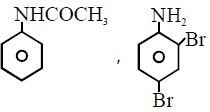
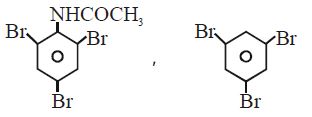
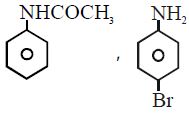
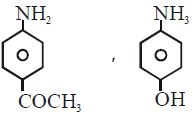
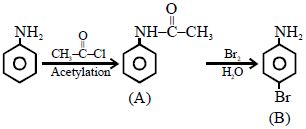
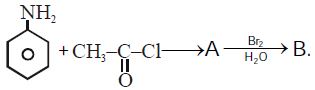
$A$ and $B$ are :-
  • A

  • B


  • D

Answer

Correct option: C.

c

Need a full question paper?

Generate a complete, print-ready paper with questions like this in minutes — across 16+ boards, with answer keys.
Start Generating Free

Similar questions

The major organic product formed from the following reaction
The one which is unimolecular reaction is
The reduction of which of the following compound would yield secondary amine?
Which of the following statements are correct about $\mathrm{Zn}, \mathrm{Cd}$ and $\mathrm{Hg}$ ?

$A$. They exhibit high enthalpy of atomization as the d-subshell is full.

$B$. $\mathrm{Zn}$ and $\mathrm{Cd}$ do not show variable oxidation state while $\mathrm{Hg}$ shows $+\mathrm{I}$ and + $II.$

$C$. Compounds of $\mathrm{Zn}, \mathrm{Cd}$ and $\mathrm{Hg}$ are paramagnetic in nature.

$D$. $\mathrm{Zn}, \mathrm{Cd}$ and $\mathrm{Hg}$ are called soft metals.

Choose the most appropriate from the options given below:

One mole of an organic compound requires $0.5$ mole of oxygen to produce an acid. The compound may be
Acid anhydride on reaction with primary amines give _______________
${[Sc{({H_2}O)_6}]^{3 + }}$ ion is
The major products from the following reaction sequence are product $\mathrm{A}$ and product $\mathrm{B}$. The total sum of $\pi$ electrons in product $A$ and product $B$ are . . . . . . .(nearest integer)
The correct order of reactivity of $PhMgBr$ with

$(I)$  $\begin{array}{*{20}{c}}
  O \\ 
  {||} \\ 
  {Ph\, - C - Ph} 
\end{array}$

$(II)$  $\begin{array}{*{20}{c}}
  {\,\,\,\,O} \\ 
  {\,\,\,\,||} \\ 
  {C{H_3} - C - H} 
\end{array}$

$(III)$  $\begin{array}{*{20}{c}}
  O \\ 
  {||} \\ 
  {C{H_3} - C - C{H_3}} 
\end{array}$

 is

Which of the following is a highly corrosive salt