Question
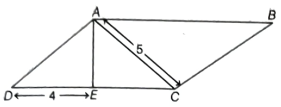
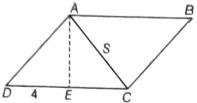
$A B C D$ is a parallelogram in which $A E \perp C D$ as shown in figure, also $A C=A D$ and $A C=5 cm, D E=4 cm$ and area of $\triangle A E D=6 cm^2$. Then, find
(i) area of $\triangle A D C$
(ii) area of parallelograr $A B C D$.
(iii) Perimeter of parallelogram $A B C D$
Image

Need a full question paper?

Generate a complete, print-ready paper with questions like this in minutes — across 16+ boards, with answer keys.

Start Generating Free

Similar questions

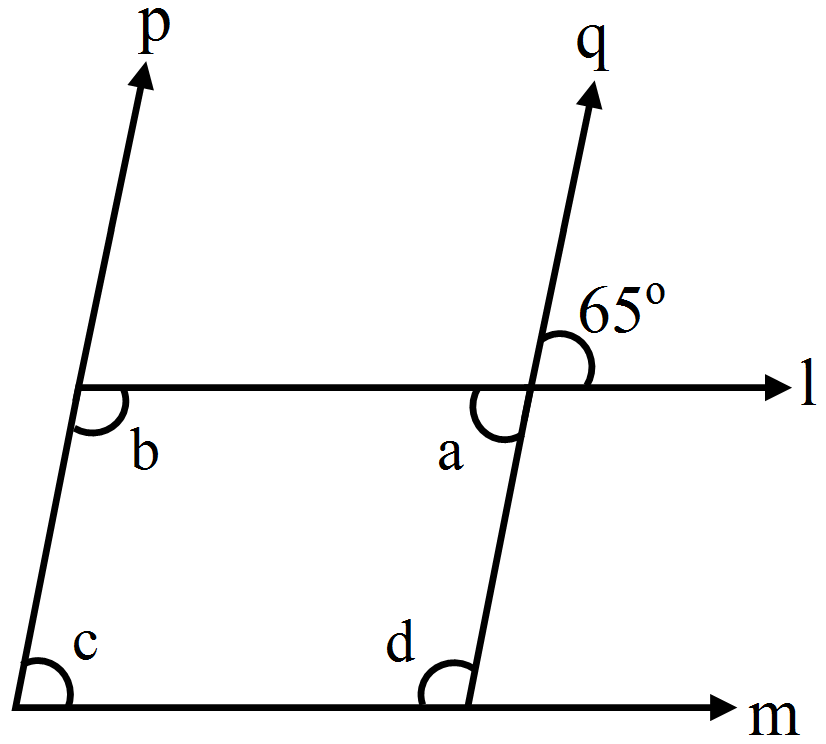
In the given figure, $\text{l || m}$ and $\text{p || q}$ Find the measure of each of the angles $\angle\text{a},\angle\text{b},\angle\text{c}\ \text{and}\ \angle\text{d}.$
The length and breadth of a rectangular park are in the ratio $5: 2$. A 2.5 m wide path running all around the outside the park has an area $305 m^2$. Find the dimensions of the park.
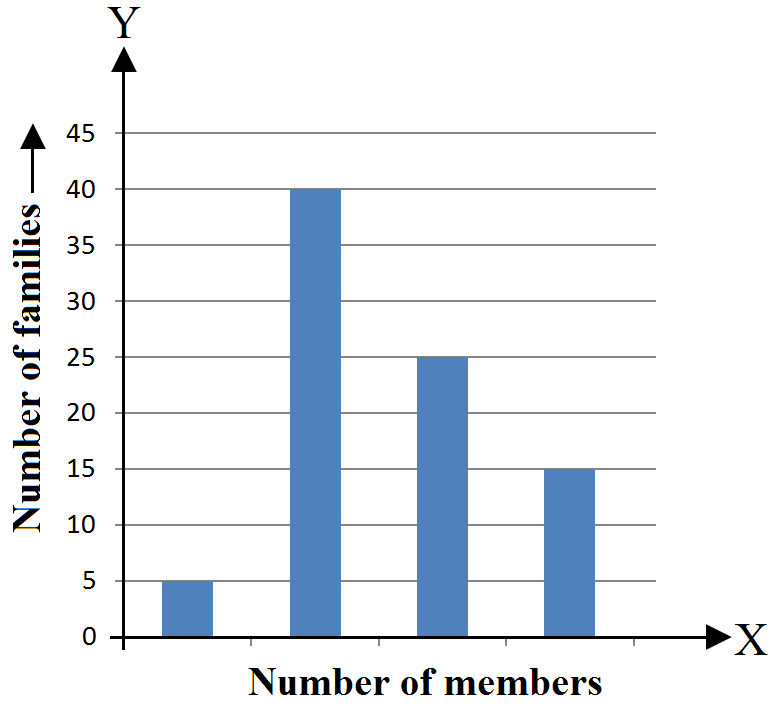
In a survey or $85$ families of a colony, the number of members in each family was recorded, and the data has been represented by the following bar graph:

Read the bar graph carefully and answer the questions given below:
$i.$ What information does the bar graph give?
$ii.$ How many families have $3$ members?
$iii.$ How many people live alone?
$iv.$ Which type of family is the most common? How many members are there in each family of this kind?
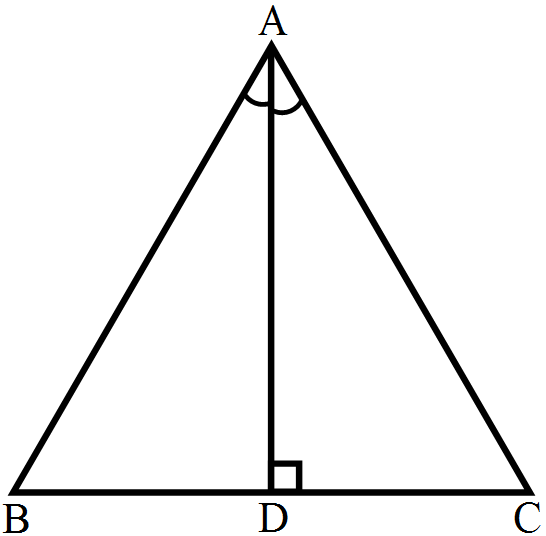
In the adjoining figure, $ABC$ is a triangle in which $AD$ is the bisector of $\angle\text{A}.$ If $\text{AD}\bot\text{BC}$ show that $\triangle\text{ABC}$ is isosceles.
Simplify and write in exponential form.
$\left(\right.$ e.g. $\left.11^6÷11^2=11^4\right)$
(i) $2^9÷2^3$ (ii) $10^8÷10^4$ (iii) $9^{11}÷9^7$
(iv) $20^{15}÷20^{13}$ (v) $7^{13}÷7^{10}$
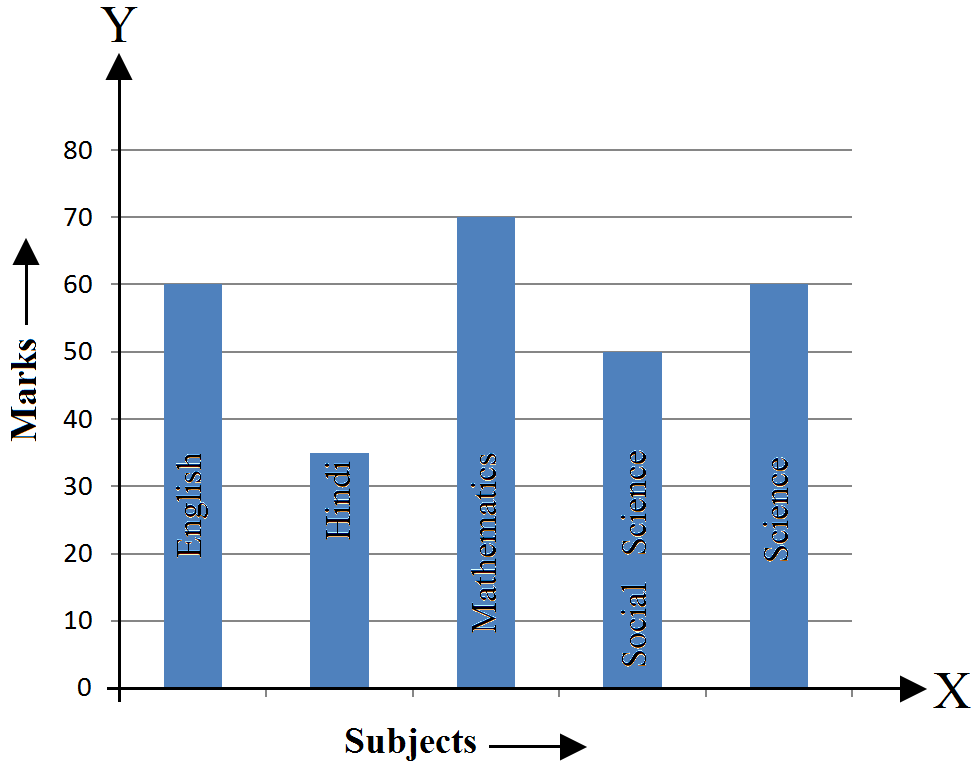
Look at the bar graph given below.

Read it care fully and answer the following questions.
$i.$ What information does the bar graph give?
$ii.$ In which subject is the student very good?
$iii.$ In which subject is the poor?
$iv.$ What is the average of his marks?
Select those rational numbers which can be written as a rational number with numerator 6: $\frac{1}{22}, \frac{2}{3}, \frac{3}{4}, \frac{4}{-5}, \frac{5}{6}, \frac{-6}{7}, \frac{-7}{8}$
A light year is the distance that light can travel in one year.
1 light year $=9460000000000 km$
(i) Express one light year in scientific notation.
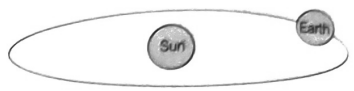
(ii) The average distance between Earth and Sun is $1.496 \times 10^8 km$. Is the distance between Earth and the Sun greater than, less than or equal to one light-year?
Image
The length of a rectangular plot of area $65 \frac{1}{3} m^2$ is $12 \frac{1}{4} m$. What is the width of the plot?
Draw two parallel lines at a distance of $5\ cm$ apart.