Question

A biconvex lens forms a real image of an object placed perpendicular to its principal axis. Suppose the radii of curvature of the lens tend to infinity. Then the image would

(a) Disappear

(b) Remain as real image still

(c) Be virtual and of the same size as the object

(d) Suffer from aberrations

Answer

(c) Be virtual and of the same size as the object

Need a full question paper?

Generate a complete, print-ready paper with questions like this in minutes — across 16+ boards, with answer keys.

Start Generating Free

Similar questions

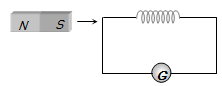
As shown in the figure, a magnet is moved with a fast speed towards a coil at rest. Due to this induced electromotive force, induced current and induced charge in the coil is E, I and Q  respectively. If the speed of the magnet is doubled, the incorrect statement is

(a) E increases

(b) I increases

(c) Q remains same

(d) Q increases

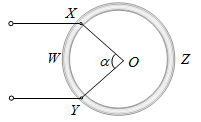
A wire of resistor R is bent into a circular ring of radius r. Equivalent resistance between two points X and Y on its circumference, when angle XOY is a, can be given by

(a)  

(b)  

(c) R (2 pa)

(d)  

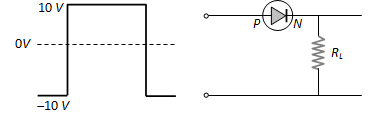
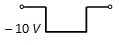
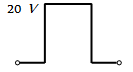
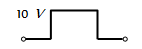
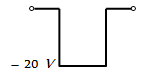
If the following input signal is sent through a PN-junction diode, then the output signal across RL will be

(a)

(b)

(c)

(d)

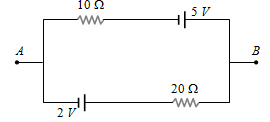
The current in the given circuit is

(a) 0.1 A

(b) 0.2 A

(c) 0.3 A

(d) 0.4 A

The total charge of the isolated system is always:

A metallic surface with work function of 2 eV, on heating to a temperature of 800 K gives an emission current of 1 mA. If another metallic surface having the same surface area, same emission constant but work function 4 eV is heated to a temperature of 1600 K, then the emission current will be

(a) 1 mA

(b) 2 mA

(c) 4 mA

(d) None of these

In a dark room of photography, generally red light is used. The reason is

(a) Most of the photographic films are not sensitive to red light

(b) The frequency for red light is low and hence the energy hv of photons is less

(c) (a) and (b) both

(d) None of the above

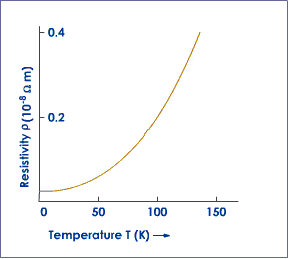
Identify the type of material based on the T-ρ graph given below.
Image

A thermocouple of resistance 1.6 is connected in series with a galvanometer of 8 resistance. The thermocouple develops and e.m.f. of 10 μV per degree temperature difference between two junctions. When one junction is kept at 0  and the other in a molten metal, the galvanometer reads 8 millivolt. The temperature of molten metal, when e.m.f. varies linearly with temperature difference, will be

(a) 960

(b) 1050

(c) 1275

(d) 1545

The path of a refracted ray of light in a prism is parallel to the base of the prism only when the

(a) Light is of a particular wavelength

(b) Ray is incident normally at one face

(c) Ray undergoes minimum deviation

(d) Prism is made of a particular type of glass