MCQ
A Carnot engine has an efficiency of $50 \%$ when its source is at a temperature $327^{\circ}\,C$. The temperature of the sink is $.........^{\circ} C$
  • A
    $200$
  • $27$
  • C
    $15$
  • D
    $100$

Answer

Correct option: B.
$27$
b
Efficiency of carnot engine

$\% \eta=\left(1-\frac{T_{\text {sink }}}{T_{\text {source }}}\right) \times 100$

$T_{\text {source }}=327^{\circ}\,C =600\,K$

$50=\left(1-\frac{T_{\text {sink }}}{600}\right) \times 100$

$\frac{1}{2}=1-\frac{T_{\text {sink }}}{600}$

$T _{\text {Sink }}=300\,K$

So temp. of sink is ${ }^{\circ} C =300-2763=27^{\circ}\,C$

Need a full question paper?

Generate a complete, print-ready paper with questions like this in minutes — across 16+ boards, with answer keys.

Start Generating Free

Similar questions

The dimensions of angular momentum , latent heat and capacitance are, respectively.
If a power of $100\, W$ is being supplied across a potential difference of $200\, V$, current flowing is ............ $A$
Consider a cube of uniform charge density $\rho$. The ratio of electrostatic potential at the centre of the cube to that at one of the corners of the cube is
Charge $q$ is uniformly distributed over a thin half ring of radius $R$. The electric field at the centre of the ring is
A person of mass $60\, \ kg$ is inside a lift of mass $940\, \ kg$ and presses the button on control panel. The lift starts moving upwards with an acceleration $1.0\ m/s^2$. If $g = 10 \,m s^{-2},$ the tension in the supporting cable is $ .......... N$
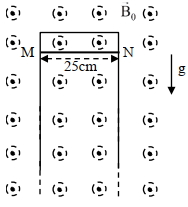
A thin conducting rod $\mathrm{MN}$ of mass $20 \mathrm{gm}$, length $25 \mathrm{~cm}$ and resistance $10 \Omega$ is held on frictionless, long, perfectly conducting vertical rails as shown in the figure. There is a uniform magnetic field $\mathrm{B}_0=4 \mathrm{~T}$ directed perpendicular to the plane of the rod-rail arrangement. The rod is released from rest at time $t=0$ and it moves down along the rails. Assume air drag is negligible. Match each quantity in List-$I$ with an appropriate value from List-$II$, and choose the correct option. [Given: The acceleration due to gravity $g=10 \mathrm{~ms}^{-2}$ and $e^{-1}=0.4$ ]
List-$I$ List-$II$
($P$) At $t=0.2 \mathrm{~s}$, the magnitude of the induced emf in Volt ($1$) $\quad 0.07$
($Q$) At $t=0.2 \mathrm{~s}$, the magnitude of the magnetic force in Newton $(2) 0.14$
($R$) At $t=0.2 \mathrm{~s}$, the power dissipated as heat in Watt $(3) 1.20$
($S$) The magnitude of terminal velocity of the rod in $\mathrm{m} \mathrm{s}^{-1}$ $(4) 0.12$
  $(5) 2.00$

According to Bohr atom model, in which of the following transitions will the frequency be maximum ?
$28\,\, gm$ of $N_2$ gas is contained in a flask at a pressure of $10$ atm and at a temperature of $57^o$. It is found that due to leakage in the flask, the pressure is reduced to half and the temperature reduced to $27\,^oC$. The quantity of $N_2$ gas that leaked out is
$A$ uniform copper wire carries a current $i$ amperes and has $p$ carriers per meter$^3$. The length of the wire is $\lambda$ meters and its cross-section area is $s$ meter $^2$. If the charge on a carrier is $q$ coulombs, the drift velocity in $ms^{-1}$ is given by
The drift velocity of electrons in silver wire with cross-sectional area $3.14 \times 10^{-6}\,m ^2$ carrying a current of $20\,A$ is. Given atomic weight of $Ag =108$ , density of silver $=10.5 \times 10^3\,kg / m ^3..........\times 10^{-4} m / sec$.