Question
A convex lens(a) Converges light rays(b) Diverges light rays(c) Form real images always(d) Always forms virtual images


Answer

(a) Converges light rays

Need a full question paper?

Generate a complete, print-ready paper with questions like this in minutes — across 16+ boards, with answer keys.
Start Generating Free

Similar questions

In any electromagnetic wave, electric and magnetic field are represented by $\vec{E}$ and $\vec{B}$ respectively. The direction of propagation of this wave is along :
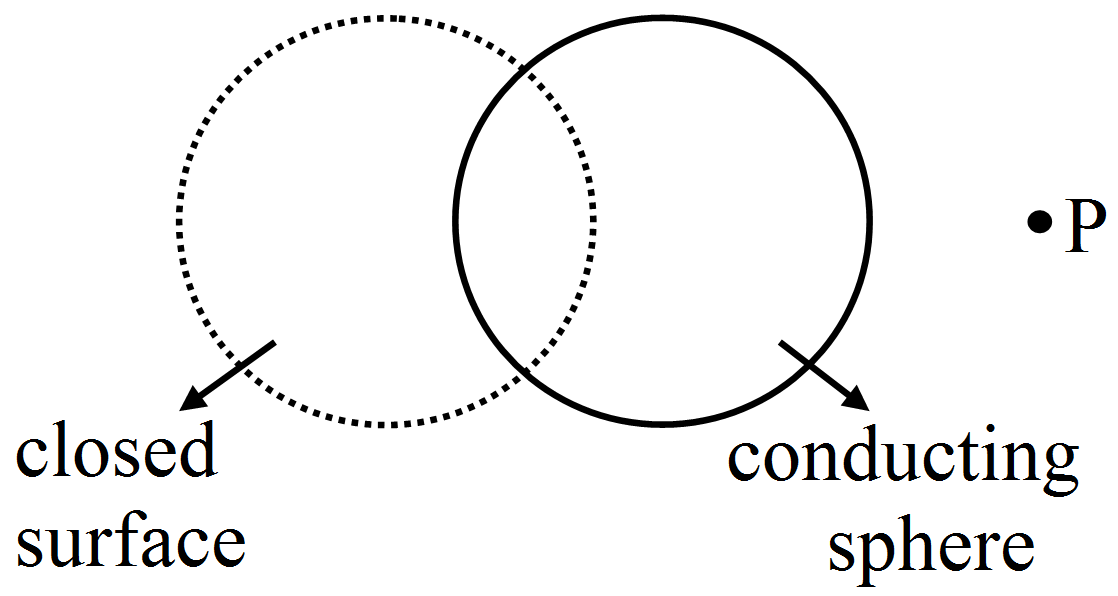
Figure shows a closed surface which intersects a conducting sphere. If a positive charged is placed at the point P, the flux of the electic field through the closed surface:
  1. Will remain zero.
  2. Will become positive.
  3. Will become neagative.
  4. Will become undefined.
Two wires of equal diameters, of resistivities $\rho_1 $ and $\rho_2$ and lengths $\mathrm{I}_1$ and $\mathrm{I}_2$, respectively, are joined in series. The equivalent resistivity of the combination is
Consider a capacitor$-$charging circuit. Let $Q_1$ be the charge given to the capacitor in a time interval of $10\ ms$ and $Q_2$ be the charge given in the next time interval of $10ms.$ Let $10\ mC$ charge be deposited in time interval $t_1$ and another $10\ mC$ charge be deposited in the next time interval $t_2.$
Electromagnetic waves
A circular coil of radius $5 \ cm$ has $500$ turns of a wire. The approximate value of the coefficient of self induction of the coil will be
Optoelectronic devices work on:
You are given three bulbs of 25, 40 and 60 watt. Which of them has lowest resistance(a) 25 watt bulb(b) 40 watt bulb(c) 60 watt bulb(d) Information is insufficient
   
   
The characteristic impedance of a coaxial cable is of the order of(a) 50 W  (b) 200 W(c) 270 W(d) None of these
       
If Fresnel’s biprism experiment as held in water inspite of air, then what will be the effect on fringe width (a) Decrease(b) Increase(c) No effect(d) None of these