Question
A device called oscillator is used to send waves along a stretched string. The string is 20cm long, and four complete waves fit along its length when the oscillator vibrates 30 times per second. For the waves on the string:
  1. What is their wavelength?
  2. What is their frequency?
  3. What is their speed?

Answer

  1. Given that there are four complete waves. So,
$\text{Wavelength}=\frac{\text{Total length of string}}{\text{Number of waves}}$
Therefore,
$\text{Wavelength}=\frac{20}{4}\text{cm}$
$=5\text{cm}$
$=0.05\text{m}$
  1. We have to calculate frequency. We know,
Frequency = (Vibration per second) × (Number of complete waves formed)
Therefore frequency,
Frequency = (30) × (4)Hz
= 120Hz
  1. Now we have to calculate the velocity of the wave.
Given: Frequency f = 120Hz
Wavelength $\lambda=0.05\text{m}$
We know the relation between velocity, frequency, and wavelength
$\text{v}=\text{f}\times\lambda$
Where,
ν is the velocity,
f the frequency,
$\lambda$ the wavelength.
Therefore,
ν = (120) × (0.05)m/s
= 6m/s
Therefore, velocity of the wave is 6m/s.

Need a full question paper?

Generate a complete, print-ready paper with questions like this in minutes — across 16+ boards, with answer keys.

Start Generating Free

Similar questions

A cyclist is moving with a speed of $14m/s.$ He starts accelerating with a rate of $6m/s^2$ and acquired the speed of $18m/s.$ Calculate, what distance did he move in acquiring that speed?
Give one difference between longitudinal and transverse wave.
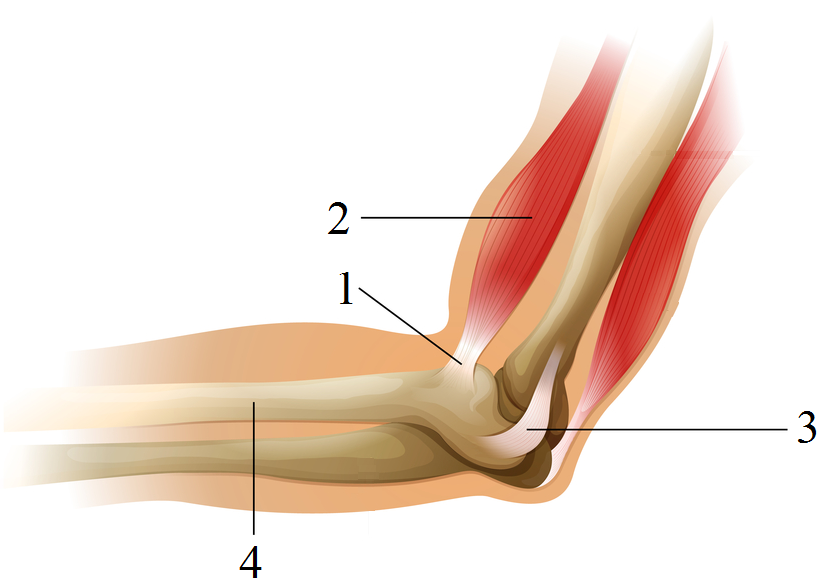
  1. Label the parts marked 1 to 4 in figure.
  2. Mention difference between 1 and 3.
A ball of mass $0.5\ kg$ slows down from a speed of $5 \ m/s$ to that of $3 \ m/s.$ Calculate the change in kinetic energy of the ball. State your answer giving proper units.
Suppose a planet exists whose mass and radius both are half that of the earth. The acceleration due to gravity on the surface of this planet will be double? Justify.
‘Osmosis is a special kind of diffusion’. Comment.
A student thought that two bricks tied together would fall faster than a single one under the action of gravity. Do you agree with his hypothesis or not? Comment.
A car is moving on a straight road with uniform acceleration. The speed of the car varies with time as follows:
Time (s) 0 2 4 6 8 10
Speed (m/s) 4 8 12 16 20 24
Draw the speed-time graph by choosing a convenient scale. From this graph:
  1. Calculate the acceleration of the car.
  2. Calculate the distance travelled by the car in 10 seconds.
A constant force acts on an object of 5kg for a period of 2s. It increases the velocity of an object from 3m/s to 7m/s. Find the magnitude of the applied force. Now, if the force was applied for a period of 5s, then what would be the final velocity of the object?
What purpose does animal husbandry fulfills?