Question
(a) From the following information, calculate Cash flow from Operating Activities.
Particulars31 March 202331 March 2024
Surplus i.e Balance in Statement of Profit and Loss6,00,0005,00,000
Provision for Tax1,00,0001,20,000
Trade Receivables2,00,0002,40,000
Trade Payables1,50,0002,00,000
Goodwill2,00,0001,50,000
Additional Information:-
Proposed Dividend for the year ended March 31, 2023 and March 31, 2024 was ₹1,50,000 and ₹1,80,000 respectively.
(b) From the following information calculate the Cash from Investing Activities.
Particulars31 March 202331 March 2024
Machinery (Cost)20,00,00028,00,000
Accumulated Depreciation4,00,0006,50,000
Additional Information:-
(i) Machinery costing ₹ 50,000 (Book Value ₹ 40,000) was lost by fire and insurance claim of ₹ 32,000 was received.
(ii) Depreciation charged during the year was ₹ 3,50,000.
(iii) A part of Machinery costing ₹ 2,50,000 was sold at a loss of ₹ 20,000.
Answer

(a) CASH FLOW FROM OPERATING ACTIVITIES
ParticularsDetailsAmount
Profit Earned during the year(1,00,000) 
Add: Proposed dividend of previous year1,50,000 
Provision for tax for current year1,20,000 
Profit before tax and extraordinary items1,70,000 
Non-operating and Non Cash Items:  
Add: Goodwill amortised50,000 
Operating profit before tax and changes in working capital2,20,000 
Add: Increase in trade payable50,000 
Less: increase in trade receivables(40,000) 
Cash generated from operations2,30,000 
Less: Income tax paid1,00,000 
Cash flow from operating activities 1,30,000
OR
Accumulated Depreciation A/c
ParticularsAmountParticularsAmount
To Machinery A/c (prev. dep on machine damaged)10,000By Balance b/d4,00,000
To Machinery A/c (prev. dep on machine sold)90,000By Depreciation A/c (Charged during the year)3,50,000
To Balance c/d6,50,000  
 7,50,000 7,50,000
DrMachinery A/cCr
ParticularsAmountParticularsAmount
To Balance b/d20,00,000By Accumulated Depreciation A/c10,000
To Bank A/c (Balancing figure)11,00,000By Insurance Company A/c32,000
  By loss by fire A/c8,000
  By Bank A/c1,40,000
  By Loss on Sale A/c20,000
  BY Accumulated Depreciation A/c90,000
  By Balance c/d28,00,000
 31,00,000 31,00,000
Investing Activities
Sale of Machinery1,40,000
Claim received from Insurance Company32,000
Machinery Purchased(11,00,000)
Cash Outflow from Investing Activities(9,28,000)

Need a full question paper?

Generate a complete, print-ready paper with questions like this in minutes — across 16+ boards, with answer keys.

Start Generating Free

Similar questions

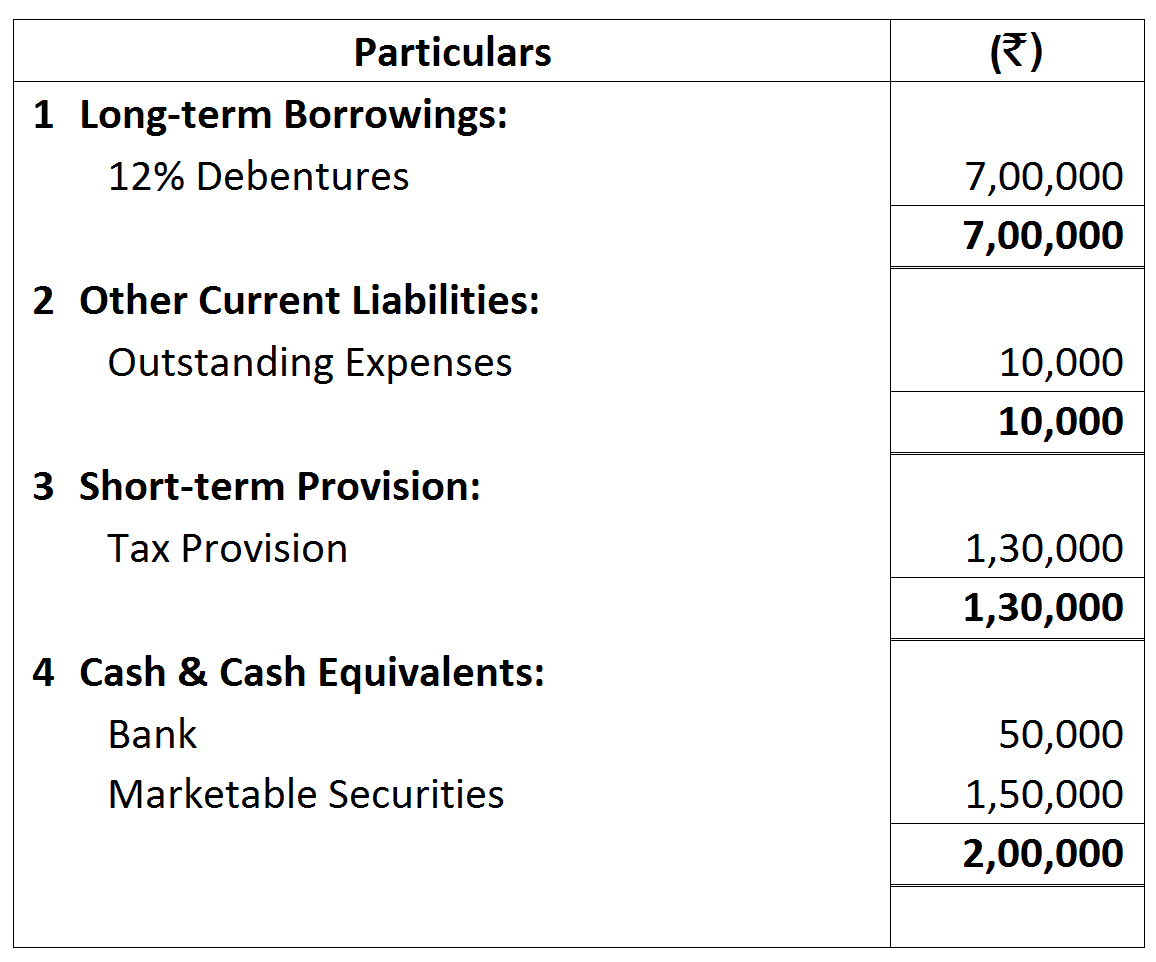
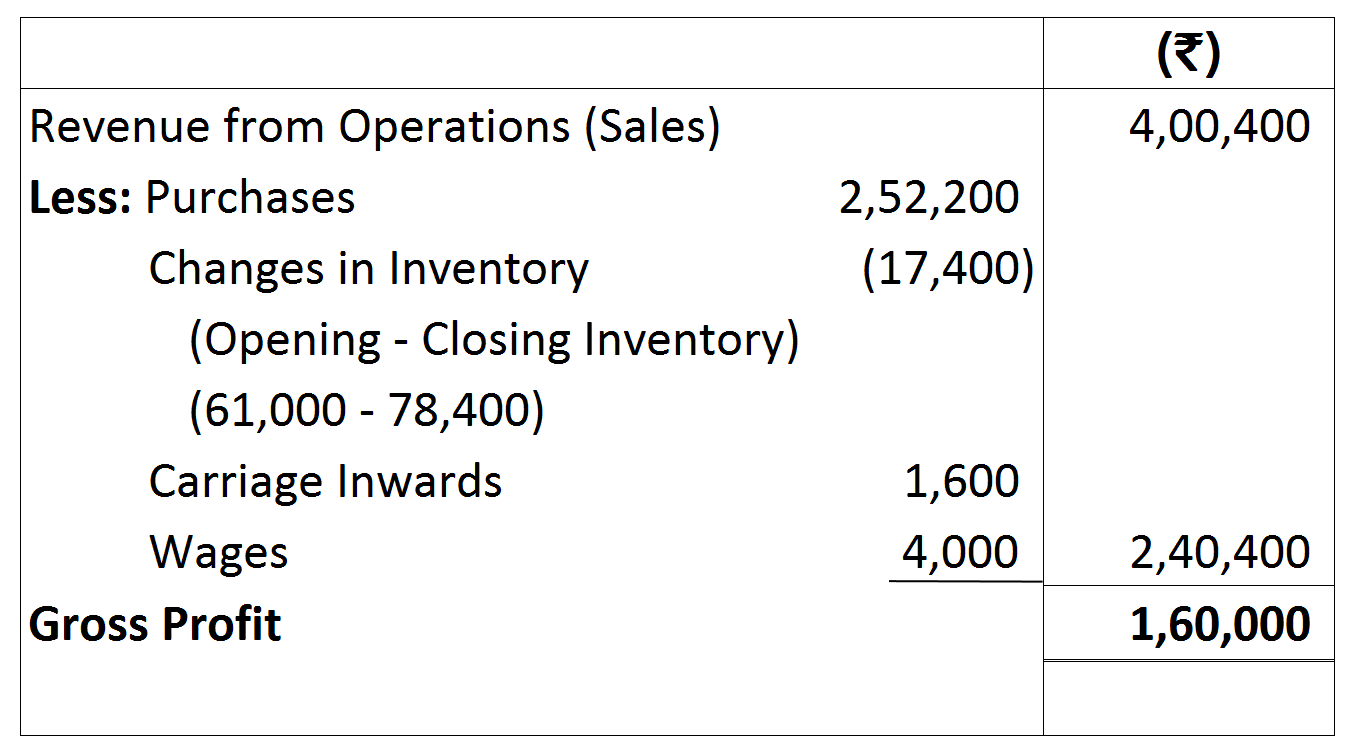
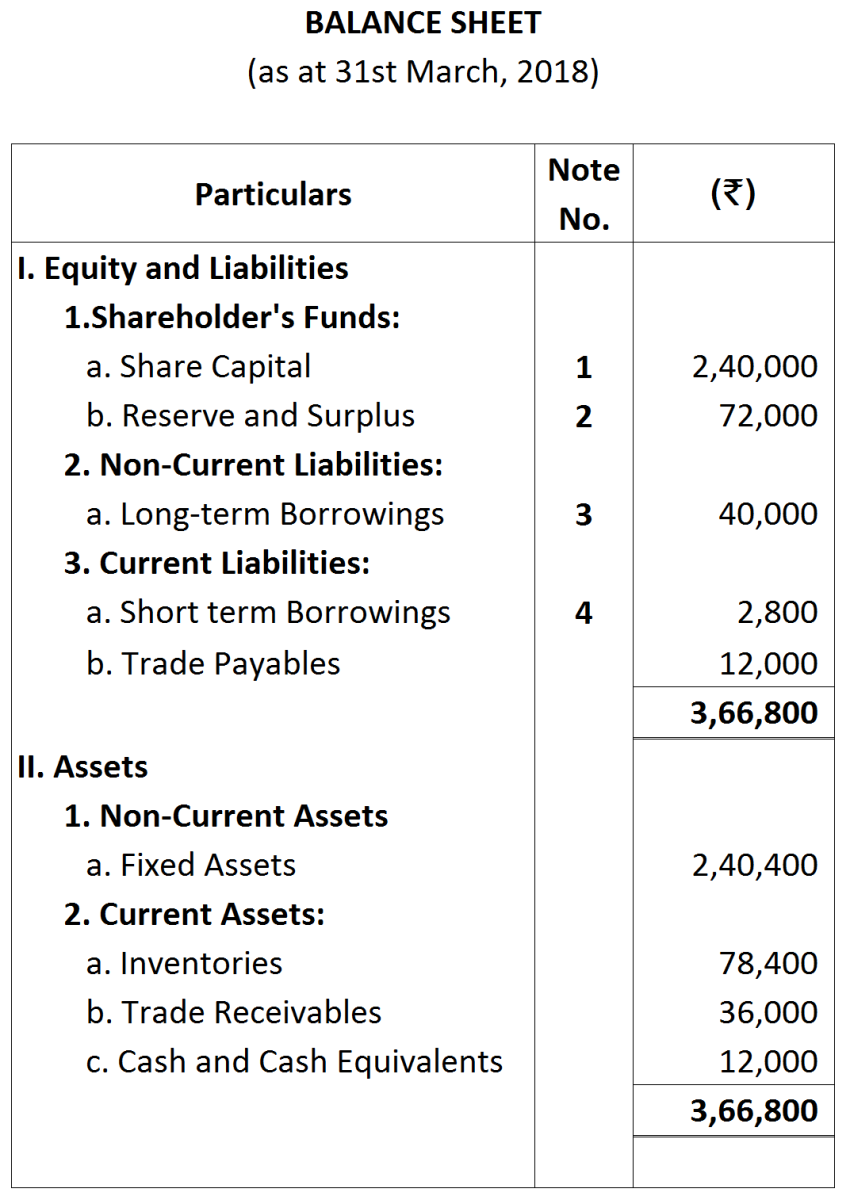
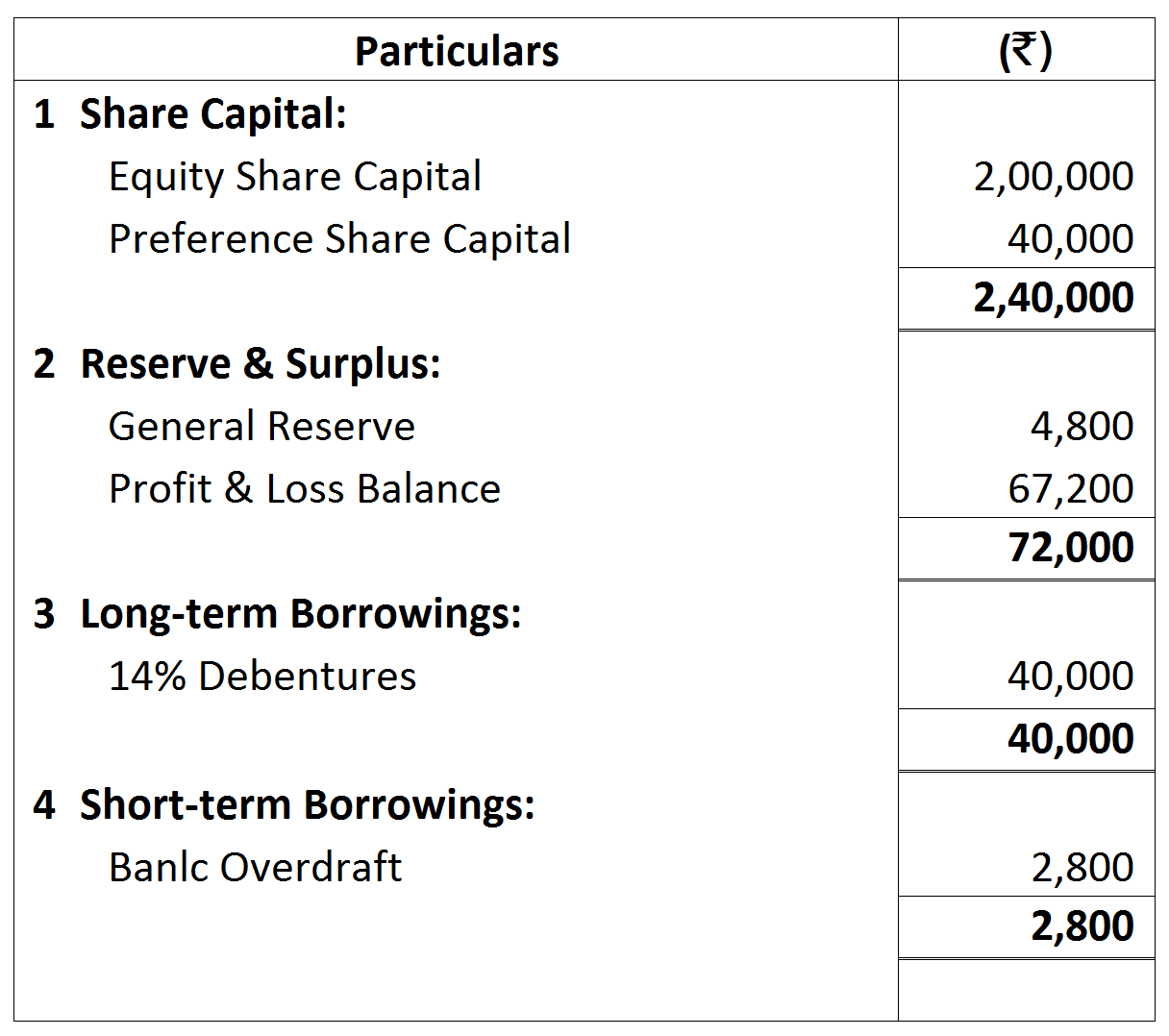
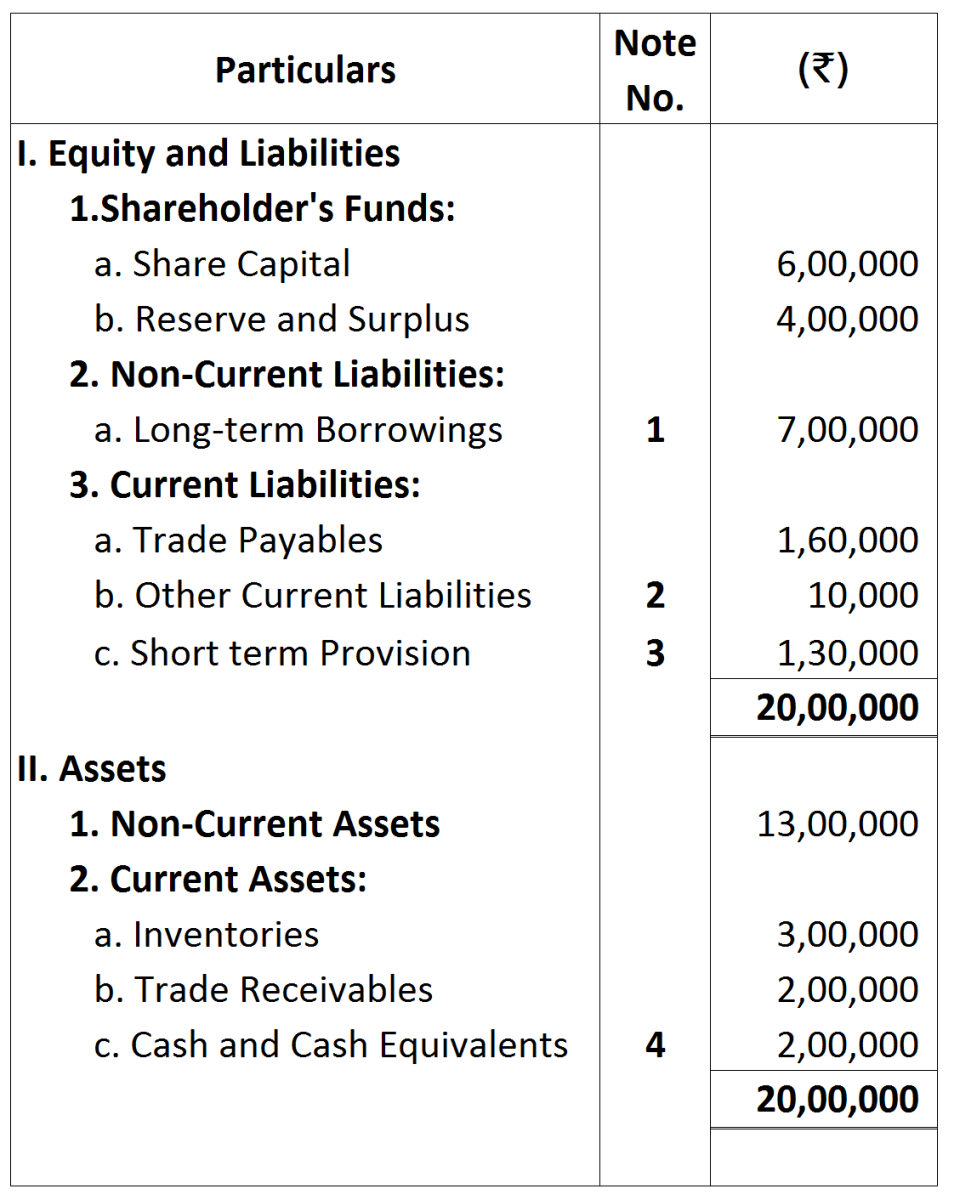
The following is the Balance Sheet of Arvind Mills Ltd. as at 31st March, 2018: Note:
 
 
(a)
Net Revenue from Operations
30,00,000
(b)
Cost of Revenue from Operations
25,80,000
(c)
Operating Exp.
2,20,000
You are required to calculate:
  1. Quick Ratio.
  2. Total Assets to Debt Ratio.
  3. Current Ratio.
  4. Gross Profit Ratio.
  5. Operating Ratio.
  6. Net Profit Ratio.
From the following information calculate any two of the following ratios:
  1. Current Ratio.
  2. Debt Equity Ratio.
  3. Operating Ratio.
Revenue from Operations ₹ 1,00,000; Cost of Revenue from Operations was 80% of Revenue from Operations; Equity Share Capital ₹ 7,00,000; General Reserve ₹ 3,00,000; Operating Expenses ₹ 10,000; Quick Assets ₹ 6,00,000; 9% Debentures ₹ 5,00,000; Closing Inventory ₹ 50,000; Prepaid Expenses ₹ 10,000 and Current Liabilities ₹ 4,00,000.
Oberoi Ltd. took certain fixed assets for ₹ 6,30,000 from Vikram Ltd. and allotted 6,000, 12% Debentures at a premium of 5% to satisfy the purchase consideration. The Company then issued a prospectus inviting the public to subscribe to 20,000, 11 % Debentures of ₹ 100 each at a discount of 2%, payable as ₹ 35 on application, ₹ 23 on allotment and the balance on first and final call.
Applications were received for 16,000 debentures only. All the applications were accepted and money received except first and final call on 100 debenture. Prepare the Cash Book and the journal.
Calculate Operating Profit Ratio and Operating Ratio from the following:
Net Revenue from Operations ₹ 3,00,000; Gross Profit ₹ 1,20,000; Operating Expenses ₹ 45,000.
The following particulars are given to you:
Notes: Calculate the following ratios and indicate the purpose which they serve:
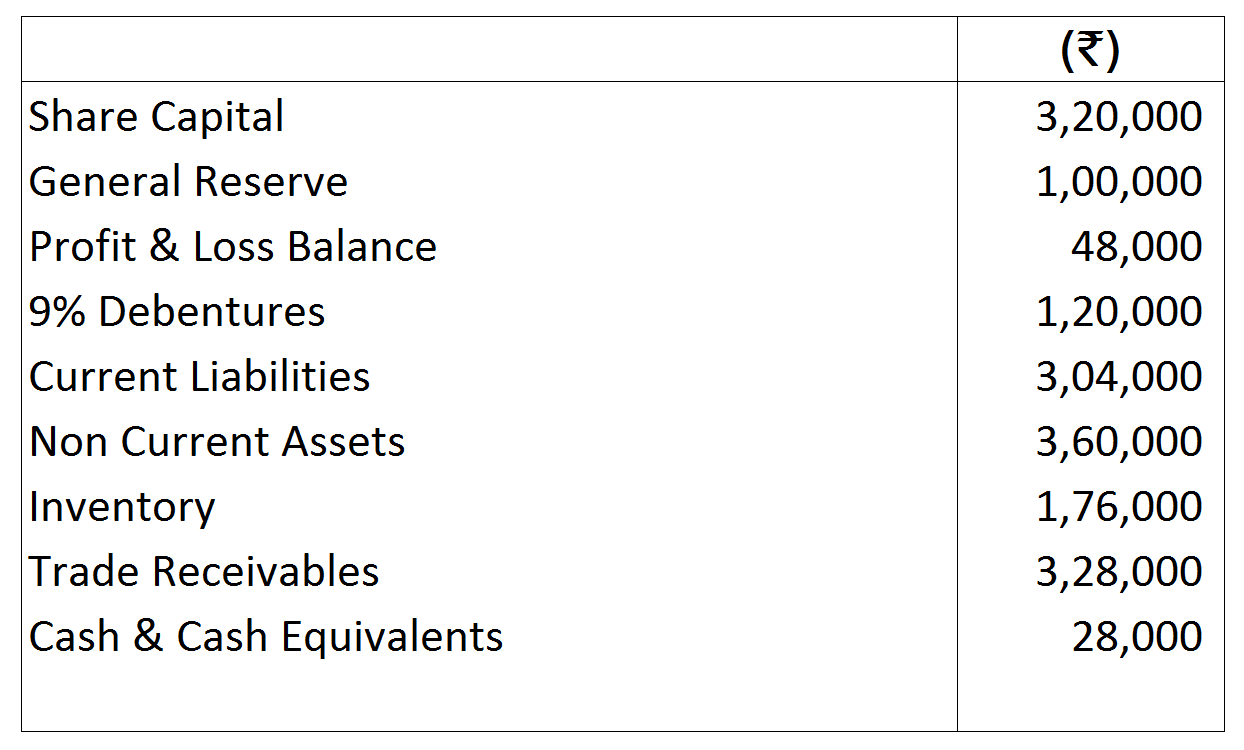
  1. Gross Profit Ratio.
  2. Liquid Ratio.
  3. Proprietary Ratio.
  4. Working Capital Turnover Ratio.
Following particulars are extracted from the books of Bharat Rubber Ltd.:

You are required to work out the following ratios:-
  1. Debt-Equity Ratio.
  2. Total Assets to Debt Ratio.
  3. Proprietary Ratio.
  4. Quick Ratio.
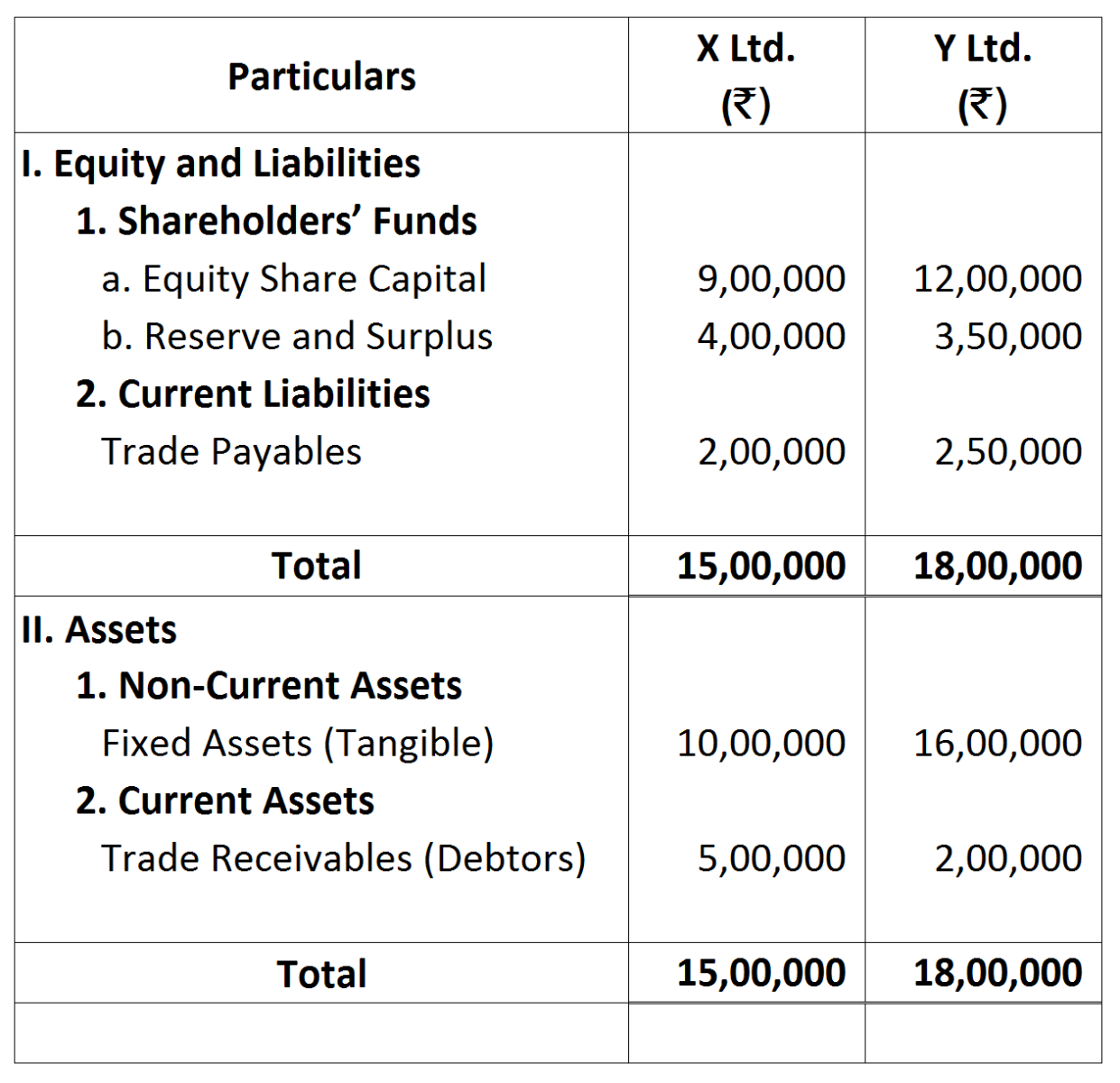
Prepare common size balance sheet and comment on financial position of x Ltd. and y Ltd. the balance sheet of x Ltd. and y Ltd. as at 31st march 2018:
Give a format of Common Size Statement of Profit & Loss for two years.
Prince Limited issued a prospectus inviting applications for 20,000 equity shares of ₹ 10 each at a premium of ₹ 3 per share payable as follows:
On Application - ₹ 2,
On Allotment (including premium) - ₹ 5,
On First Call - ₹ 3,
On Second call - ₹ 3,
Applications were received for 30,000 shares and allotment was made on pro rata basis. Money overpaid on application s was adjusted to the amount due on allotment.
Mr. Mohit whom 400 shares were allotted, failed to pay the allotment money and the first call, and his shares were forfeited after the first call. Mr. Joly, whom 600 shares were allotted, failed to pay for the two calls and hence, his shares were forfeited.
Of the shares forfeited, 800 shares were reissued to Supriya as fully paid for ₹ 9 per share, the whole of Mr Mohit's shares being included.
Amisha Ltd inviting application for 40,000 shares of ₹ 100 each at a premium of ₹ 20 per share payable; on application ₹ 40 ; on allotment ₹ 40 (Including premium): on first call ₹ 25 and Second and final call ₹ 15.
Application were received for 50,000 shares and allotment was made on prorata basis. Excess money on application was adjusted on sums due on allotment.
Rohit to whom 600 shares were allotted failed to pay the allotment money and his shares were forfeited after allotment. Ashmita, who applied for 1000 shares failed to pay the.
Two calls and his shares were forfeited after the second call. Of the shares forfeited, 1200 shares were sold to Kapil for ₹ 85 per share as fully paid, the whole of Rohit’s shares being included.
Record necessary journal entries.