MCQ
$A$ is
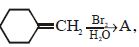
- ✓
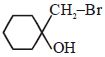
- B
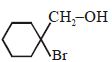
- C
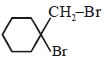
- D

Generate a complete, print-ready paper with questions like this in minutes — across 16+ boards, with answer keys.
$\begin{array}{*{20}{c}}
{OH\,\,\,\,\,\,\,\,\,\,\,\,\,\,\,\,\,\,\,\,\,\,\,\,\,\,\,\,\,O} \\
{\,|\,\,\,\,\,\,\,\,\,\,\,\,\,\,\,\,\,\,\,\,\,\,\,\,\,\,\,\,\,\,\,\,\,\,\,||} \\
{{C_6}{H_5} - CH - C{H_2} - C - C{H_3}}
\end{array}\mathop {\xrightarrow{{(i)\,NaOBr}}}\limits_{(ii)\,{H_2}O/{H^ + }\,(iii)\,\Delta } $ product
product will be :
[Atomic numbers of $Cr =24$ and $Mn =25$ ]
$(A)$ $Cr ^{2+}$ is a reducing agent
$(B)$ $Mn ^{3+}$ is an oxidizing agent
$(C)$ Both $Cr ^{2+}$ and $Mn ^{3+}$ exhibit $d^4$ electronic configuration
$(D)$ When $Cr ^{2+}$ is used as a reducing agent, the chromium ion attains $d^5$ electronic configuration
$(A)\, F^-, Na^+, Mg^{+2}$ $(B) \,Ni, Cu, Zn$
$(C)\, N^{-3}, Cs^+, H^-$ $(D)\, Li, He, Be^{+2}$