MCQ
A large virtual image of object is formed by :
- ✓concave mirror
- Bconvex mirror
- Cplane mirror
- Dconcave lens
Generate a complete, print-ready paper with questions like this in minutes — across 16+ boards, with answer keys.
A square coil  area is placed perpendicular to a uniform magnetic field of intensity
  . The magnetic flux through the coil is
|
(a) 10 weber |
(b) |
(c) |
(d) 100 weber |
$\text{y}=\text{a}_1\sin\omega\text{t}$
$\text{y}=\text{a}_2\sin(\omega\text{t}+\in)$
$\text{y}=\text{a}_1\sin2\omega\text{t}$
$\text{y}=\text{a}_2\sin2(\omega\text{t}+\in)$
Interference fringes may be observed due to superposition of:
In order to pass 10% of main current through a moving coil galvanometer of 99 ohm, the resistance of the required shunt is
|
(a) 9.9 Ω |
(b) 10 Ω |
(c) 11 Ω |
(d) 9 Ω |
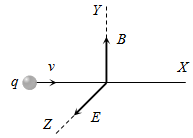
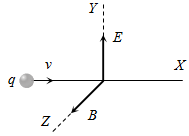
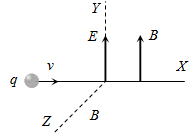
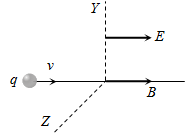
A particle of charge q and mass m is moving along the x -axis with a velocity v and enters a region of electric field E and magnetic field B as shown in figure below for which figure the net force on the charge may be zero
|
(a)
|
(b)
|
(c)
|
(d)
|
If T is the half life of a radioactive material, then the fraction that would remain after a time  is
is
|
(a) |
(b) |
(c) |
(d) |
Figure shows the electric lines of force emerging from a charged body. If the electric field at A and B are  and
and  respectively and if the displacement between A and B is r then

|
(a) |
(b) |
(c) |
(d) |