MCQ
A man is standing between two parallel cliffs and fires a gun. If he hears first and second echoes after $1.5 s$ and $3.5 s$ respectively, the distance between the cliffs is (Velocity of sound in air $=340 \mathrm{~ms}$ )
  • A
    $1190 \mathrm{~m}$
  • $850 \mathrm{~m}$
  • C
    $595 \mathrm{~m}$
  • D
    $510 \mathrm{~m}$

Answer

Correct option: B.
$850 \mathrm{~m}$

Need a full question paper?

Generate a complete, print-ready paper with questions like this in minutes — across 16+ boards, with answer keys.

Start Generating Free

Similar questions

In an $X$-ray tube electrons bombarding the target produce $X$-rays of minimum wavelength $1 \mathring A$. What must be the energy of bombarding electrons
The resistance of a discharge tube is
At what distance from the centre of the earth, the value of acceleration due to gravity $g$ will be half that on the surface ( $R=$ radius of earth)
A body [Pb.PET 2004$]$ rest with a constant acceleration of $5 m / s ^2$. Its instantaneous speed (in $m / s$ ) at the end of $10 sec$ is
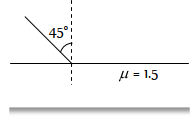
One side of a glass slab is silvered as shown. A ray of light is incident on the other side at angle of incidence $i=45^{\circ}$. Refractive index of glass is given as $1.5.$ The deviation of the ray of light from its initial path when it comes out of the slab isImage
A body dropped from a height $h$ with an initial speed zero, strikes the ground with a velocity $3 km / h$. Another body of same mass is dropped from the same height $h$ with an initial speed $-u^{\prime}=4 km / h$. Find the final velocity of second body with which it strikes the ground
The volume of air increases by $5 \%$ in its adiabatic expansion. The percentage decrease in its pressure will be
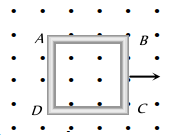
A metallic square loop $A B C D$ is moving in its own plane with velocity $v$ in a uniform magnetic field perpendicular to its plane as shown in the figure. An electric field is induced
Image
A wall is made up of two layers A and B. The thickness of the two layers is the same, but materials are different. The thermal conductivity of $\mathrm{A}$ is double than that of $\mathrm{B}$. In thermal equilibrium the temperature difference between the two ends is $36^{\circ} \mathrm{C}$. Then the difference of temperature at the two surfaces of $A$ will be
An object is placed $12 \mathrm{~cm}$ to the left of a converging lens of focal length $8 \mathrm{~cm}$. Another converging lens of $6 \mathrm{~cm}$ focal length is placed at a distance of $30 \mathrm{~cm}$ to the right of the first lens. The second lens will produce