MCQ
A moving charge produces :
  • A
    only electric field
  • B
    only magnetic field
  • both electric and magnetic field
  • D
    none of electric and magnetic field

Answer

Correct option: C.
both electric and magnetic field
C

Need a full question paper?

Generate a complete, print-ready paper with questions like this in minutes — across 16+ boards, with answer keys.
Start Generating Free

Similar questions

A plane electromagnetic wave of frequency $28 \ MHz$ travels in free space along the positive $x-$direction. At a particular point in space and time, electric field is $9.3\ V/m$ along positive $y-$direction. The magnetic field $($in $T)$ at that point is
Which of the following is the definition for magnetic meridian of Earth?
A radioactive substance has a half life of 60 minutes. After 3 hours, the fraction of atom that have decayed would be(a)12.5%(b) 87.5%(c) 8.5%  (d) 25.1%
       
The phenomenon of light passing through the object is called:
The resistance of an ideal ammeter is(a) Infinite(b) Very high(c) Small(d) Zero
       
If a charged particle moves unaccelerated in a region containing electric and magnetic fields,
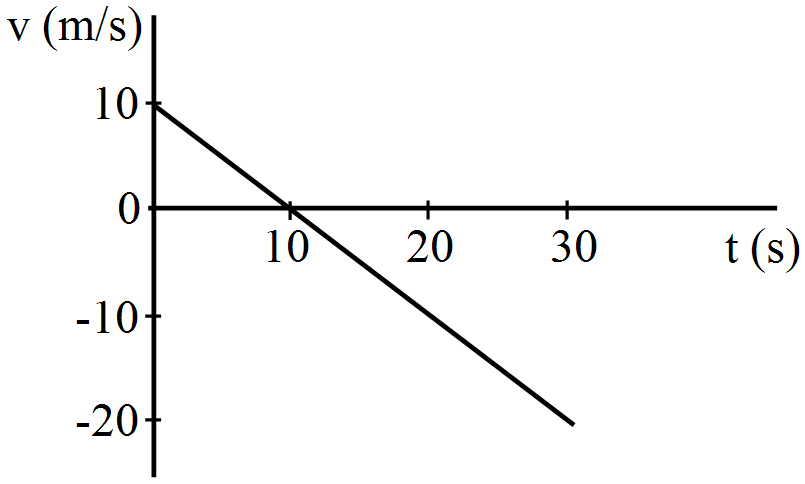
The velocity-time plot for a particle moving on a straight line is shown in the figure:
  1. The particle has a constant acceleration.
  2. The particle has never turned around.
  3. The particle has zero displacement.
  4. The average speed in the interval 0 to 10s is the same as the average speed in the interval 10s to 20s.
The optical path of a monochromatic light is same if it goes through 4.0 cm of glass or 4.5 cm of water.  If the refractive index of glass is 1.53, the refractive index of the water is(a) 1.30 (b) 1.36(c) 1.42(d) 1.46
       
Find out correct option which describe the Red shift of distant galaxies.
Assertion :   A transformer cannot work on dc supply.
Reason     : dc changes neither in magnitude nor in direction.(a) If both assertion and reason are true and the reason is the correct explanation of the assertion.(b) If both assertion and reason are true but reason is not the correct explanation of the assertion.(c) If assertion is true but reason is false.(d) If the assertion and reason both are false.