Question
A moving coil type of galvanometer is based upon the principle that:

Answer

  1. Coil carrying current experiences a torque in magnetic field.
Explanation:
In a moving coil type of galvanometer needle deflects when torque in magnetic field is non - zero.
So, a moving coil galvanometer is based upon the principle that coil carrying current experiences a torque in a magnetic field.

Need a full question paper?

Generate a complete, print-ready paper with questions like this in minutes — across 16+ boards, with answer keys.
Start Generating Free

Similar questions

Assertion  :  A transistor amplifier in common emitter configuration has a low input impedence.
Reason      : The base to emitter region is forward biased.(a) If both assertion and reason are true and the reason is the correct explanation of the assertion.(b) If both assertion and reason are true but reason is not the correct explanation of the assertion.(c) If assertion is true but reason is false.(d) If the assertion and reason both are false.


When cathode rays strike a metal target of high melting point with very high velocity, then(a) X-rays are produced(b) Ealpha-rays are produced(c) TV waves are produced(d) Ultrasonic waves are produced
   
   
The resistance of a discharge tube is(a) Ohmic(b) Non-ohmic(c) Both (a) and (b)(d) Zero
       
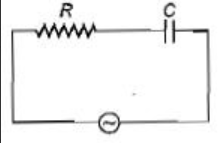
A 50 Hz, 20 V AC source is connected across R series circuit as shown in Figure If the voltage across R is 12V then voltage across capacitor is.
Image
Two nucleons are at a separation of $1\times 10^{-15} \mathrm{~m}.$ The net force between them is $F_1,$ if both are neutrons $,F_2$ if both are protons and $F_3$ if one is a proton and other is a neutron. In such a case
A metal surface of work function 1.07eV is irradiated with light of wavelength 332nm. The retarding potential required to stop the escape of photo electron is:
A long solenoid of length L has a mean diameter D. It has n layers of windings of N turns each. If it carries a current ‘i’ the magnetic field at its centre will be(a) Proportional to D(b) Inversely proportional to D(c) Independent of D(d) Proportional to L
   
   
In a compound microscope magnification will be large, if the focal length of the eye piece is(a) Large                                            (b) Smaller (c) Equal to that of objective(d) Less than that of objective
   
   
Electric field at a point varies as $r^0$ for
In case of the electromagnetic waves the angle between the electric and magnetic field vectors is.