Question
A parallel plate capacitor is charged. If the plates are pulled apart:

Answer

  1. The potential difference increases.
Explanation:
Capacitance of a parallel plate capacitor.
$\text{C}=ε0\text{AdC}=ε0\text{Ad}$
A parallel plate capacitor is charged (battery is disconnected) then the plates are pulled apart, the capacitance decreases while the charge remains the same.
$\because$ Potentialdifference = ChargeCapacitance∵Potentialdifference = ChargeCapacitance.
$\therefore$ potential difference increases.

Need a full question paper?

Generate a complete, print-ready paper with questions like this in minutes — across 16+ boards, with answer keys.
Start Generating Free

Similar questions

Assertion   :   In the process of photoelectric emission, all the emitted photoelectrons have the same kinetic energy.
Reason       : The photon transfers its whole energy to the electron of the atom in photoelectric effect.(a) If both assertion and reason are true and the reason is the correct explanation of the assertion.(b) If both assertion and reason are true but reason is not the correct explanation of the assertion.(c) If assertion is true but reason is false.(d) If assertion is false but reason is true.


A sonometer wire of length l vibrates in fundamental mode when excited by a tuning fork of frequency $416\ Hz$. If the length is doubled keeping other things same, the string will:
In the equation AB = C, A is the current density, C is the electric field, Then B is:
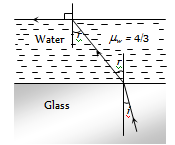
A ray of light is incident at the glass$–$water interface at an angle $i,$ it emerges finally parallel to the surface of water, then the value of $\mu_{\mathrm{g}}$ would be
A moving coil sensitive galvanometer gives at once much more deflection. To control its speed of deflection(a) A high resistance is to be connected across its terminals(b) A magnet should be placed near the coil(c) A small copper wire should be connected across its terminals(d) The body of galvanometer should be earthed


The mechanism of the heat produced in a conductor when an electric current flows through it, can be explained on the basis of(a) Viscosity(b) Friction(c) Free electron theory(d) Gauss's theorem
       
When light is refracted into a medium:
The equation E = pc is valid:
Water of volume $2$ litre in a container is heated with a coil of $1\ kW$ at $27 ^\circ C$. The lid of the container is open and energy dissipates at rate of $160\ J/s$. In how much time temperature will rise from $27^\circ C$ to $77^\circ C\ [$Given specific heat of water is $4.2 \ kJ/kg]$
Ideal $P - N$ junction can be used :