Question
A powerful magnet attracts:

Answer

  1. Only ferromagnetic materials and their ores.
Explanation:
There are only three types of materials diamagnetic, paramagnetic and ferromagnetic.
Diamagnetic materials will be repeled feebly.
Paramagnetic materials will be attracted feebly.
Only Ferromagnetic materials gets attracted very strongly.
As well as their ores also because they will also be ferromagnetic in nature.

Need a full question paper?

Generate a complete, print-ready paper with questions like this in minutes — across 16+ boards, with answer keys.
Start Generating Free

Similar questions

The permanent magnetic moment of the atoms of a material is zero. The material:
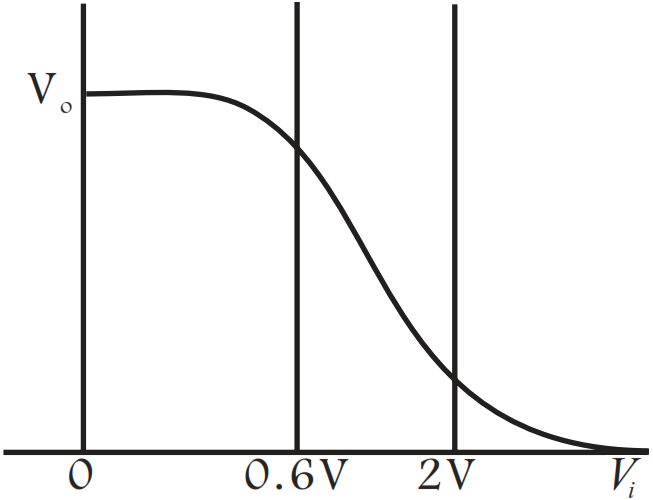
Figure shows the transfer characteristics of a base biased $CE$ transistor. Which of the following statements are true?
Continuous spectrum is not due to(a) Hydrogen flame(b) Electric bulb(c) Kerosene oil lamp flame(d) Candle flame
   
   
Which of the following is the definition for magnetic meridian of Earth?
The possible quantum number for $3d$ electron are
The maximum illumination on a screen at a distance of 2 m from a lamp is 25 lux. The value of total luminous flux emitted by the lamp is(a) 1256 lumen(b) 1600 lumen(c) 100 candela(d) 400 lumen
       
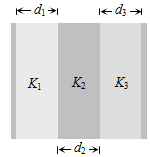
The expression for the capacity of the capacitor formed by compound dielectric placed between the plates of a parallel plate capacitor as shown in figure, will be $($Zarea of plate $= A)$
A bar magnet of magnetic moment $10^4 \mathrm{J} / \mathrm{T}$ is free to rotate in a horizontal plane. The work done in rotating the magnet slowly from a direction parallel to a horizontal magnetic field of $4 \times$ $10^{-5} T$ to a direction $60^{\circ}$ from the field will be
The purpose of cathode in cathode ray tube is ______:
In a laboratory experiment on emission from atomic hydrogen in a discharge tube, only a small number of lines are observed whereas a large number of lines are present in the hydrogen spectrum of a star. This is because in a laboratory:
  1. The amount of hydrogen taken is much smaller than that present in the star.
  2. The temperature of hydrogen is much smaller than that of the star.
  3. The pressure of hydrogen is much smaller than that of the star.
  4. The gravitational pull is much smaller than that in the star.