- The hole concentration increases.
- The hole concentration decreases.
- The electron concentration increases.
- The electron concentration decreases.
Explanation:
When a semiconductor is doped with a donor type such as arsenic or phosphorous, which has five valence electrons, the donor atom replaces the Si or Ge atom. As a result, four out of the five electrons of the donor atom form a covalent bond by sharing an electron with four atoms of silicon. However, the fifth electron is free to move. Also, due to the breaking up of covalent bonds at room temperature, equal number of electrons and holes are produced. Thus, the total number of holes in the n-type semiconductor is less compared to the number of free electrons.
Generate a complete, print-ready paper with questions like this in minutes — across 16+ boards, with answer keys.

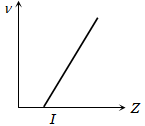
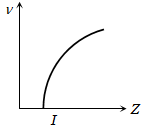
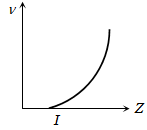
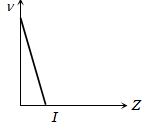
The graph that correctly represents the relation of frequency n of a particular characteristic X-ray with the atomic number Z of the material is
|
(a)
|
(b)
|
(c)
|
(d)
|
A potential difference of 2V is applied between the opposite faces of a Ge crystal plate of area 1 cm2 and thickness 0.5 mm. If the concentration of electrons in Ge is 2 × 10¹⁹/m3 and mobilities of electrons and holes are 0.36 and 0.14
respectively, then the current flowing through the plate will be
|
(a) 0.25 A |
(b) 0.45 A |
(c) 0.56 A |
(d) 0.64 A |
The magnetic potential at a point on the axial line of a bar magnet of dipole moment M is V. What is the magnetic potential due to a bar magnet of dipole moment
at the same point
| (a) 4V | (b) 2V |
(c) |
(d) |
A molecule with a dipole moment p is placed in an electric field of strength E. Initially the dipole is aligned parallel to the field. If the dipole is to be rotated to be anti-parallel to the field, the work required to be done by an external agency is
|
(a) – 2pE |
(b) – pE |
(c) pE |
(d) 2pE |
The magnetic moment of a circular coil carrying current is
|
(a) Directly proportional to the length of the wire in the coil |
|
(b) Inversely proportional to the length of the wire in the coil |
|
(c) Directly proportional to the square of the length of the wire in the coil |
|
(d) Inversely proportional to the square of the length of the wire in the coil |
For measurement of potential difference, potentiometer is preferred in comparison to voltmeter because
|
(a) Potentiometer is more sensitive than voltmeter |
|
(b) The resistance of potentiometer is less than voltmeter |
|
(c) Potentiometer is cheaper than voltmeter |
|
(d) Potentiometer does not take current from the circuit |