MCQ
A sequence is called ___________________ if $a_{n+1} = a_n + d$.
  • Arithmetic progression
  • B
    Geometric Progression
  • C
    Hharmonic Progression
  • D
    Special Progression

Answer

Correct option: A.
Arithmetic progression
  1. Arithmetic progression
Solution:
A sequence is called arithmetic progression if $a_{n+1} = a_n + d$ where $a_1$ is the first term and d is common difference.

Need a full question paper?

Generate a complete, print-ready paper with questions like this in minutes — across 16+ boards, with answer keys.

Start Generating Free

Similar questions

The point $\mathrm{P}(\mathrm{a}, \mathrm{b})$ undergoes the following three transformations successively:

$(a)$ reflection about the line $y=x$.

$(b)$ translation through $2$ units along the positive direction of $x$-axis.

$(c)$ rotation through angle $\frac{\pi}{4}$ about the origin in the anti-clockwise direction.

If the co-ordinates of the final position of the point $P$ are $\left(-\frac{1}{\sqrt{2}}, \frac{7}{\sqrt{2}}\right)$, then the value of $2 a+b$ is equal to:

Let $\quad S=\left\{z=x+i y: \frac{2 z-3 i}{4 z+2 i}\right.$ is a real number $\}$. Then which of the following is NOT correct?
A car will hold $2$ in the front seat and $1$ in the rear seat. If among $6$ persons $2$ can drive, then the number of ways in which the car can be filled is
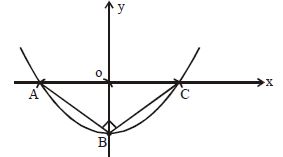
If graph of $y = ax^2 + bx + c$ as follows

$\Delta ABC$ is right angled osceles triangle with hypotenuse $AC = 4\sqrt 2\ units$ then minimum value of $ax^2 + bx + c$ is
Given that the equation ${z^2} + (p + iq)z + r + i\,s = 0,$ where $p,q,r,s$ are real and non-zero has a real root, then
The value of$\cos1^\circ\cos2^\circ\cos^\circ...\cos179$ is:
Statement $1$ : The only circle having radius $\sqrt {10} $ and a diameter along line $2x + y = 5$ is $x^2 + y^2 - 6x +2y = 0$.
Statement $2$ : $2x + y = 5$ is a normal to the circle $x^2 + y^2 -6x+2y = 0$.
If the sum of $1 + \frac{{1 + 2}}{2} + \frac{{1 + 2 + 3}}{3} + .....$ to $n$ terms is $S$, then $S$ is equal to
The co-ordinates of the vertices $A$ and $B$ of an isosceles triangle $ABC (AC = BC)$ are $(-2,3)$ and $(2,0)$ respectively. $A$ line parallel to $AB$ and having a $y$ -intercept equal  to $\frac{43}{12}$ passes through $C$, then the co-ordinates of $C$ are :-
$x = 1 + a + {a^2} + ....\infty \,(a < 1)$ $y = 1 + b + {b^2}.......\infty \,(b < 1)$ Then the value of $1 + ab + {a^2}{b^2} + ..........\infty $ is