MCQ
A seven digit number is formed using digits $3 ,3,4,4,4,5,5 .$ The probability, that number so formed is divisible by $2,$ is ..... .
  • A
    $\frac{6}{7}$
  • B
    $\frac{1}{7}$
  • $\frac{3}{7}$
  • D
    $\frac{4}{7}$

Answer

Correct option: C.
$\frac{3}{7}$
c
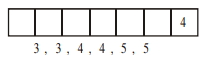
Digits $=3,3,4,4,4,5,5$

Total $7$ digit numbers $=\frac{7 !}{2 ! 2 ! 3 !}$

Number of $7$ digit number divisible by $2$ $\Rightarrow$ last digit $=4$

Now $7$ digit numbers which are divisible by $2$

$=\frac{6 !}{2 ! 2 ! 2 !}$

Required probability $=\frac{\frac{6 !}{2 ! 2 ! 2 !}}{\frac{7 !}{3 ! 2 ! 2 !}}=\frac{3}{7}$
Need a full question paper?

Generate a complete, print-ready paper with questions like this in minutes — across 16+ boards, with answer keys.

Start Generating Free

Similar questions

The equation of straight line passing through $( - a,\;0)$ and making the triangle with axes of area ‘$T$’ is
In a rectangle $A B C D$, the coordinates of $A$ and $B$ are $(1,2)$ and $(3,6)$ respectively and some diameter of the circumscribing circle of $A B C D$ has equation $2 x-y+4=0$. Then, the area of the rectangle is
The probability that a man will be alive in $20$ years is $\frac{3}{5}$ and the probability that his wife will be alive in $20$ years is $\frac{2}{3}$. Then the probability that at least one will be alive in $20$ years, is
The arithmetic mean and the geometric mean of two distinct 2-digit numbers $x$ and $y$ are two integers one of which can be obtained by reversing the digits of the other (in base 10 representation). Then, $x+y$ equals
Suppose $a , b$ denote the distinct real roots of the quadratic polynomial $x ^2+20 x -2020$ and suppose c,d denote the distinct complex roots of the quadratic polynomial $x^2-20 x+2020$. Then the value of

$a c(a-c)+a d(a-d)+b c(b-c)+b d(b-d)$ is

If the remainders of the polynomial $f(x)$ when divided by $x + 1,\,x - 2,\,x + 2$ are $6, 3, 15$ then the remainder of $f(x)$ when divided by $(x + 1)\,(x + 2)\,(x - 2)$ is
The term independent of $' x '$ in the expansion of ${\left( {9\,x\,\, - \,\,\frac{1}{{3\,\sqrt x }}} \right)^{18}}, x > 0$ , is $\alpha$ times the corresponding binomial co-efficient . Then $' \alpha '$ is :
Find the sum $1^2+2^2+3^2+……………+10^2$​​​​​​​.
At the point of intersection of the rectangular hyperbola $ xy = c^2 $ and the parabola $y^2 = 4ax$  tangents to the rectangular hyperbola and the parabola make an angle $ \theta $ and $ \phi $ respectively with the axis of $X$, then
If the mean of $4, 7, 2, 8, 6$ and $a$ is $7$, then the mean deviation from the median of these observations is