MCQ
A solid sphere of radius $R_1$ and volume charge density $P=\frac{P_0}{r}$ is enclosed by a hollow sphere of radius $R_2$ with negative surface charge destiny $\sigma_2$ such that the total charge in the system is zero $P _0$ is positive constant and $r$ is the distance from the centre of sphere the ratio $\frac{ R _2}{ R _1}$ is:
  • A
    $\frac{\sigma}{\text{p}_0}$
  • B
    $\sqrt{\frac{2\sigma}{\text{p}_0}}$
  • $\sqrt{\frac{\text{p}_0}{2\sigma}}$
  • D
    $\frac{\text{p}_0}{\sigma}$

Answer

Correct option: C.
$\sqrt{\frac{\text{p}_0}{2\sigma}}$

Need a full question paper?

Generate a complete, print-ready paper with questions like this in minutes — across 16+ boards, with answer keys.

Start Generating Free

Similar questions

How does the potential difference change with the effect of the dielectric when the battery remains connected across the capacitor?
A electron $(q = 1.6 \times 10^{-19}C)$ is moving at right angle to the uniform magnetic field $3.534 \times 10^{-5}T$. The time taken by the electron to complete a circular orbit is
In Bohr’s model electrons are revolving in a circular orbits around the nucleus called as:
The radius of fifth orbit of the $L ^{++}$is $.........\times 10^{-12}\,m$. Take : radius of hydrogen atom $=0.51 \mathring A$
In $SI$, Henry is the unit of
A zone plate of focal length 60 cm, behaves as a convex lens, If wavelength of incident light is $6000A^o$, then radius of first half period zone will be
Consider the following statements $\mathrm{A}$ and $\mathrm{B}$ and identify the correct answer:

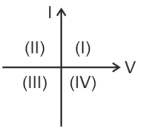
$A$. For a solar-cell, the $I-V$ characteristics lies in the $IV$ quadrant of the given graph.

$B$. In a reverse biased $p n$ junction diode, the current measured in $(\mu \mathrm{A})$, is due to majority charge carriers.

In Millikan's oil drop experiment an oil drop carrying a charge $Q$ is held stationary by a potential difference $2400\,V$ between the plates. To keep a drop of half the radius stationary the potential difference had to be made $600\,V$. What is the charge on the second drop
Boron rods in nuclear reactor are used as a
A radioactive sample is undergoing $\alpha$ decay. At any time $t_{1}$, its activity is $A$ and another time $t _{2}$, the activity is $\frac{ A }{5}$. What is the average life time for the sample?