MCQ
A source and an observer approach each other with same velocity $50 \mathrm{~m} / \mathrm{s}$. If the apparent frequency is $435 \mathrm{sec}$, then the real frequency is
  • $320 \mathrm{~sec}$
  • B
    $360 \mathrm{~sec}$
  • C
    $390 \mathrm{~sec}$
  • D
    $420 \mathrm{~sec}$

Answer

Correct option: A.
$320 \mathrm{~sec}$
$n^{\prime}=n\left[\frac{v+v_O}{v-v_S}\right] ;$ Here $v=332 \mathrm{~m} / \mathrm{s}$ and $v_0=v_s=50 \mathrm{~m} / \mathrm{s}$
$\Rightarrow 435=n\left[\frac{332+50}{332-50}\right] \Rightarrow n=321.12 \mathrm{sec}^{-1} \approx 320 \mathrm{sec}^1$

Need a full question paper?

Generate a complete, print-ready paper with questions like this in minutes — across 16+ boards, with answer keys.

Start Generating Free

Similar questions

A force of $5 N$, making an angle $\theta$ with the horizontal, acting on an object displaces it by $0.4 \mathrm{~m}$ along the horizontal direction. If the object gains kinetic energy of 1 , the horizontal component of the force is
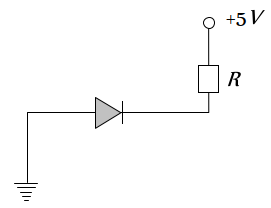
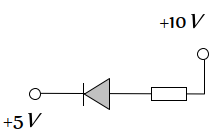
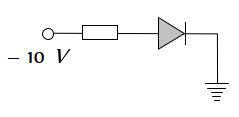
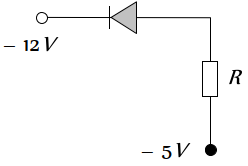
In the given figure, which of the diodes are forward biased ?

Image

Image

Image

Image

Image

Which one of the following quantities does not have the unit of force per unit area
The wavelength of light in two liquids ' $x$ ' and ' $y$ ' is $3500 \mathring A$ and $7000 \mathring A$, then the critical angle of $x$ relative to $y$ will be
A gun fires a bullet of mass $50 \mathrm{gm}$ with a velocity of $30 \mathrm{~m} \mathrm{sec}{ }^{-1}$.Because of this the gun is pushed back with a velocity of $1 \mathrm{~m} \mathrm{sec}{ }^{-1}$. The mass of the gun is
An object of mass $3 \mathrm{~m}$ splits into three equal fragments. Two fragments have velocities $\hat{v j}$ and $\hat{v i}$. The velocity of the third fragment is
$\alpha$ particle is revolving in radius $r$ with frequency $f$ then find value of magnetic dipole moment.
The temperature gradient in a rod of $0.5 \mathrm{~m}$ long is $80^{\circ} \mathrm{C} / \mathrm{m}$. If the temperature of hotter end of the rod is $30^{\circ} \mathrm{C}$, then the temperature of the cooler end is
The resolving power of a telescope whose lens has a diameter of $1.22\ m$ for a wavelength of $5000 \mathring A$ is
A system changes from the state $\left(P_1, V_1\right)$ to $\left(P_2 V_2\right)$ as shown in the figure. What is the work done by the system
Image