Question
A triangle ABC has been enlarged by scale factor m = 2.5 to the triangle A' B' C' Calculate : the length of C' A' if CA = 4 cm.

Answer

Given that ABC is a triangle that has been enlarged by scale factor m = 2.5 to the triangle A' B' C'
A' B' = 6cm
So, AB(2.5) = A' B'
$\Rightarrow$ AB(2.5) = 6
$\Rightarrow$ AB = 2.4 cm
If CA = 4cm.
So, CA(2.5) = C' A'
$\Rightarrow$ (4) (2.5) = C' A'
$\Rightarrow$ C' A' = 10cm

Need a full question paper?

Generate a complete, print-ready paper with questions like this in minutes — across 16+ boards, with answer keys.
Start Generating Free

Similar questions

Solve equation using factorisation method:
$\frac{6}{x}=1+x$
In the following figure line $APB$ meets the X-axis at $A,$ Y-axis at $B.$ P is the point $(4, -2)$ and $AP: PB = 1: 2.$ Write down the coordinates of $A$ and $B.$
A man invests Rs 8800 on buying shares of face value of rupees hundred each at a premium of 10%. If he earns Rs 1200 at the end of year as dividend, find :
(i) the number of shares he has in the company.
(ii) the dividend percentage per share.
The two similar triangles are equal in area. Prove that the triangles are congruent.
Cards marked with numbers 1, 2, 3 ……… 20 are well shuffled and a card is drawn at random. What is the probability that the number on the card is: divisible by 3
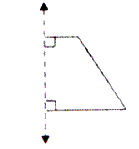
Complete the following figure, about the given lines of symmetry which are shown by dotted lines and name the figure thus obtained:
Use the factor theorem to determine that $x - 1$ is a factor of $x^6 - x^5 + x^4 - x^3 + x^2 - x + 1.$
Angle ABC = 60° and BA = BC = 8 cm. The mid points of BA and BC are M and N respectively. Draw and describe the locus of a point which is:
(i) Equidistant from BA and BC.
(ii) 4 cm from M
(iii) 4 cm from N
Mark the point P, which is 4 cm from both M and N, and equidistant from BA and BC. Join MP and NP, and describe the figure BMPN.
Two dice (each bearing numbers 1 to 6) are rolled together. Find the probability that the sum of the numbers on the upper-most faces of two dice is:  between 5 and 8 
Find the value of the discriminant in the following quadratic equation:
$2x^2 - 3x + 1 = O$