Question
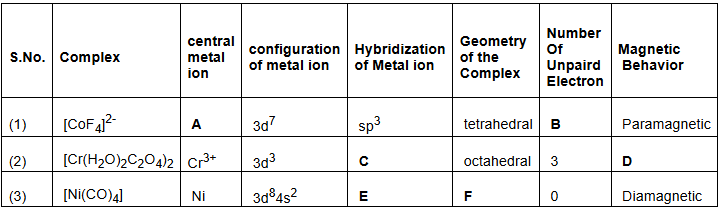
$(a).$ Using, Valence Bond Theory identify $A, B, C, D, E$ and $F$ in the following table:
Image
$(b).$ Write the ionic equations for the reaction of acidified $K_2Cr_2O_7$ with
$(i) \ H_2S$ and $(ii) \ FeSO_4$
Answer

$(a).A = Co^{2+}$
$B = 3$
$C = d^2sp^3$
$D =$ Paramagnetic
$E = sp^3$
$F =$ tetrahedral
$(b). (i) \ Cr_2O_7^{2-} + 8 H^+ + 3 H_2S \rightarrow 2 Cr^{3+} + 3S + 7 H_2O$
$(ii) \ Cr_2O_7^{2-} + 14 H^+ 6 Fe^{2+} 2 Cr³^+ + 6 Fe^{3+} + 7 H_2O$

Need a full question paper?

Generate a complete, print-ready paper with questions like this in minutes — across 16+ boards, with answer keys.

Start Generating Free

Similar questions

How will you obtain the following compounds from ethyl alcohol? Explain with equation :
(i) Diethyl ether
(ii) Iodoform
(iii) Ethyl acetate
(iv) Acetaldehyde
Giving an example for each describe the following reactions:
i. Hofmann bromamide reaction.
ii. Gattermann reaction.
iii. Coupling reaction.
Write down the IUPAC name for each of the following complexes and indicate the oxidation state, electronic configuration, and coordination number. Also, give stereochemistry and magnetic moment of the complex:
$a. \left.K \left[ Cr \left( H _2 O \right)_2\right\}\left( C _2 O _4\right)_2\right] \cdot 3 H _2 O$
$b. \left[ Co \left( NH _3\right)_5 Cl \right] Cl _2$
$c. CrCl _3( py )_3$
$d. Cs \left[ FeCl _4\right]$
$e. K _4\left[ Mn ( CN )_6\right]$
(a) What type of protein is present in keratin?
(b) Write the reactions showing the presence of following in the open structure of glucose:
   i. an aldehyde group
  ii. a primary alcohol
(c) What products would be formed when a nucleotide from DNA containing thymine is hydrolysed?
(d) Amino acids show amphoteric behaviour. Why?
(e) What are a Amino Acids? Give examples.
(f) a. How can you explain the absence of an aldehyde group in the pentaacetate of D-glucose?
    b. Name the bases present in RNA. Which one of these is not present in DNA?
(g) Which monosaccharide units are present in starch, cellulose and glycogen and which linkages link these units?
Explain the elimination reaction of haloalkanes.
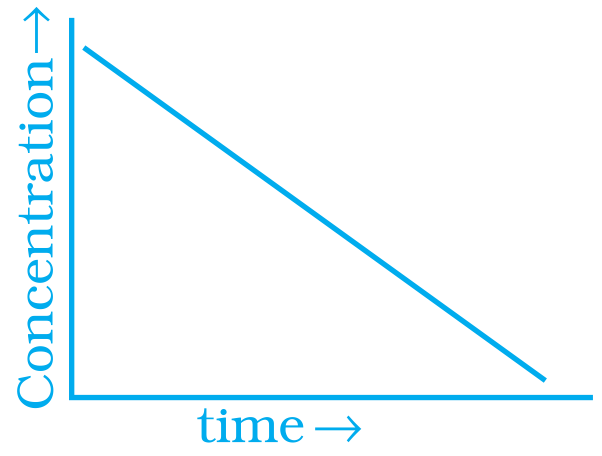
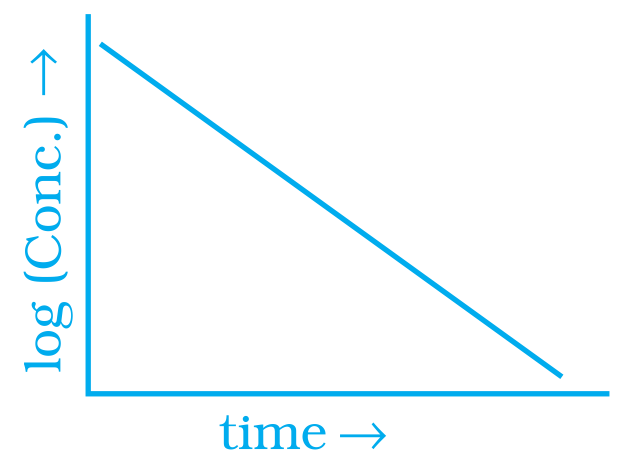
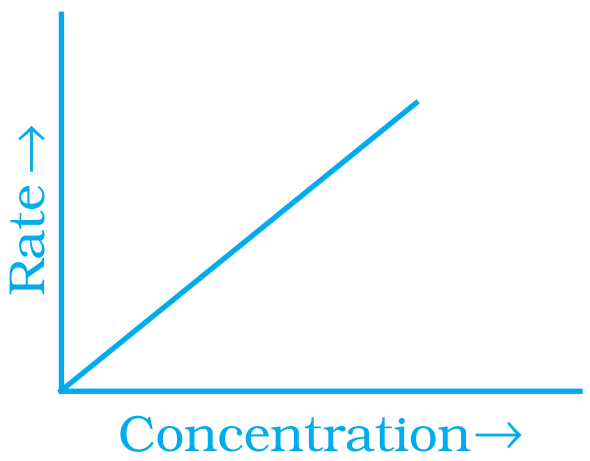
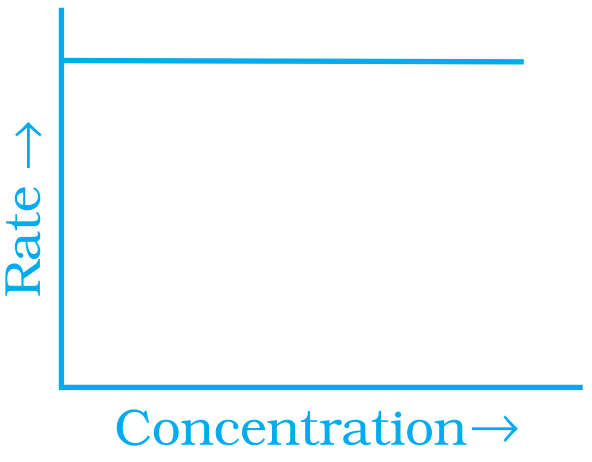
Match the graph given in Column I with the order of reaction given in Column II. More than one item in Column I may link to the same item of Column II.
 
Column I
 
Column II
(i)
 
 
(ii)
(a)
$I^{st}$ order
(iii)
(b)
Zero order
(iv)
   
Comment on the statement that elements of the first transition series possess many properties different from those of heavier transition elements.
  1. Complete the following chemical reaction equations:
i. $\text{MnO}_{4(aq)}^{-}+\text{C}_{2}\text{O}_{4(aq)}^{2-}+\text{H}^{+}_{(aq)}\rightarrow$

ii. $\text{Cr}_{2}\text{O}_{7(aq)}^{2-}+\text{Fe}^{2+}_{(aq)}+\text{H}_{(aq)}^{+}\rightarrow$
  1. Explain the following observations about the transition/inner transition elements:
  1. There is in general an increase in density of element from titanium (Z=22) to copper (Z=29).
  2. There occurs much more frequent metal-metal bonding in compounds of heavy transition elements (3rd series).
  3. The members in the actinoid series exhibit a larger number of oxidation states than the corresponding members in the lanthanoid series.
Specify the oxidation numbers of the metals in the following coordination entities:
i. $\left[ Co \left( H _2 O \right)( CN )( en )_2\right]^{2+}$
ii. $\left[ Pt ( Cl )_4\right]^{2-}$
iii. $K _3\left[ Fe ( CN )_6\right]$
iv. $\left[ Cr \left( NH _3\right)_3 Cl _3\right]$
$i. \text{IUPAC} $ Write structures of different isomeric amines corresponding to the molecular formula, $C_4H_{11}N.$
$ii.$ Write $ \text{IUPAC} $ names of all the isomers.
$iii.$ What type of isomerism is exhibited by different pairs of amines?