MCQ
A wave is reflected from a rigid support. The change in phase on reflection will be
  • A
    $\pi /4$
  • B
    $\pi /2$
  • $\pi$
  • D
    $2\pi $

Answer

Correct option: C.
$\pi$
c
(c)After reflection from rigid support, a wave suffers a phase change of $\pi$.

Need a full question paper?

Generate a complete, print-ready paper with questions like this in minutes — across 16+ boards, with answer keys.

Start Generating Free

Similar questions

Given below are two statements: One is labelled as Assertion $A$ and the other is labelled as Reason $R$.

Assertion $A$ : Product of Pressure $(P)$ and time $(t)$ has the same dimension as that of coefficient of viscosity.

Reason $R$ : Coefficient of viscosity $=\frac{\text { Force }}{\text { Velocity gradient }}$

Question : Choose the correct answer from the options given below 
A monatomic gas at pressure $P_1$ and volume $V_1$ is compressed adiabatically to ${\frac{1}{8}}^{th}$ of its original volume. What is the final pressure of the gas is ........ $P_1$?
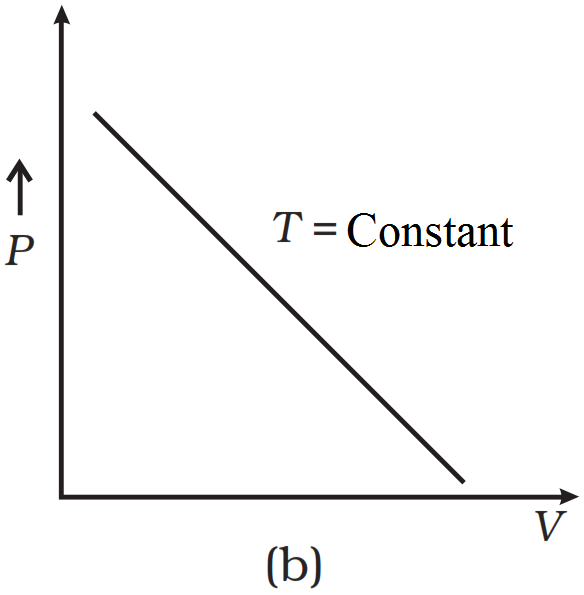
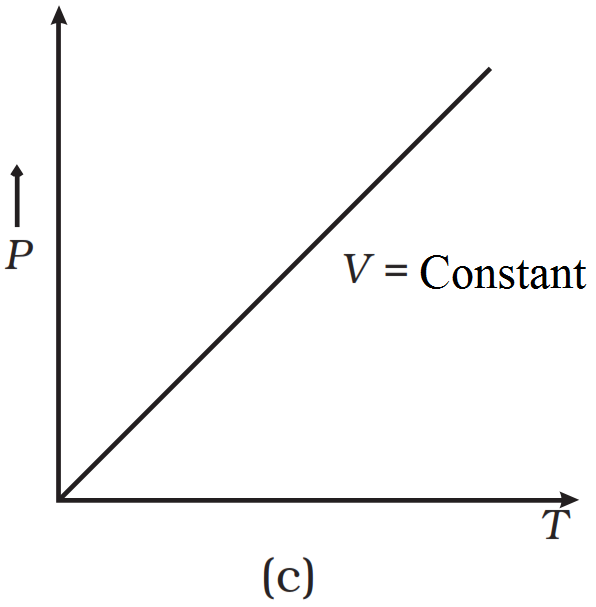
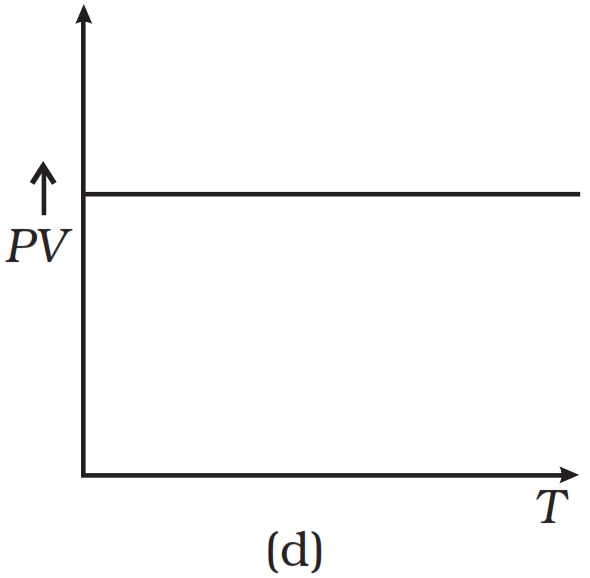
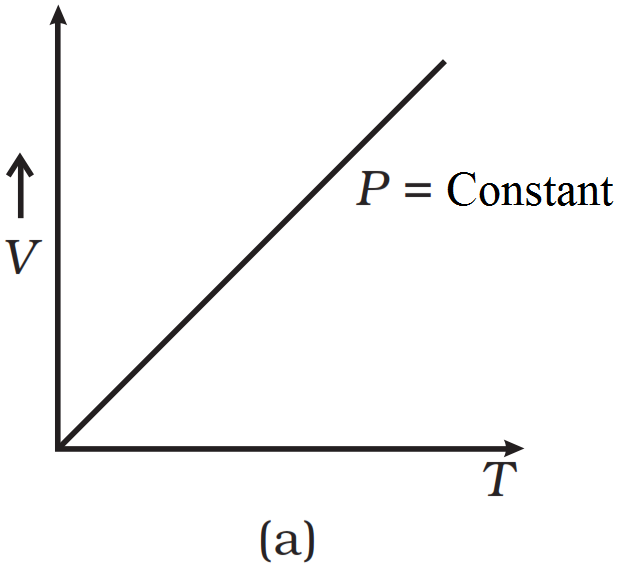
Which of the following diagrams (figure) depicts ideal gas behaviour?

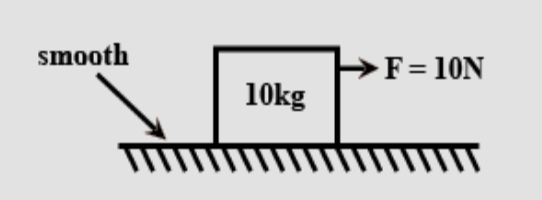
Force shown acts for 2 seconds. Find out work done by force F on 10kg in 3 seconds.
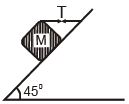
A block of mass $15 \,kg $ is resting on a rough inclined plane as shown in figure. The  block is tied up by a horizontal string which has tension of $50\,N$. The minimum  coefficient of friction between the surfaces of contact is $(g = 10\,m/s^2)$
An ideal gas undergoes a quasi static, reversible process in which its molar heat capacity $C$ remains constant. If during this process the relation of pressure $P$ and volume $V$ is given by $PV^n =$ constant, then n is given by (Here $C_p$ and $C_v$ are molar specific heat at constant pressure and constant volume, respectively) :
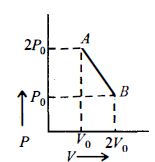
$n\, moles$ of an ideal gas undergo a process $A \to B$ as shown in the figure. Maximum temperature of the gas during the process is
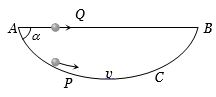
A particle $P$ is sliding down a frictionless hemispherical bowl. It passes the point $A$ at $t = 0$. At this instant of time, the horizontal component of its velocity is $v$. A bead $Q$ of the same mass as $P$ is ejected from $A$ at $t = 0$ along the horizontal string $AB$ (see figure) with the speed $v$. Friction between the bead and the string may be neglected. Let ${t_P}$ and ${t_Q}$ be the respective time taken by $P$ and $Q$ to reach the point $B$. Then
A body of mass $2.9\, kg$ is suspended from a string of length $2.5\, m$ and is at rest. A bullet of mass $100\, g$ , strikes the block horizontally with velocity $150 \,ms^{-1}$  and sticks to it. What is the maximum angle made by the string with the vertical after  the impact ? .............. $^o$ $(g = 10\, m/s^2) $
If the force constant of a wire is $K,$ the work done in increasing the length of the wire by $l$ is