MCQ
According to Werner's theory
  • Primary valency can be ionized
  • B
    Secondary valency can be ionized
  • C
    Primary and secondary valencies both cannot be ionized
  • D
    Only primary valency cannot be ionized

Answer

Correct option: A.
Primary valency can be ionized
a
It’s obvious.

Need a full question paper?

Generate a complete, print-ready paper with questions like this in minutes — across 16+ boards, with answer keys.

Start Generating Free

Similar questions

Incorrect statement regarding following reactions is

$Xe{{F}_{6}}\,\xrightarrow{+\,Excess\,\,{{H}_{2}}O}\,'X'\,+\,HF$

$Xe{{F}_{6}}\,\xrightarrow{+\,2\,\,{{H}_{2}}O}\,'Y'\,+\,HF$
Assertion : $B_2$ molecule is diamagnetic.
Reason : The highest occupied molecular orbital is of $\sigma $ type.
Select the odd one
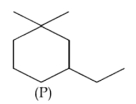
$IUPAC$ name of following compound $(\mathrm{P})$ is 
The bond angles in methane $(I),$ ammonia $(II)$ and trimethyl amine $(III)$ increase in the order :
The term $\left( { - \frac{{dc}}{{dt}}} \right)$ in a rate equation refers to the
$A$  is an aqueous acid; $B $ is an aqueous base. They are diluted separately, then
X ' is the number of acidic oxides among $\mathrm{VO}_{2}$,
$\mathrm{V}_{2} \mathrm{O}_{3}, \mathrm{CrO}_{3}, \mathrm{~V}_{2} \mathrm{O}_{5}$ and $\mathrm{Mn}_{2} \mathrm{O}_{7}$. The primary valency of cobalt in $\left[\mathrm{Co}\left(\mathrm{H}_{2} \mathrm{NCH}_{2} \mathrm{CH}_{2} \mathrm{NH}_{2}\right)_{3}\right]_{2}\left(\mathrm{SO}_{4}\right)_{3}$ is Y .
The value of $\mathrm{X}+\mathrm{Y}$ is :
Ferrous ion can be oxidised by which of the following ions ?
For the following two acid-base reactions, which statement is True ?

$(I){\mkern 1mu} C{H_3}CH_2^ - {\mkern 1mu}  + {\mkern 1mu} \mathop {C{H_3}N{H_2}}\limits_{p{K_a} = 35}  \rightleftharpoons \mathop {C{H_3}C{H_3}}\limits_{p{K_a} = 50}  + C{H_3}N{H^ - }$

$(II){\mkern 1mu} {F^ - }{\mkern 1mu}  + {\mkern 1mu} \mathop {{H_2}O}\limits_{p{K_a} = 15.7}  \rightleftharpoons \mathop {HF}\limits_{p{K_a} = 3.2}  + H{O^ - }$