MCQ
Activation energy of any reaction depends on
  • A
    Temperature
  • Nature of reactants
  • C
    Number of collisions per unit time
  • D
    Concentration of reactants

Answer

Correct option: B.
Nature of reactants
b
(b)The value of activation energy for a chemical reaction primarily dependent on the nature of reacting species.

Need a full question paper?

Generate a complete, print-ready paper with questions like this in minutes — across 16+ boards, with answer keys.

Start Generating Free

Similar questions

What is the standard reduction potential $(E^o)$ for $Fe^{3+} \to Fe$ ?  ............... $\mathrm{V}$

Given that :

$F{e^{2 + }} + 2{e^ - } \to Fe;$      ${E^o}_{F{e^{2 + }}/Fe} =  - 0.47\,V$

$F{e^{3 + }} + {e^ - } \to F{e^{2 + }};$   ${E^o}_{F{e^{3 + }}/F{e^{2 + }}} =  + 0.77\,V$

Which of the following molecule contains both ionic and covalent bond
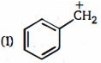
Which of the following options is the correct order of relative stabilities of cations $I, II$ and $III$ as written below (most stable first) ?

$(II)\,\,\,{{H}_{2}}C=CH-C{{H}_{2}}-\overset{+}{\mathop{C}}\,H-C{{H}_{3}}$

$(III)\,\,\,\begin{matrix}
   \,\,\,\,\,C{{H}_{3}}\,  \\
   |\,  \\
   {{H}_{3}}C-C-\overset{+}{\mathop{C}}\,{{H}_{2}}  \\
   |\,  \\
   \,\,\,C{{H}_{3}}  \\
\end{matrix}$
No. of atoms in one molecule of sulphur is
The correct code for stability of oxidation states for given cations is

$(i)$ $P{b^{2 + }} > P{b^{4 + }},T{l^ + } < T{l^{3 + }}$         $(ii)$ $Bi^{3+} < Sb^{3+} , Sn^{2+} < sn^{4+}$

$(iii)$ $P{b^{2 + }} > P{b^{4 + }},B{i^{3 + }} > B{i^{5 + }}$     $(iv)$ $T{l^{3 + }} < I{n^{3 + }},S{n^{2 + }} > S{n^{4 + }}$

$(v)$ $S{n^{2 + }} < P{b^{2 + }},S{n^{4 + }} > P{b^{4 + }}$     $(vi)$ $S{n^{2 + }} < P{b^{2 + }},S{n^{4 + }} < P{b^{4 + }}$
Incorrect statement for the use of indicators in acid-base titration is :
What is the dissociation constant for $NH_4OH$ if at a given temperature its $0.1\,N$ solution has $pH = 11.27$ and the ionic product of water is $7.1 \times 10^{-15}$ (antilog $0.73 = 5.37$ )
Which of the following is not a consequence of the Lanthanoid contraction?
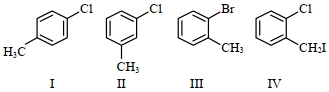
Among the following compounds $I-IV,$ which one forms a yellow precipitate on reacting sequentially with $(i)$ $\mathrm{NaOH}$ $(ii)$ dil. $\mathrm{HNO}_{3}$ $(iii)$ $\mathrm{AgNO}_{3}$ ?
If electron affinity of $Cl$ is $348\, kJ/mol$ then how much energy is released to convert  $1.0\, gm\, Cl$ in $Cl^-\, gas$ .....$kJ$