Question
Air pressure in a car tyre increases during driving. Explain.

Answer

Volume of a car tyre is fixed. During driving, temperature of the gas increases while its volume remains constant. So, according to Charle’s law, at constant volume (V),
Pressure (P) $\propto$ Temperature (T)
Therefore, pressure of gas increases

Need a full question paper?

Generate a complete, print-ready paper with questions like this in minutes — across 16+ boards, with answer keys.
Start Generating Free

Similar questions

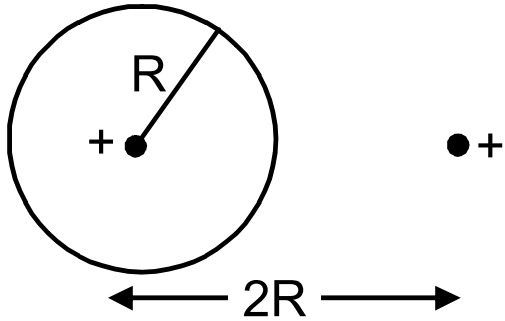
Find the flux of the electric field through a spherical surface of radius R due to a charge of 10-7C at the centre and another equal charge at a point 2R away from the centre.

Blood is flowing 0.1 cm long and $2 \times 10^{-4}$ cm radius in the tube. The pressure difference at the ends of this tube is 20 mm mercury. Coefficient of viscosity of blood is $0.5 \times 10^3 kg m ^{-1} sec ^{-1}$. Find the rate of blood flow in the tube.
A U-shaped wire is dipped in a soap solution, and removed. The thin soap film formed between the wire and the light slider supports a weight of $1.5 \times 10^{-2} N$ (which includes the small weight of the slider). The length of the slider is 30 cm . What is the surface tension of the film?
Find the maximum angular speed of the electron of a hydrogen atom in a stationary orbit.
A car weighing 1400kg is moving at a speed of 54km/h up a hill when the motor stops. If it is just able to reach the destination which is at a height of 10m above the point, calculate the work done against friction (negative of the work done by the friction).
The bottom of a ship is made heavy. Why?
A cylinder rolls on a horizontal plane surface. If the speed of the centre is 25m/s, what is the speed of the highest point?
A cylindrical jar of cross-sectional area 0.01m2 is filled with water to a height of 50cm (given figure). It carries a tight fitting piston of negligible mass. Calculate the pressure at the bottom of the jar when a mass of 5kg is placed on the piston.
An open organ pipe has a length of 5cm.
  1. Find the fundamental frequency of vibration of this pipe.
  2. What is the highest harmonic of such a tube that is in the audible range? Speed of sound in air is 340m/s and the audible range is 20-20,000Hz.
It is a common observation that rain clouds can be at about a kilometre altitude above the ground.
Estimate the time required to flatten the drop.