MCQ
Aluminium is obtained by
  • A
    Reducing $A{l_2}{O_3}$ with coke
  • Electrolysing $A{l_2}{O_3}$ dissolved in $N{a_3}Al{F_6}$
  • C
    Reducing $A{l_2}{O_3}$ with chromium
  • D
    Heating alumina and cryolite

Answer

Correct option: B.
Electrolysing $A{l_2}{O_3}$ dissolved in $N{a_3}Al{F_6}$
b
Aluminium is obtained by electrolising alumina dissolved in cryolite $\left( Na _3 AlF _6\right)$

$4 Na _3 AlF _6 \leftrightharpoons 12 Na ^{+}+4 Al ^{3+}+12 F ^{-}$

$4 Al ^{3+}+12 e ^{-} \rightarrow 4 Al \text { (at cathode) }$

$12 F ^{-} \rightarrow 6 F _2+12 e ^{-} \text {(at anode) }$

$2 Al _2 O _3+6 F _2 \rightarrow AlF _3+3 O _2$

Need a full question paper?

Generate a complete, print-ready paper with questions like this in minutes — across 16+ boards, with answer keys.
Start Generating Free

Similar questions

Which of the following metal does not show variable valency
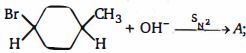
The product $A$ is
When zinc reacts with very dilute $HNO_3$, the oxidation state of nitrogen changes from
The reaction $2NO + Br_2 \rightarrow  2NOBr,$ follows the mechanism given below

$(I)$  $NO + Br_2 \rightleftharpoons  NOBr_2 $    ........ Fast

$(II)$  $NOBr_2 + NO \rightarrow 2NOBr$     ......... Slow

The overall order of this reaction is

The incorrect postulates of the Dalton's atomic theory are :

$(A)$ Atoms of different elements differ in mass.

$(B)$ Matter consists of divisible atoms.

$(C)$ Compounds are formed when atoms of different element combine in a fixed ratio.

$(D)$ All the atoms of given element have different properties including mass.

$(E)$ Chemical reactions involve reorganisation of atoms.

Choose the correct answer from the options given below :

The octahedral complex of a metal ion $M^{3+}$ with four monodentate ligands $L_1, L_2, L_3$ and $L_4$ absorb wave lengths in the region of red, green, yellow and blue, respectively. The increasing order of ligand strength of the four ligands is :
Kohlrausch's law states that at 
Which of the following configuration is correct for iron
Which one of the following compounds will be most reactive for $S_N1$ reactions :
$AB _{2}$ is $10 \%$ dissociated in water to $A ^{2+}$ and $B ^{-}$. The boiling point of a $10.0$ molal aqueous solution of $AB _{2}$ is ............  ${ }^{\circ} C$. (Round off to the Nearest Integer).

[Given : Molal elevation constant of water $K _{ b }=0.5\, \,K\, kg\, mol ^{-1}$ boiling point of pure water $\left.=100^{\circ} C \right]$