MCQ
Among the following the weakest base is
- A$C_6H_5CH_2NH_2$
- B$C_6H_5CH_2NHCH_3$
- C$NO_2CH_2NH_2$
- ✓$CH_3NHCHO$
$C_{6} H_{5} N H C H_{3}>C_{6} H_{5} C H_{2} N H_{2}>O_{2} N C H_{2} N H_{2}>C H_{3} N H C H O$
Generate a complete, print-ready paper with questions like this in minutes — across 16+ boards, with answer keys.
Ice $ \rightleftharpoons $ Water
Compounds $X$ and $Y $ are
$(i)\,\,(CH_3)_2CH-CH_2Br \xrightarrow{{{C_2}{H_5}OH}} (CH_3)_2CH-CH_2OC_2H_5 + HBr$
$(ii)\,\,(CH_3)_2CH-CH_2-Br \xrightarrow{{{C_2}{H_5}{O^- }}} (CH_3)_2CH-CH_2OC_2H_5 + Br^-$
The mechanisms of reaction $(i)$ and $(ii)$ are respectively
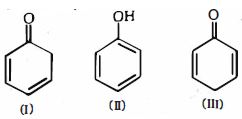
Statement $(I)$ : The oxidation state of an element in a particular compound is the charge acquired by its atom on the basis of electron gain enthalpy consideration from other atoms in the molecule.
Statement $(II)$ : $\mathrm{p} \pi-\mathrm{p} \pi$ bond formation is more prevalent in second period elements over other periods.
In the light of the above statements, choose the most appropriate answer from the options given below :