MCQ
Among the given cations, the most stable carbonium ion is
  • A
    sec-butyl
  • ter-butyl
  • C
    n-butyl
  • D
    None of these

Answer

Correct option: B.
ter-butyl
b
(b) $\underset{\,\,\,\,\,\,\,\,\,{{3}^{o}}}{\mathop{C{{H}_{3}}-\underset{C{{H}_{3}}}{\overset{\,\,C{{H}_{3}}}{\mathop{\underset{|\,\,\,\,\,}{\overset{|\,\,\,\,}{\mathop{{{C}^{+}}\,}}}\,}}}\,>}}\,\,\underset{\,\,\,\,\,\,\,\,\,\,\,2{}^\circ }{\mathop{C{{H}_{3}}-\underset{C{{H}_{3}}}{\mathop{\underset{|\,\,\,\,\,\,}{\mathop{CH{{_{{}}^{{}}}^{+}}}}\,}}\,>}}\,\,\underset{\begin{matrix}
   \begin{matrix}
   {}  \\
   \begin{matrix}
   {}  \\
   {{1}^{o}}  \\
\end{matrix}  \\
\end{matrix}  \\
   \,\,\,\,\,\,\,\,\,\,\,\,\,\,  \\
\end{matrix}}{\mathop{C{{H}_{3}}-CH{{_{2}^{{}}}^{+}}}}\,>\underset{\begin{matrix}
   {}  \\
   \begin{matrix}
   {}  \\
   \begin{smallmatrix} 
 \text{Methyl } \\ 
 \text{carbocation} 
\end{smallmatrix}  \\
\end{matrix}  \\
\end{matrix}}{\mathop{CH{{_{3}^{{}}}^{+}}\,\,\,\,\,\,\,}}\,$

The higher the number of alkaline groups, the greater the charge is the deflection and hence the more carbonium ion is permanent.

Need a full question paper?

Generate a complete, print-ready paper with questions like this in minutes — across 16+ boards, with answer keys.
Start Generating Free

Similar questions

The hybrid orbitals used by central atoms in $BeC{l_2},\,\,BC{l_3}$ and $CC{l_4}$ molecules are respectively
Phosgene is the common name for
$ $
If $5$ moles of $BaCl _2$ is mixed with $2$ moles of $Na _3 PO _4$, the maximum number of moles of $Ba _3\left( PO _4\right)_2$ formed is $............$(Nearest integer)
Enzymes in the living systems
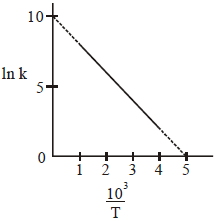
The rate constant $(k)$ of a reaction is measured at different temperatures $(T),$ and the data are plotted in the given figure. The activation energy of the reaction in $kJ\, mol ^{-1}$ is :

($R$ is gas constant)

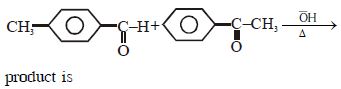
In the given reaction '$A$' is :- 

$(A)\xrightarrow{{\operatorname{Re}duction}}(B)\xrightarrow{{HN{O_2}}}{C_2}{H_5}OH$

Arrange the compounds in order of decreasing reactivity for nucleophilic additon reaction

$\mathop {\begin{array}{*{20}{c}}
  {O\,\,\,\,\,\,\,\,\,\,\,\,\,} \\ 
  {||\,\,\,\,\,\,\,\,\,\,\,\,} \\ 
  {C{H_3} - C - C{H_2} - Cl} 
\end{array}}\limits_{\left( I \right)} $    $\underset{(II)}{\mathop{\begin{matrix}
   \,\,\,\,\,\,\,\,\,\,\,\,\,\,\,\,\,\,O  \\
   \,\,\,\,\,\,\,\,\,\,\,\,\,\,\,\,\,\,\,\,\,||\,\,\,  \\
   Cl-C{{H}_{2}}-C-H  \\
\end{matrix}}}\,$

$\mathop {\begin{array}{*{20}{c}}
  O \\ 
  {||} \\ 
  {H - C - H} 
\end{array}}\limits_{\left( {III} \right)} $    $\mathop {\begin{array}{*{20}{c}}
  O \\ 
  {||} \\ 
  {{H_3}C - C - C{H_3}} 
\end{array}}\limits_{\left( {IV} \right)} $

Hofmann's hypobromite reaction affords a method of
The standard free energy change $\left(\Delta G ^{\circ}\right)$ for $50 \%$ dissociation of $N _{2} O _{4}$ into $NO _{2}$ at $27^{\circ} C$ and $1\, atm$ pressure is $- x\, J \,mol ^{-1}$. The value of $x$ is $......$ (Nearest Integer)

[Given $: R =8.31 \,J \,K ^{-1} \,mol ^{-1}, \log 1.33=0.1239$ $\ln 10=2.3]$