MCQ
Amongst the following compounds, the compound having the lowest boiling point is
- A
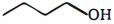
- B
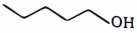
- ✓

- D
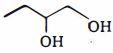
Generate a complete, print-ready paper with questions like this in minutes — across 16+ boards, with answer keys.
$\mathrm{A}+\mathrm{B} \rightarrow \mathrm{C}$ (Reaction 1$)$
$\mathrm{P} \rightarrow \mathrm{Q}$ (Reaction $2$)
The ratio of the half life of Reaction $1$ : Reaction $2$ is $5: 2$. If $t_1$ and $t_2$ represent the time taken to complete $2 / 3^{\text {dd }}$ and $4 / 5^{\text {dd }}$ of Reaction $1$ and
Reaction $2$, respectively, then the value of the ratio $\mathrm{t}_1: \mathrm{t}_2$ is . . . .$\times 10^{-1}$ (nearest integer).
[Given: $\log _{10}(3)=0.477$ and $\log _{10}(5)=0.699$ ]
Reason : On increasing dilution, degree of ionisation of weak electrolyte increases and molality of ions also increases.
$(A)$ Reduction of $HCHO$
$(B)$ Oxidation of $HCHO$
$(C)$ Reduction of $PhCHO$
$(D)$ Oxidation of $Ph-CHO$