Question
‘An accounting report is essential a report which must be able to fulfil certain basic criteria' Explain? List the various types of accounting reports.

Answer

When the collected data is processed and manipulated in a useful sense that can be understood by the users without any ambiguity, then it becomes information. When this relevant information is further summarised to meet a particular aim, it is called a report. The content and the design of the report depend upon the level of management to which it is to be submitted. The various decisions are to be made on the basis of this report. Irrespective of the content and design, every accounting report must fulfill the following criteria:
  1. Relevance.
  2. Timeliness.
  3. Accuracy.
  4. Completeness.
  5. Summarisation.
The various types of reports used in MIS can be broadly categorised as follows.
  1. Summary Reports: These are the reports that summarise all the activities of an organisation.
Example: Profit and Loss Account.
  1. Demand Reports: These are the reports that are prepared on the request and need of the management.
Example: Bad-Debts report.
  1. Customer/ Supplier Reports: These are the reports that are prepared as per the specifications of the management showing various aspects of the suppliers/customers.
Example: Report of Top 10 customers.
  1. Exception Reports: These are the reports that are prepared in accordance with some specific conditions or exceptions.
Example: Inventory Status Report.
  1. Responsibility Reports: These reports are prepared by the managers who are responsible for their respective departments.
Example: Purchase Manager submits a report regarding different aspects of purchase.

Need a full question paper?

Generate a complete, print-ready paper with questions like this in minutes — across 16+ boards, with answer keys.
Start Generating Free

Similar questions

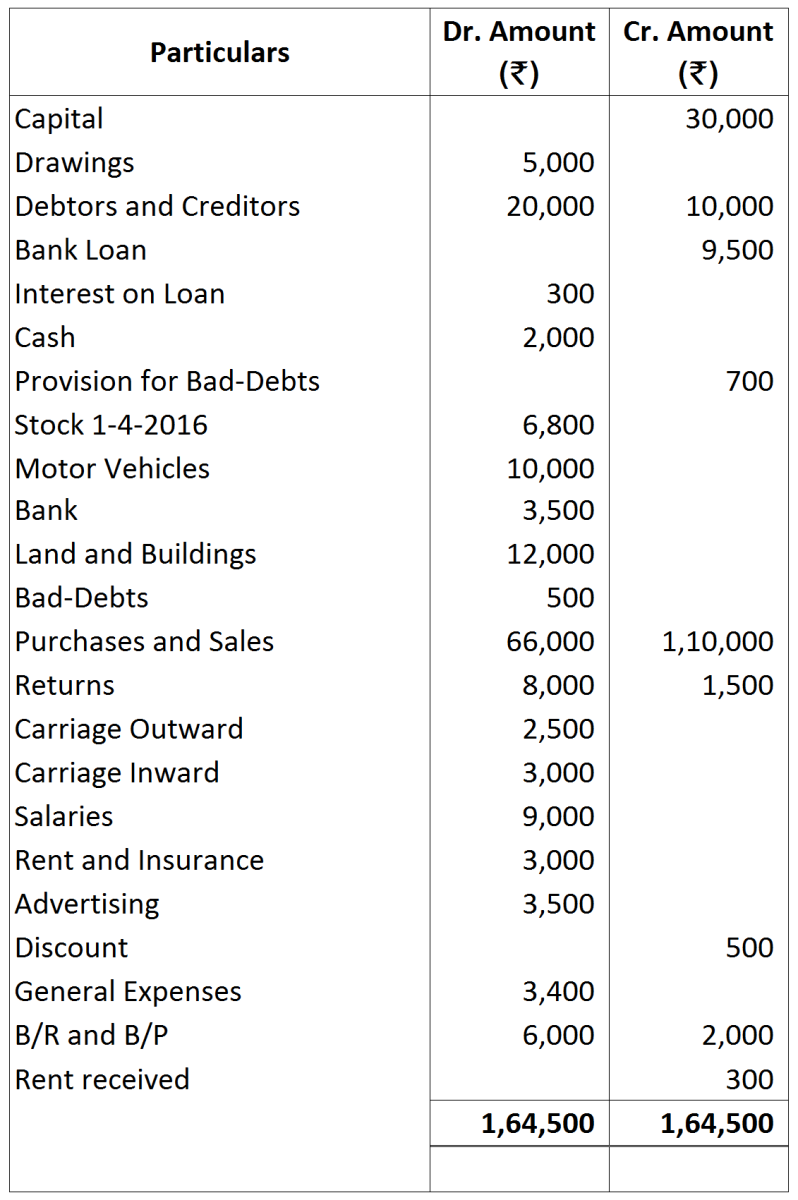
On 31st March, 2017 the following Trial Balance was extracted from the books of Mohan:

Prepare Trading and Profit & Loss Account for the year ended 31st March, 2017 and Balance Sheet as at that date after taking into account the following:
  1. Private purchases amounting to ₹ 4,000 have been debited to Purchases Account.
  2. Depreciate Land and Buildings at $2\frac{1}{2}\%$ and Motor Vehicles at 20%.
  3. Salaries outstanding ₹ 200.
  4. Prepaid Insurance ₹ 200.
  5. Provision for Doubtful Debts is to be maintained at 5% on Debtors.
  6. Stock on 31st March, 2017 was valued at ₹ 7,000.
Anand Mohan has kept incomplete books. From the following particulars, prepare his Final Accounts for the year ending $31^{st}$ March, $2019:$ Received from Debtors $₹\ 37,000;$ Fresh Capital brought in cash $₹\ 20,000;$ Commission Received $₹\ 2,800;$ Cash Sales $₹\ 95,000$. Paid to Creditors $₹\ 35,000$; Cash Purchases $₹\ 26,500$; Ornaments for his wife $₹\ 22,000;$ Wages $₹\ 18,800;$ Rent $₹\ 8,400;$ Salary $₹\ 12,000$. His Other Assets and Liabilities:
  1. Unpaid wages $₹\ 1,500.$
  2. Provide for Doubtful Debts at $5\%$ on Debtors.
Calculate the due dates of the bills in the following cases:
Date of Bill
Tenure (Period)
(i)
1st December, 2018
60 Days
(ii)
30th April, 2019
2 Months
(iii)
28th January, 2019
1 Month
(iv)
23rd November, 2018
2 Months
(v)
29th May, 2018
4 Months
Pass the rectifying entries for the following:
  1. Sales of goods ₹ 6,000 to Madan were recorded as ₹ 600 in the Sales Book.
  2. Credit purchase of goods from Mohan amounting to ₹ 2,000 has been wrongly passed through the Sales Book.
  3. Return of goods worth ₹ 500 by a customer was entered in ‘Purchases Return Book’.
  4. Cheque of ₹ 400 received from Ranjan was dishonoured and debited to the Discount Account.
  5. Bill for ₹ 820 received from Ramesh for repair of machinery was entered in the Purchases Book as ₹ 720.
Pass the rectification entries for the following transactions:
  1. Repairs to plant amounting to ₹ 2,000 had been charged to Plant and Machinery Account.
  2. Wages paid to the firm's workmen for making certain additions to machinery amounting to ₹ 1,340 were debited to Wages Account.
  3. A cheque for ₹ 7,500 received from Sandesh was credited to the account of Ramesh.
  4. Goods to the value of ₹ 7,000 returned by Prateek were included in closing stock, but no entry was made in the books.
  5. (v) Goods costing ₹ 5,000 were purchased for various members of the staff and the cost was included in 'Purchases'. A similar amount was deducted from the salaries of the staff members concerned and the net payments to them debited to Salaries Account.
  6. Credit purchase of old machinery from Sohan for ₹ 1,70,000 was entered in the Purchase Book as purchase from Mohan for ₹ 7,10,000. ₹ 30,000 paid as repairing charges on the reconditioning of a newly purchased second hand machinery were debited to General Expenses Account.
  7. Debit and Credit totals of discount columns in the Cash Book which come to ₹ 400 and ₹ 370 respectively have not been posted to Discount Accounts.
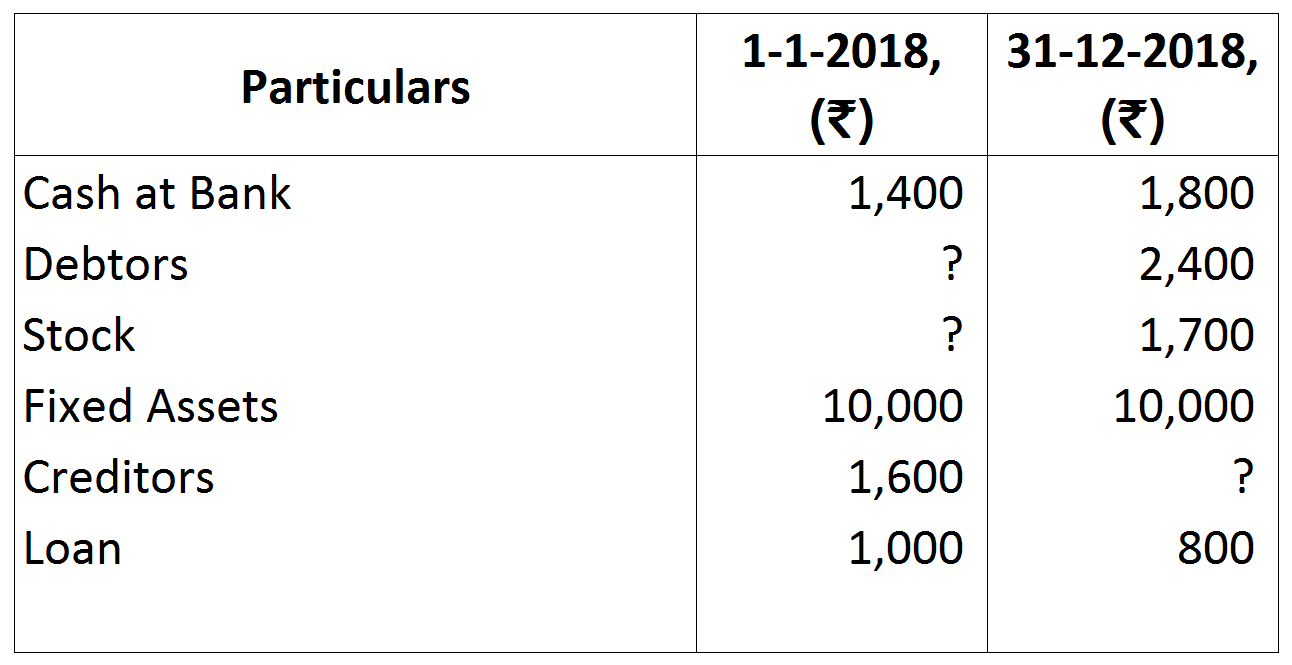
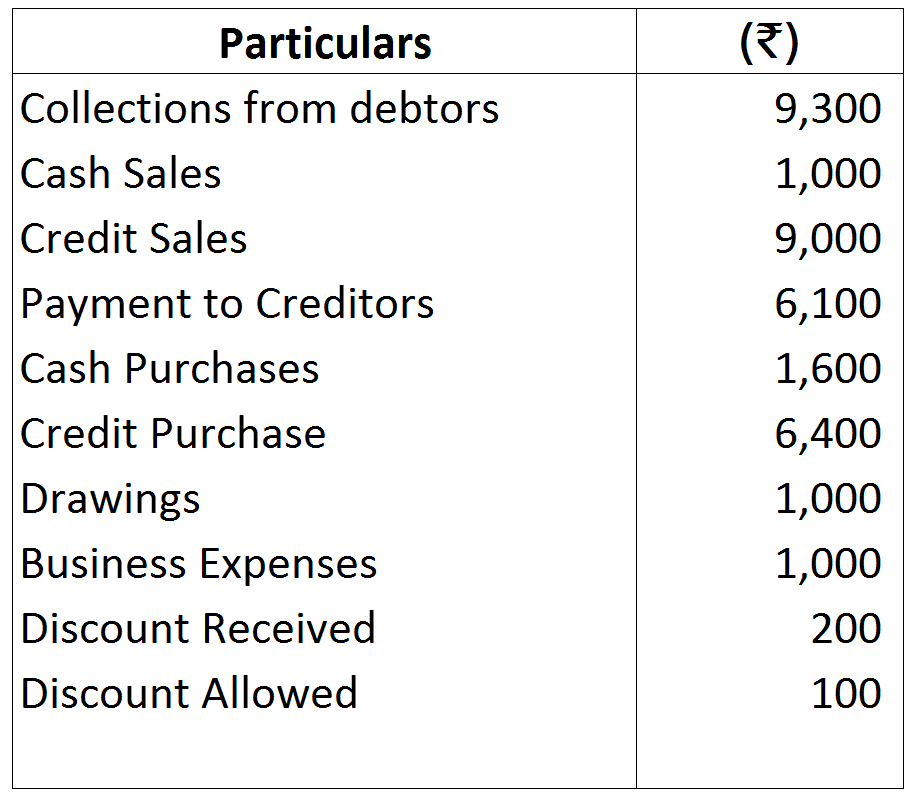
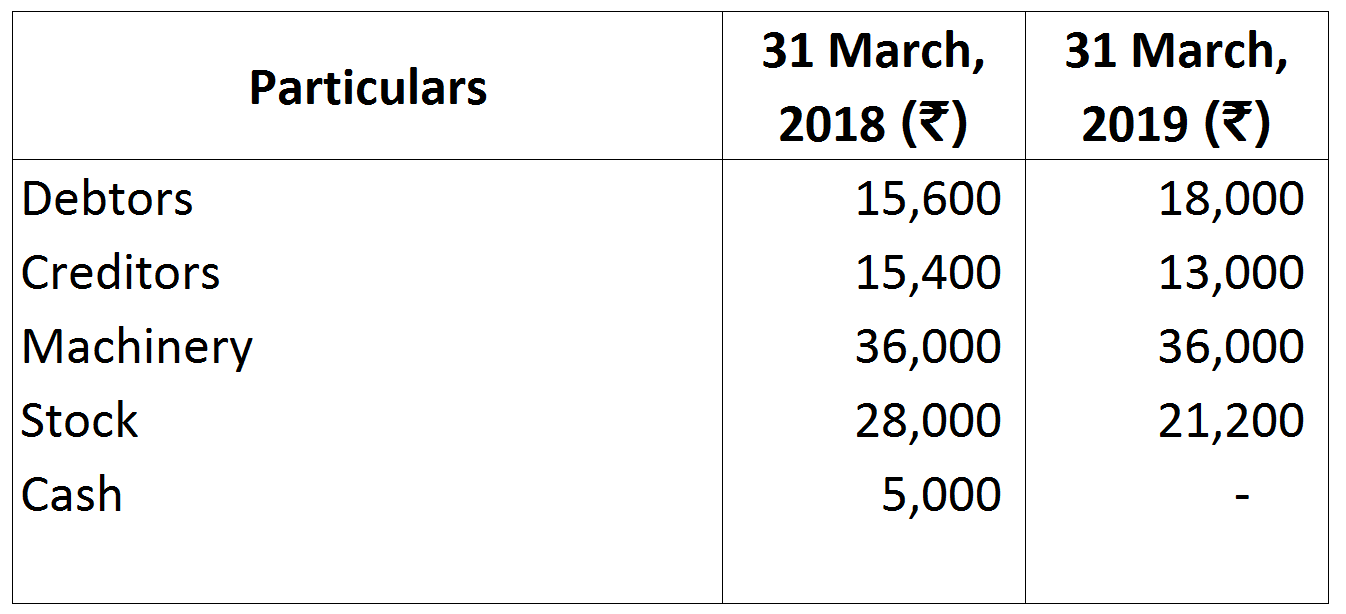
From the following records kept on single entry basis, prepare final accounts assuming that ratio of gross profit to sales is 25%: Transactions during the year 2018:
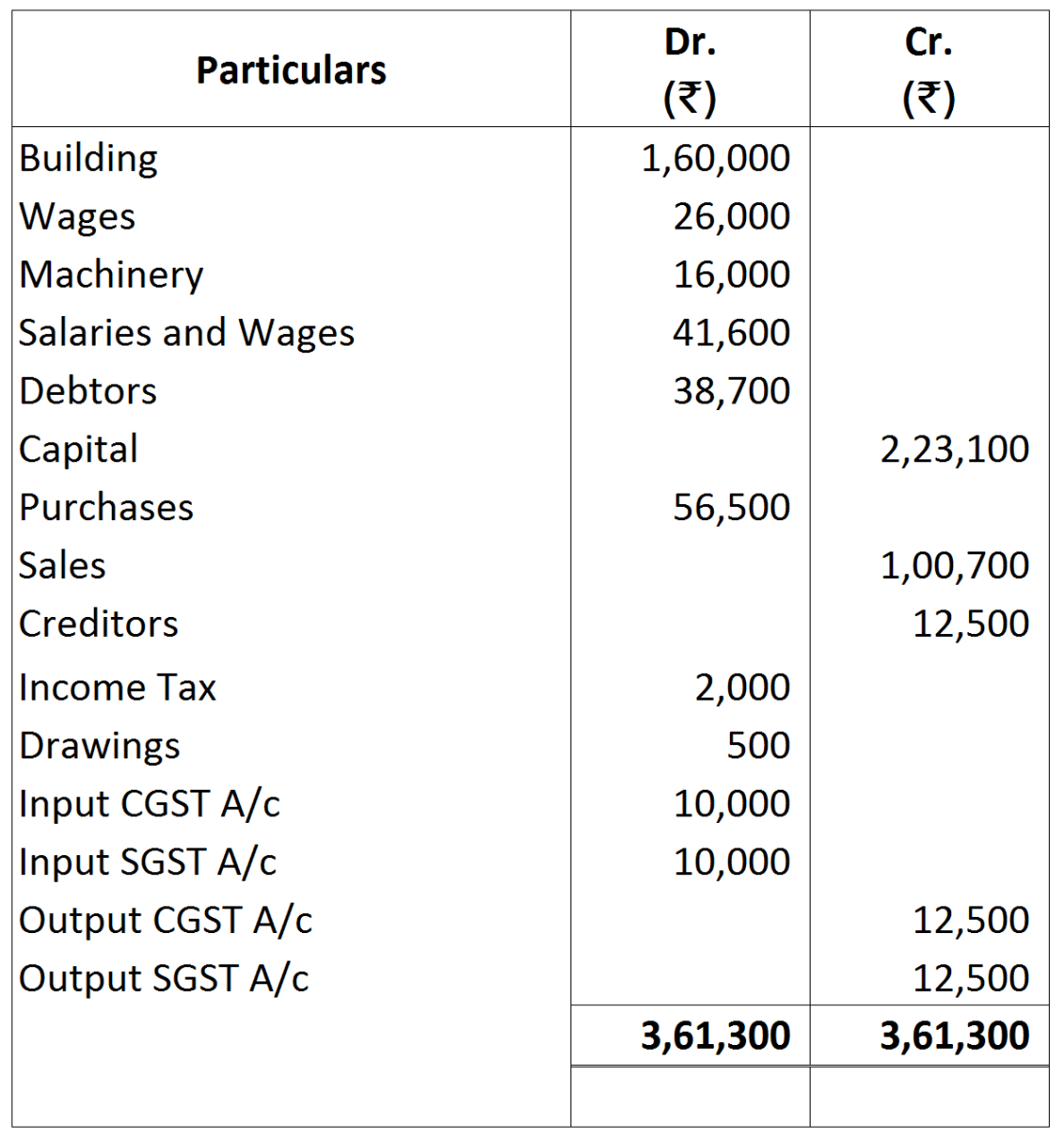
From the following Trial Balance and additional information of Mr. Gaurav, a proprietor, prepare Trading and Profit and Loss Account for the year ended $31^{st}$​​​​​​​ March, $2019$ and Balance Sheet as at that date:

Closing Stock at cost $₹ 1,00,000$ but its market value is $₹ 88,500$.
What integrity constraints are specified on database schema? Why is each considered important?
On 1st March, 2019, R accepted a Bill of Exchange of ₹ 20,000 from S payable 3 months after date in full settlement of his dues. On the same day S endorsed the Bill of Exchange to T together with a cheque for ₹ 5,000 in settlement of his debt to the latter. On 2nd March, 2019, T discounted the Bill of Exchange @ 6% p.a. with his bank. On maturity the Bill of Exchange was dishonoured.
Journalise the transactions in the books of R and T.
The Capital of Sh. Madhusudan on $1^{st}$ April, $2016$ was ₹ $5,00,000$ and on $31^{st}$ March, $2017$ was ₹ $4,80,000$. He has informed you that he withdrew from the business ₹ $8,000$ per month for his private use. He paid ₹ $20,000$ for his income-tax and the installment of the loan of his personal house at the rate of ₹ $15,000$ per month from the business. He had also sold his shares of Reliance Company costing ₹ $1,00,000$ at a profit of $20\%$ and invested half of this amount in the business. Calculate the profit or loss of the business.