MCQ
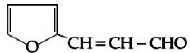
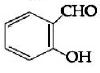
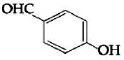
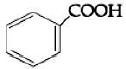
An aromatic compound $‘A‘$ having molecular formula $C_7H_6O_2$ on treating with aqueous ammonia and heating forms compound $‘B’$. The compound $‘B’$ on reaction with molecular bromine and potassium hydroxide provides compound $‘C’$ having molecular formula $C_6H_7N$. The structure of $‘A’$ is

  • B

  • C

  • D

Answer

Correct option: A.

a

Need a full question paper?

Generate a complete, print-ready paper with questions like this in minutes — across 16+ boards, with answer keys.

Start Generating Free

Similar questions

Reaction of phenol with chloroform in presence of dilute sodium hydroxide finally introduces which one of the following functional group ?
The first transition series metal 'M' has the highest enthalpy of atomisation in its series. One of its aquated ion $\left(\mathrm{M}^{\text {n+}}\right)$ exists in green colour. The nature of the oxide formed by the above $\mathrm{M}^{\mathrm{n}-}$ ion is :
For a reaction, $I^-+ OCl^-\to IO^-+ Cl^-$ is an aqueous medium, the rate of reaction is given by $\frac{{d[I{O^ - }]}}{{dt}} = K\frac{{[{I^ - }][OC{l^ - }]}}{{[O{H^ - }]}},$ The overall order of reaction is
Which of the following statements is not correct?
The first ionisation potential is maximum for
Identify the $D$ and $E$ in the following reaction

$\begin{array}{*{20}{c}}
  {C{H_3} - CH - CH - C{H_3}\xleftarrow[{ether}]{{Na}}R\,' - Br\,\xrightarrow{{Mg}}'D'\,\xrightarrow{{{H_2}O}}E} \\ 
  {\,\,\,\,|\,\,\,\,\,\,\,\,\,\,\,\,\,|\,\,\,\,\,\,\,\,\,\,\,\,\,\,\,\,\,\,\,\,\,\,\,\,\,\,\,\,\,\,\,\,\,\,\,\,\,\,\,\,\,\,\,\,\,\,\,\,\,\,\,\,\,\,\,\,\,\,\,\,\,\,\,\,\,\,\,\,\,\,\,\,\,\,\,\,\,\,\,\,\,\,\,\,\,\,\,} \\ 
  {\,\,\,\,\,C{H_3}\,\,\,\,\,C{H_3}\,\,\,\,\,\,\,\,\,\,\,\,\,\,\,\,\,\,\,\,\,\,\,\,\,\,\,\,\,\,\,\,\,\,\,\,\,\,\,\,\,\,\,\,\,\,\,\,\,\,\,\,\,\,\,\,\,\,\,\,\,\,\,\,\,\,\,\,\,\,\,\,\,\,\,\,\,\,\,\,\,\,\,} 
\end{array}$
Which compound is zero valent metal complex
According to Bronsted-Lowry concept an acid is a substance which
Major product $(B)$ of this reaction is
The $V-C$ distance in $V(CO)_6$ and $[V(CO)_6]^-$ are respectively (in $pm$)-