MCQ
An electron has a spin quantum number $+1/2$ and magnetic quantum number $-1.$ It cannot be present in :
- A$d-$ orbital
- B$f-$ orbital
- ✓$s-$ orbital
- D$p-$ orbital
For $l=0$, malue should be $0$ indicates $s$ orbital.
For $l=1$, malue should be $-1,0,+1$ indicates $s, p$ orbitals.
For $l=2$, malue should be $-2,-1,0,+1,+2$ indicates $s , p , d$ orbitals.
Fore $l=3$, malue should be $-3,-2,-1,0,+1,+2,+3$ indicates $s , p , d$ orbitals.
For $l$ value $-1$ the electron may present in $p$ or $d$ or $f$ orbital
Generate a complete, print-ready paper with questions like this in minutes — across 16+ boards, with answer keys.

$C{{H}_{3}}C{{H}_{2}}C{{H}_{2}}Br\xrightarrow{NaCN}$ $X\xrightarrow[heat]{{{H}_{3}}{{O}^{+}}}Y\xrightarrow[{{H}^{+}}]{C{{H}_{3}}C{{H}_{2}}OH}Z$
Kaushal's method : $\begin{array}{*{20}{c}}
{C{H_3} - CH - C{H_3}\xrightarrow{{KCl}}} \\
{|\,\,\,\,\,\,\,\,\,\,\,\,\,\,\,\,\,\,\,\,} \\
{OH\,\,\,\,\,\,\,\,\,\,\,\,\,\,\,\,\,\,}
\end{array}$
Preeti's method : $C{H_3} - CH = C{H_2}\xrightarrow{{C{l_2} + {H_2}O}}$
Raghav's method : $\begin{array}{*{20}{c}}
{C{H_3} - CH - C{H_3}\xrightarrow[{Pyridine}]{{SOC{l_2}}}} \\
{|\,\,\,\,\,\,\,\,\,\,\,\,\,\,\,\,\,\,\,\,\,\,\,\,\,\,\,} \\
{OH\,\,\,\,\,\,\,\,\,\,\,\,\,\,\,\,\,\,\,\,\,\,}
\end{array}$

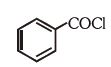
(image) $\frac{{{H_2}}}{{pd - BaS{O_4}}}\,'A'$
The product $'A'$ is