Question

An electron is moving in the north direction. It experiences a force in vertically upward direction. The magnetic field at the position of the electron is in the direction of

(a) East

(b) West

(c) North

(d) South

Answer

(a) East

Need a full question paper?

Generate a complete, print-ready paper with questions like this in minutes — across 16+ boards, with answer keys.

Start Generating Free

Similar questions

Two capacitors of equal capacity are first connected in parallel and then in series. The ratio of the total capacities in the two cases will be

(a) 2 : 1

(b) 1 : 2

(c) 4 : 1

(d) 1 : 4

A short magnet of moment 6.75 Am2 produces a neutral point on its axis. If horizontal component of earth's magnetic field is 5  , then the distance of the neutral point should be

(a) 10 cm

(b) 20 cm

(c) 30 cm

(d) 40 cm

Two coherent sources of different intensities send waves which interfere. The ratio of maximum intensity to the minimum intensity is 25. The intensities of the sources are in the ratio:

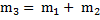
If in a nuclear fusion process the masses of the fusing nuclei be  and   and the mass of the resultant nucleus be , then

(a)  

(b)  

(c)  

(d)  

Check the incorrect statement: When a magnet is moved into a coil the strength of the current depends on:
Consider two observers moving with respect to each other at a speed v along a straight line. They observe a bock of mass m moving a distancel on a rough surface. The following quantities will be same as observed by the two observers.
  1. Kinetic energy of the block at time t.
  2. Work done by friction.
  3. Total work done on the block.
  4. Acceleration of the block.
What will be the nature of charge on the metal paper clip of electroscope when a negatively charged body is brought in contact with it?
Two equal masses are attached to the two ends of a spring of spring constant k. The masses are pulled out symmetrically to stretch the spring by a length x over its natural length. The work done by the spring on each mass is:

  1. $\frac{1}{2}\text{kx}^2$

  2. $-\frac{1}{2}\text{kx}^2$

  3. $\frac{1}{4}\text{kx}^2$

  4. $-\frac{1}{4}\text{kx}^2$

X-rays of wavelength 0.1 Å allowed to fall on a metal get scattered. The wavelength of scattered radiation is 0.111 Å. If h = 6.624 × 10⁻³⁴ J-s and m0 = 9 × 10–31 kg, then the direction of the scattered photons will be

(a) cos–1 (0.547)

(b) cos–1 (0.4484)

(c) cos–1 (0.5)

(d) cos–1 (0.3)

A manufacturer uses a concave lens instead of a convex lens in a magnifying glass by mistake. What will be the effect on the working of the lens?