Question

An optically active compound

(a) Rotates the plane polarised light

(b) Changing the direction of polarised light

(c) Do not allow plane polarised light to pass through

(d) None of the above

Answer

(a) Rotates the plane polarised light

Need a full question paper?

Generate a complete, print-ready paper with questions like this in minutes — across 16+ boards, with answer keys.

Start Generating Free

Similar questions

A magnetic field can be produced by:

For a substance the average life for a-emission is 1620 years and for b emission is 405 years. After how much time the 1/4 of the material remains after a and b emission

(a) 1500 years

(b) 300 years

(c) 449 years

(d) 810 years

A beam of electrons and protons move parallel to each other in the same direction, then they

(a) Attract each other

(b) Repel each other

(c) No relation  

(d) Neither attract nor repel

If a 2 kW boiler is used everyday for 1 hour, then electrical energy consumed by boiler in thirty days is

(a) 15 unit

(b) 60 unit

(c) 120 unit

(d) 240 unit

How many meters of a thin wire are required to design a solenoid of length 1m and L = 1mH? Assume cross-sectional diameter is very small.
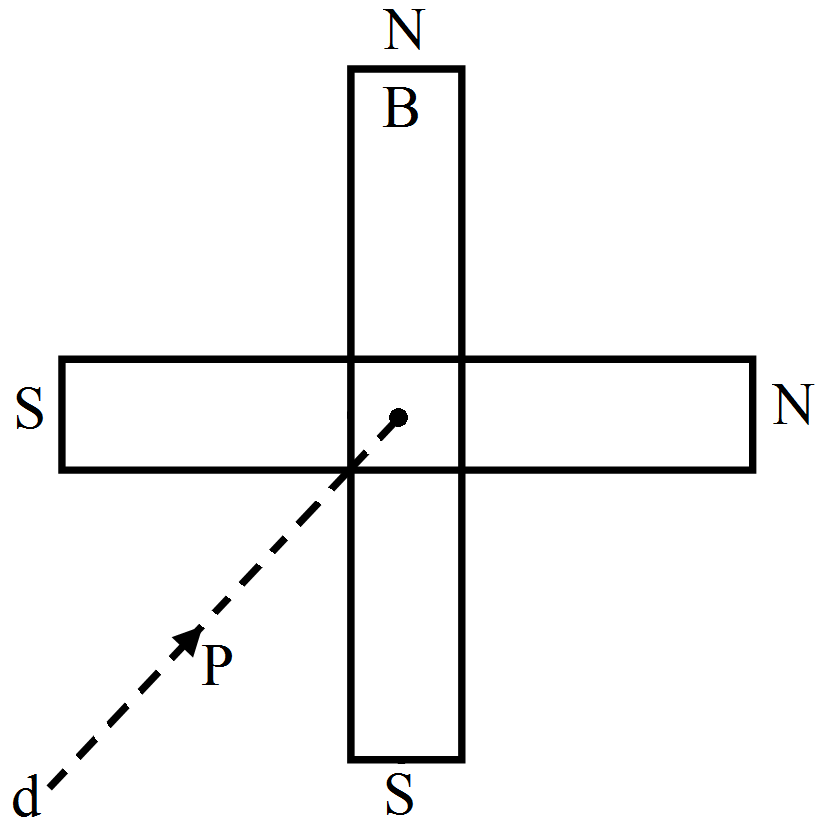
Two short magnets of equal dipole moments M are fastened perpendicularly at their centre (figure). The magnitude of the magnetic field at a distance d from the centre on the bisector of the right angle is:

A body has – 80 micro coulomb of charge. Number of additional electrons in it will be

(a) 8  

(b) 80  

(c) 5  

(d) 1.28  

Which one of the following is the primary effect of UV radiation caused due to depletion of ozone layer?

The magnetic flux linked with a circuit of resistance 100 ohm increases from 10 to 60 webers. The amount of induced charge that flows in the circuit is (in coulomb)

(a) 0.5

(b) 5

(c) 50       

(d) 100

Faraday's laws are consequence of conservation of

(a) Energy

(b) Energy and magnetic field

(c) Charge

(d) Magnetic field