Question
Answer the following questions: When viewing through a compound microscope, our eyes should be positioned not on the eyepiece but a short distance away from it for best viewing. Why? How much should be that short distance between the eye and eyepiece?

Answer

The image of the objective of the eyepiece is called exit aperture. All the rays coming from the object pass through the exit aperture after refraction from the objective. Therefore, this is an ideal condition for seeing with our eyes. If we keep our eyes too close to the eyepiece, the eyepiece will not be able to receive much light and the area of vision will also reduce. If we place our eyes on the exit aperture and the area of the pupil of our eye is greater than or equal to the area of the exit aperture, then our eyes will capture all the rays refracted from the objective. The exact location of the aperture generally depends on the distance between the objective and the eyepiece. When we look through a microscope by placing our eye on one end of it, the ideal distance between the eye and the eyepiece is inherent in the design of the instrument.
Need a full question paper?

Generate a complete, print-ready paper with questions like this in minutes — across 16+ boards, with answer keys.

Start Generating Free

Similar questions

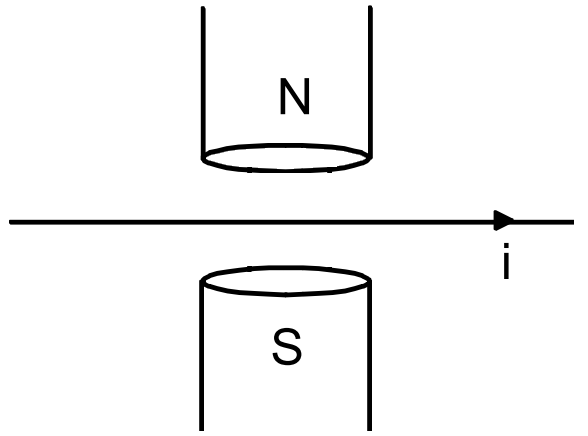
A magnetic field of strength 1.0T is produced by a strong electromagnet in a cylindrical region of radius 4.0cm, as shown in the figure. A wire, carrying a current of 2.0A, is placed perpendicular to and intersecting the axis of the cylindrical region. Find the magnitude of the force acting on the wire.
How many time constants will elapse before the power delivered by a battery drops to half of its maximum value in an RC circuit?
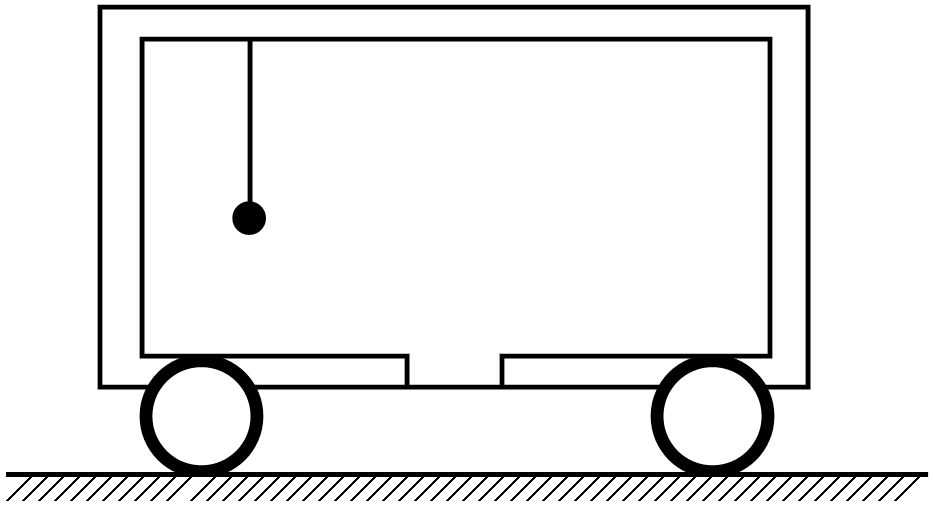
A cart of mass M is at rest on a frictionless horizontal surface and a pendulum bob of mass m hangs from the roof of the cart. The string breaks, the bob falls on the floor, makes several collisions on the floor and finally lands up in a small slot made in the floor. The horizontal distance between the string and the slot is L. Find the displacement of the cart during this process.
Visible light has wavelengths in the range of 400nm to 780nm. Calculate the range of energy of the photons of visible light.
A capacitor is connected to an alternating-current source. Is there a magnetic field between the plates?
A charge $Q$ is uniformly distributed over a rod of length l. Consider a hypothetical cube of edge l with the centre of the cube at one end of the rod. Find the minimum possible flux of the electric field through the entire surface of the cube.
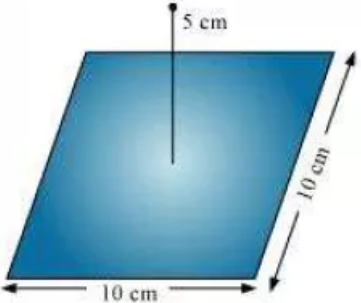
A point charge $+10\  \mu\ C$ is a distance $5\ cm$ directly above the centre of a square of side $10\ cm,$ as shown in Fig. $1.34.$ What is the magnitude of the electric flux through the square?
$($Hint: Think of the square as one face of a cube with edge $10\ cm.)$
Consider a uniform electric field $E = 3 \times 10^3 î N/C$.
  1. What is the flux of this field through a square of $10 \ cm$ on a side whose plane is parallel to the $yz$ plane?
  2. What is the flux through the same square if the normal to its plane makes a $60^\circ $ angle with the $x-$ axis ?
A small pin fixed on a table top is viewed from above a distance of 50 cm. By what distance would the pin appear to be raised if it is viewed from the same point through a 15 cm thick glass slab held parallel to the table? Refractive index of glass = 1.5. Does the answer depend on the location of the slab?
How many time constants will elapse before the charge on a capacitors falls to 0.1% of its maximum value in a discharging RC circuit?