Question
Armature current in dc motor will be maximum when(a) Motor has acquired maximum speed(b) Motor has acquired intermediate speed(c) Motor has just started moving(d) Motor is switched off


Answer

(c) Motor has just started moving

Need a full question paper?

Generate a complete, print-ready paper with questions like this in minutes — across 16+ boards, with answer keys.
Start Generating Free

Similar questions

L, C and R represent the physical quantities inductance, capacitance and resistance respectively. Which of the following combinations have dimensions of frequency?
  1. $\frac{1}{\text{RC}}$
  2. $\frac{\text{R}}{\text{L}}$
  3. $\frac{1}{\sqrt{\text{LC}}}$
  4. $\text{C}/\text{L}$
Assertion  : Radioactive nuclei emit $\beta^{-1}$  particles.
Reason      : Electrons exist inside the nucleus.
Atomic mass of an element is:
If the binding energy per nucleon for $_3​Li^7$ is $5.6\ MeV,$ the total binding energy of a lithium nucleus is?
The $emf$ of a thermocouple, one junction of which is kept at $0^{\circ} \mathrm{C}$, is given by $\mathrm{e}=\mathrm{at}+\mathrm{bt}^2$ the Peltier co$-$efficient will be
Capacitiors are used in electrical circuits where appliances need more:
Coulomb’s force between two stationery charges is also:
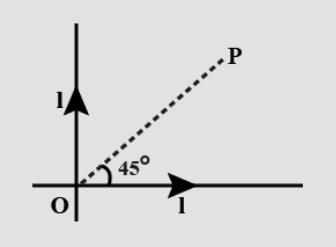
Two infinite long wires, each carrying current I, are lying along x - axis and y - axis, respectively. A charged particle, having a charge q and mass m, is projected with a velocity u along the straight line OP. The path of the particle is (neglect gravity) a:
An electric dipole is placed in an electric field generated by a point charge(a) The net electric force on the dipole must be zero(b) The net electric force on the dipole may be zero(c) The torque on the dipole due to the field must be zero(d) The torque on the dipole due to the field may be zero


A body is rotating nonuniformity about a vertical axis fixed in an inertial frame. The resultant force on a particle of the body not on the axis is:
  1. Vertical.
  2. Horizontal and skew with the axis.
  3. Horizontal and intersecting the axis.
  4. None of these.