MCQ
Assertion (A): 232.508 can be written as $2.32508 \times 10^2$ in scientific notation.
Reason (R): While writing $2.32508 \times 10^2$, the decimal had to be moved to the left by two places and the same is the exponent (2) of 10 in the scientific notation.
  • Both A and R are true and R is the correct explanation of A.
  • B
    Both A and R are true but R is not the correct explanation of A.
  • C
    A is true but R is false.
  • D
    Both A and R are false.

Answer

Correct option: A.
Both A and R are true and R is the correct explanation of A.
(a) Both A and R are true and R is the correct explanation of A .
Explanation: 232.508 can be written as $2.32508 \times 10^2$ in scientific notation. While writing it, the decimal had to be moved to the left by two places and the same is the exponent (2) of 10 in the scientific notation.

Need a full question paper?

Generate a complete, print-ready paper with questions like this in minutes — across 16+ boards, with answer keys.

Start Generating Free

Similar questions

Note : In the following question a statement of Assertion $(A)$ followed by a statement of Reason $(R)$ is given. Choose the correct option out of the choices given below:
Assertion $(A)$ : Excessive use of chlorinated synthetic pesticides causes soil and water pollution.
Reason $(R)$ : Such pesticides are non-biodegradable.
Note : In the following questions a statement of assertion $(A)$ followed by a statement of reason $(R)$ is given. Choose the correct option out of the choices given below each question.
Assertion $(A)$ : In the reaction between potassium permanganate and potassium iodide, permanganate ions act as oxidising agent.
Reason $(R)$ : Oxidation state of manganese changes from $+2$ to $+7$ during the reaction.
Assertion (A): Each side of a cube is measured to be 7.203 m . What is the volume of the cube to appropriate significant figure $373.7 m^3$.
Reason (R): The mass of one mole of a substance in grams is called its average atomic mass.
Assertion: A spectral line will be seen for a $2 p_x \rightarrow 2 p_y$ transition.
Reason: Energy is released in the form of waves of light when the electron drops from $2 p_{ v }$ to 2 p orbital.
Note : In the following questions a statement of assertion $(A)$ followed by a statement of reason $(R)$ is given. Choose the correct option out of the choices given below each question.
Assertion $(A)$ : Among halogens fluorine is the best oxidant.
Reason $(R)$ : Fluorine is the most electronegative atom.
Assertion (A): In case of isoelectronic ions the ionic size increases with the increase in atomic number.
Reason (R): The greater the attraction of nucleus, greater is the ionic radius.
In the following questions a statement of assertion $(A)$ followed by a statement of reason $(R)$ is given. Choose the correct option out of the choices given below each question.
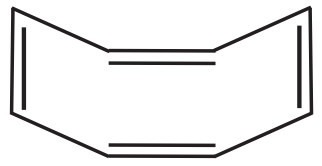
Assertion $(A)$ : The compound cyclooctane has the following structural formula:

It is cyclic and has conjugated $8\pi-$ electron system but it is not an aromatic compound.
Reason $(R) : (4n + 2) \pi-$ electrons rule does not hold good and ring is not planar.
Note : In the following questions a statement of Assertion $(A)$ followed by a statement of Reason $(R)$ is given. Choose the correct option out of the choices given below each question.
Assertion $(A)$ : Black body is an ideal body that emits and absorbs radiations of all frequencies.
Reason $(R)$ : The frequency of radiation emitted by a body goes from a lower frequency to higher frequency with an increase in temperature.
Note : In the following questions a statement of Assertion $(A)$ followed by a statement of Reason $(R)$ is given. Choose the correct option out of the choices given\ below each question.
Assertion $(A)$ : A solution containing a mixture of acetic acid and sodium acetate maintains a constant value of $\ce{pH}$ on addition of small amounts of acid or alkali.
Reason $(R)$ : A solution containing a mixture of acetic acid and sodium acetate acts as a buffer solution around $\ce{pH}\ 4.75.$
Assertion (A): Simple distillation can help in separating a mixture of propan-1-ol (boiling point $97^{\circ} C$ ) and propanone (boiling point $56^{\circ} C$ ).
Reason (R): Liquids with a difference of more than $20^{\circ} C$ in their boiling points can be separated by simple distillation.