MCQ
Assertion (A): For two hon-zero vectors $\vec{a}$ and $b , \vec{a} \cdot b = b \cdot \vec{a}$.
Reason (R): For two non-zero vectors $\vec{a}$ and $\vec{b}, \vec{a} \times \vec{b}=\vec{b} \times \vec{a}$.
  • A
    Both Assertion (A) and Reason (R) are true and Reason $(R)$ is the correct explanation of the Assertion (A).
  • B
    Both Assertion (A) and Reason (R) are true, but Reason $(R)$ is not the correct explanation of the Assertion (A).
  • C
    Assertion (A) is true but Reason (R) is false.
  • D
    Assertion (A) is false but Reason (R) is true.
Answer

Assertion (A) is true but reason $( R )$ is false. As, $\vec{a} \times \vec{b}=-\vec{b} \times \vec{a}$.

Need a full question paper?

Generate a complete, print-ready paper with questions like this in minutes — across 16+ boards, with answer keys.

Start Generating Free

Similar questions

Directions: In the following questions, the Assertions $(A)$ and Reason$(s) (R)$ have been put forward. Read both the statements carefully and choose the correct alternative from the following:
Assertion $(A):$ The derivative of $\log\sin\text{x}\text{ w.r.t}\sqrt{\cos\text{x}}$ is $2\sqrt{\cos\text{x}} \cos\text{x } \text{cosec x}$
Reason$(R):$ The derivative of $\text{u w.r.t. v}$ is $\frac{\frac{\text{du}}{\text{dx}}}{\frac{\text{dv}}{\text{dx}}}$
Directions: In the following questions, a statement of assertion $(A)$ is followed by a statement of reason $(R).$ Mark the correct choice as:
Assertion: The function $f : R \rightarrow R, \text{f}(\text{x})=\mid\text{x}\ \mid$ is not one $-$ one.
Reason: The function $\text{f}(\text{x})=\mid\text{x}\ \mid$ is not onto.
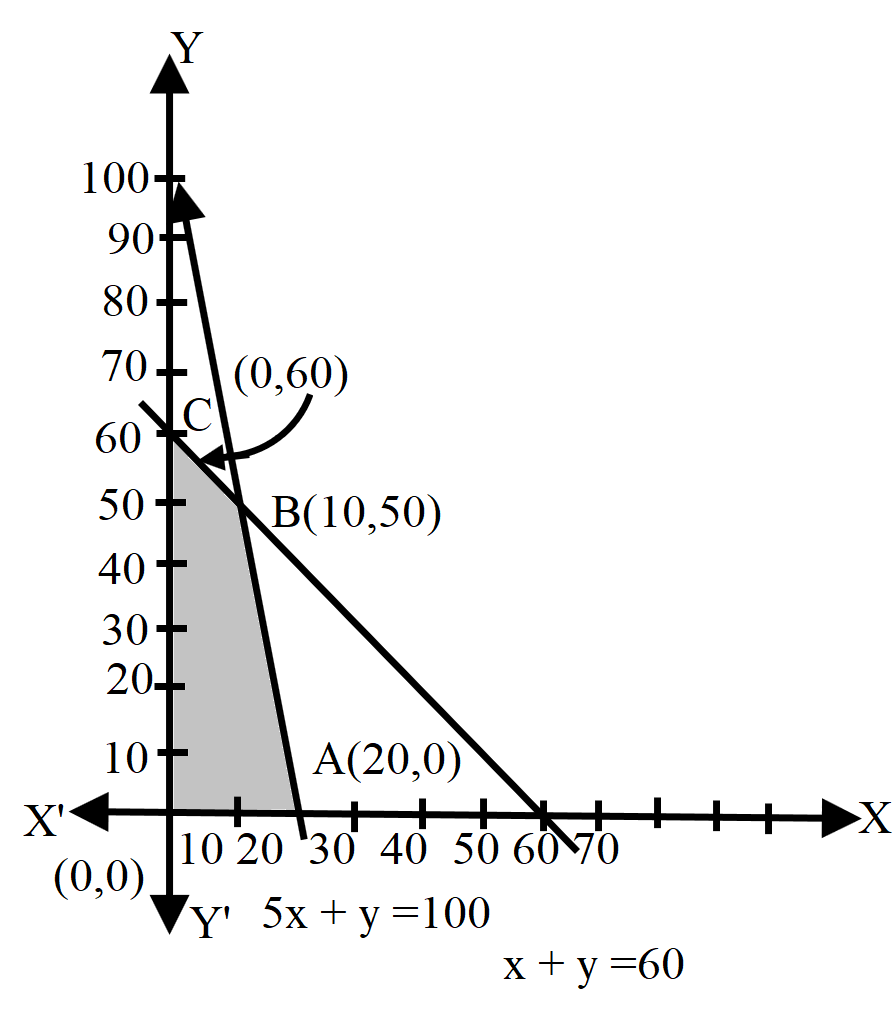
Directions : In the following questions, the Assertions $(A)$ and Reason $(s)\ (R)$ have been put forward. Read both the statements carefully and choose the correct alternative from the following : Consider, the graph of constraints stated as linear inequalities as below: $5\text{x}+\text{y}\leq100,\text{x}+\text{y}\leq60,\text{x},\text{y}\geq0.$
Assertion $(A) : (25, 40) $ is an infeasible solution of the problem.
Reason $(R)$ : Any point inside the feasible region is called an infeasible solution.
Assertion $(A):$ Let $f(x)=x^3+a x^2+b x+5 \sin ^2 x,$ then the condition that $f(x)$ is always one $-$ one function is $a^2-3 b+15 < 0$.
Reason $(R) : f(x)$ to be one one either $f$ is strictly increasing or strictly decreasing.
Directions : In the following questions, the Assertions $(A)$ and Reason $(s)\ (R)$ have been put forward. Read both the statements carefully and choose the correct alternative from the following :
Assertion : In $\triangle\text{ABC},\overrightarrow{\text{AB}}+\overrightarrow{\text{BC}}+\overrightarrow{\text{CA}}=0.$
Reason : If $\overrightarrow{\text{OA}}=\overrightarrow{\text{a}},\overrightarrow{\text{OB}},\overrightarrow{\text{b}},$ then $\overrightarrow{\text{AB}}=\overrightarrow{\text{a}}+\overrightarrow{\text{b}}.$
Directions : In these questions, a statement of Assertion is followed by a statement of Reason is given.Choose the correct answer out of the following choices :
Assertion : Order of the differential equation whose solution is $\text{y}=\text{c}_1\text{e}^{\text{x}+\text{c}_2}+\text{c}_3\text{e}^{\text{x}+\text{c}_4}$ is $4.$
Reason : Order of the differential equation is equal to the number of independent arbitrary constants mentioned in the solution of the differential equation.
Let R be any relation in the set A of human beings in a town at a particular time.
Assertion (A): If $R=\{(x, y): x$ is wife of $y\}$, then $R$ is reflexive.
Reason (R): If $R=\{(x, y): x$ is father of $y\}$, then R is neither reflexive nor symmetric nor transitive.
Directions: In the following questions, the Assertions (A) and Reason(s) (R) have been put forward. Read both the statements carefully and choose the correct alternative from the following:
Assertion (A) If $x^2 + 2xy + y^3 = 42$, Then $\frac{\text{dy}}{\text{dx}}=\frac{2(\text{x+y})}{(2\text{x+3}\text{y}^2)}$
Reason(R) $\frac{\text{dy}^\text{n}}{\text{dx}}=\text{ny}^{(\text{n-1})}$
Assertion (A): The domain of the function $\sec ^{-1} 2 x$ is $\left(-\infty,-\frac{1}{2}\right] \cup\left[\frac{1}{2}, \infty\right) .$ Reason $(R): \sec ^{-1}(-2)=-\frac{\pi}{4}$
Directions: In the following questions, the Assertions $(A)$ and Reason$(s) (R)$ have been put forward. Read both the statements carefully and choose the correct alternative from the following:
Assertion $(A):$ if $\text{f(x)}=\text{a}(\text{x}+\sin\text{x})$ is increasing function if $a\in(0,\infty)$
Reason $(R):$ The given function $\text{f(x) }$is increasing only if $a\in(0,\infty)$