MCQ
Assertion (A): Natural numbers are not associative for multiplication
Reason (R): The associative property states that the sum or the product of three or more numbers does not change if they are grouped in a different way.
  • A
    Both A and R are true and R is the correct explanation of A
  • B
    Both A and R are true but R is not the correct explanation of A
  • C
    A is true but R is false
  • A is false but R is true

Answer

Correct option: D.
A is false but R is true
D

Need a full question paper?

Generate a complete, print-ready paper with questions like this in minutes — across 16+ boards, with answer keys.

Start Generating Free

Similar questions

Directions: In the following questions, the Assertions $(A)$ and Reason$(s)$ $(R)$ have been put forward. Read both the statements carefully and choose the correct alternative from the following:
Assertion $(A)$: The like terms are $2x^2, 9x^2$.
Reasons $(R)$: like terms are terms that have the same variables and powers
Directions: In the following questions, the Assertions $(A)$ and Reason(s) $(R)$ have been put forward. Read both the statements carefully and choose the correct alternative from the following:
Assertion (A): Integers are not commutative for addition
Reason (R): Rational numbers are commutative under addition and multiplication
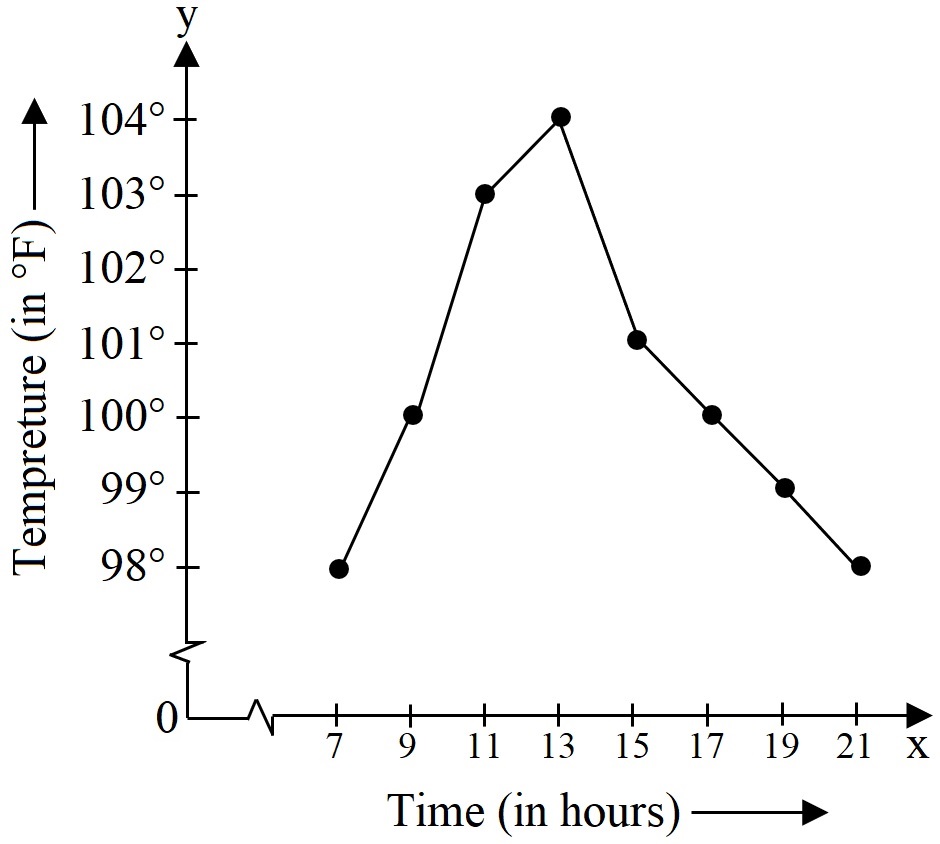
Observe the following temperature time graph and consider it as reasons for the following assertions:

Assertion (A): The fall in temperature from 13 hours to 21 hours is 60F.
Directions : In the following questions, the Assertions $(A)$ and Reason $(s) \ (R)$ have been put forward. Read both the statements carefully and choose the correct alternative from the following:
Assertion $(A)$ : Whole numbers are not associative for subtraction
Reason $(R)$ : The associative property states that the sum or the product of three or more numbers does not change if they are grouped in a different way.
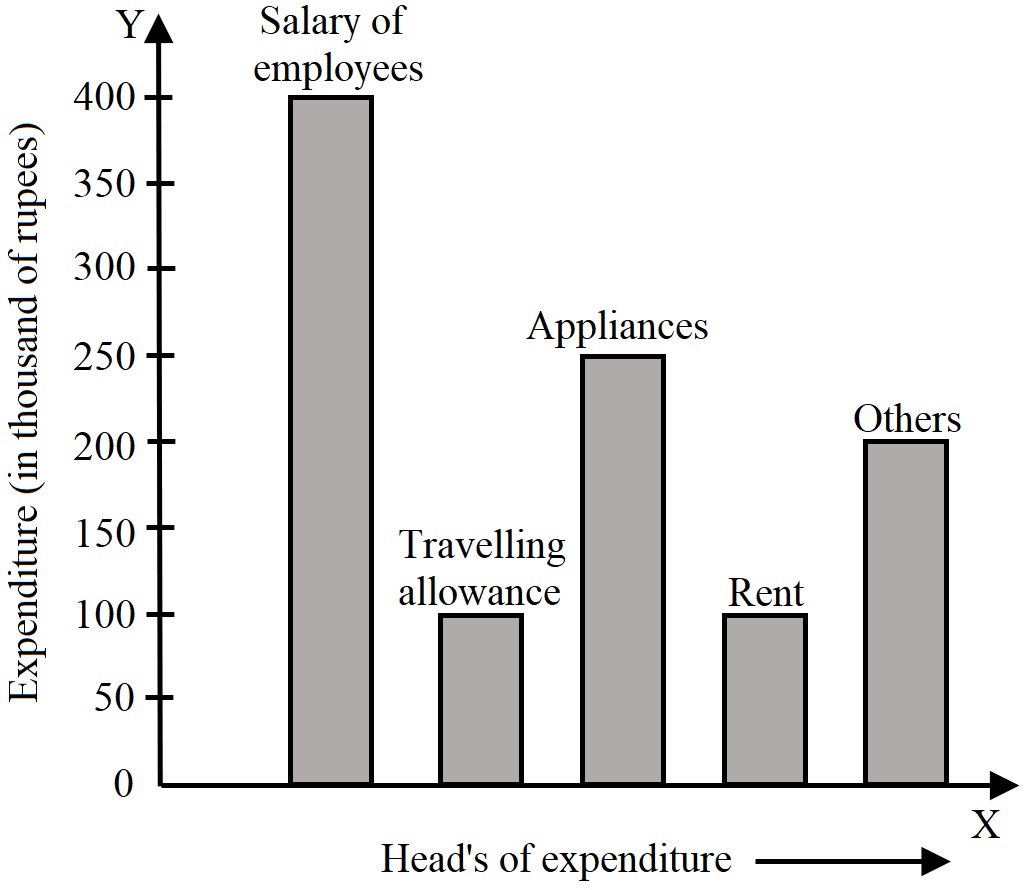
Directions: In the following questions, the Assertions $(A)$ and Reason(s) $(R)$ have been put forward. Read both the statements carefully and choose the correct alternative from the following: Observe the following bar graph and consider it as reasons for the following assertions:
Assertion (A): The sum of the expenditures (in thousands of rupees) on travelling allowance and rent is $200$
Assertion (A): The solution of the equation $\frac{5}{\text{x}}$ = 2 is $\frac{2}{5}$
Reason (R): The value of the variable which makes left hand side equal to right hand side in the given equation is called the solution or the root of the equation.
Assertion (A): Each of the numbers 400, 900,1600 and 2500 is a perfect square.
Reason (R): A number ending in an even number of zeros is always a perfect square.
Directions: In the following questions, the Assertions $(A)$ and Reason(s) $(R)$ have been put forward. Read both the statements carefully and choose the correct alternative from the following:
Assertion (A): On subtracting 30 from two times a number, we get 56. This statement in the form of an equation is $2x - 30 = 56$
Reason (R): the linear equation involves only one unknown, it is called “univariate”. The quadratic equation contains only powers of $x$ that are non-negative
Assertion (A): Whole numbers are not commutative for division
Reason (R): Rational numbers are commutative under addition and multiplication
Assertion (A): Rational numbers are closed under division.
Reason (R): A rational number is a number that is in the form of $\frac{\text{p}}{\text{q}}$ where p and q are integers, and q is not equal to 0.