Question

Assertion   :   Bending a wire does not effect electrical resistance.

Reason       : Resistance of wire is proportional to resistivity of material.

(a) If both assertion and reason are true and the reason is the correct explanation of the assertion.

(b) If both assertion and reason are true but reason is not the correct explanation of the assertion.

(c) If assertion is true but reason is false.

(d) If the assertion and reason both are false.

Answer

(a) If both assertion and reason are true and the reason is the correct explanation of the assertion.

Need a full question paper?

Generate a complete, print-ready paper with questions like this in minutes — across 16+ boards, with answer keys.

Start Generating Free

Similar questions

A bi-convex lens made of glass (refractive index 1.5) is put in a liquid of refractive index 1.7. Its focal length will

(a) Decrease and change sign

(b) Increase and change sign

(c) Decrease and remain of the same sign

(d) Increase and remain of the same sign

The energy stored in a 50 mH inductor carrying a current of 4 A will be

(a) 0.4 J

(b) 4.0 J

(c) 0.8 J

(d) 0.04 J

If an ammeter is to be used in place of a voltmeter then we must connect with the ammeter a

(a) Low resistance in parallel

(b) High resistance in parallel

(c) High resistance in series

(d) Low resistance in series

Einstein got Nobel prize on which of the following works

(a) Mass-energy relation

(b) Special theory of relativity

(c) Photoelectric equation

(d)  (a) and (b) both

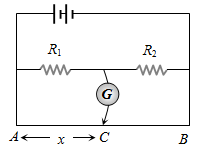
In the shown arrangement of the experiment of the meter bridge if AC corresponding to null deflection of galvanometer is x, what would be its value if the radius of the wire AB is doubled

(a) x

(b) x/4

(c) 4x       

(d) 2x

Density of nucleus is ___________ the atomic mass number of atom.

A long magnetic needle of length 2L, magnetic moment M and pole strength m units is broken into two pieces at the middle. The magnetic moment and pole strength of each piece will be

(a)   

(b) M,  

(c)    

(d) M, m

In a Young's double  slit experiment the source S and the two slits A and B are vertical with slit A above slit B. The fringes are observed on a vertical screen K. The optical path length from S to B is increased very slightly (by introducing a transparent material of higher refractive index) and the optical path length from S to A is not changed, as a result the fringe system on K moves

(a) Vertically downwards slightly

(b) Vertically upwards slightly

(c) Horizontally, slightly to the left

(d) Horizontally, slightly to the right

The moment of inertia of a uniform semicircular wire of mass M and radius r about a line perpendicular to the plane of the wire through the centre is:

  1. $\text{Mr}^2$

  2. $\frac{1}{2}\text{Mr}^2$

  3. $\frac{1}4{}\text{Mr}^2$

  4. $\frac{2}{5}\text{Mr}^2$

Which of the following parameters are the same for all hydrogen-like atoms and ions in their ground states?