Question

Assertion  : Radioactive nuclei emit   particles.

Reason      : Electrons exist inside the nucleus.

(a) If both assertion and reason are true and the reason is the correct explanation of the assertion.

(b) If both assertion and reason are true but reason is not the correct explanation of the assertion.

(c) If assertion is true but reason is false.

(d) If the assertion and reason both are false.

Answer

(c) If assertion is true but reason is false.

Need a full question paper?

Generate a complete, print-ready paper with questions like this in minutes — across 16+ boards, with answer keys.

Start Generating Free

Similar questions

When the temperature of silicon sample is increased from 27  to 100, the conductivity of silicon will be

(a) Increased

(b) Decreased

(c) Remain same

(d) Zero

The current in a coil of inductance 5 H decreases at the rate of 2 A/s. The induced e.m.f. is

(a) 2 V     

(b) 5 V

(c) 10 V   

(d) – 10 V

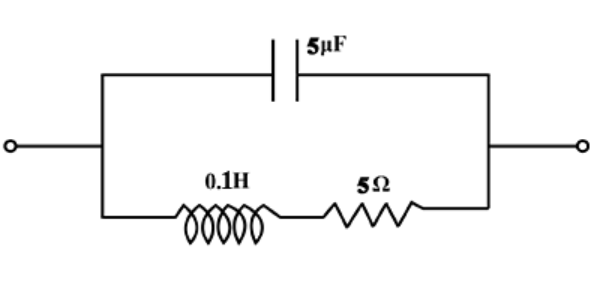
In the circuit shown in fig., the resonant frequency is.
Image

Huygen's conception of secondary waves

(a) Allow us to find the focal length of a thick lens

(b) Is a geometrical method to find a wavefront

(c) Is used to determine the velocity of light

(d) Is used to explain polarisation

In a step-up transformer the turn ratio is 1:10. A resistance of 200 ohm connected across the secondary is drawing a current of 0.5 A. What is the primary voltage and current

(a) 50 V, 1 amp

(b) 10 V, 5 amp

(c) 25 V, 4 amp

(d) 20 V, 2 amp

The power rating of an electric motor which draws a current  of 3.75 amperes when operated at 200 V is about

(a) 1 H.P.

(b) 500 W

(c) 54 W  

(d) 750 H.P.

There is a current of 20 amperes in a copper wire of  square metre area of cross-section. If the number of free electrons per cubic metre is , then the drift velocity is

(a) 125  

(b) 12.5  

(c) 1.25  

(d) 1.25  

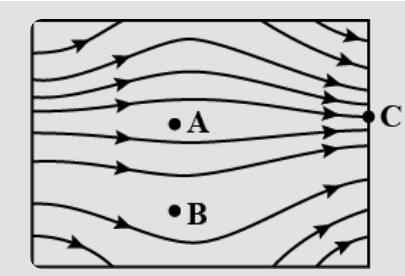
Figure shows the magnetic field lines in a magnetic field. A, B. and C are three points in this field. At what point is the magnetic field strong ?

At what distance from a convex lens of focal length 30 cm, an object should be placed so that the size of the image be 1/2 of the object

(a) 30 cm

(b) 60 cm

(c) 15 cm

(d) 90 cm

Two periodic waves of amplitudes A1 and A2 pass through a region. If A1 > A2, the difference in the maximum and minimum resultant amplitude possible is:
  1. 2A1
  2. 2A2
  3. A1 + A2
  4. A1 - A2