Question

Assertion  :   Semiconductors do not Obey's Ohm's law. 

Reason     : Current is determined by the rate of flow of charge carriers.

(a) If both assertion and reason are true and the reason is the correct explanation of the assertion.

(b) If both assertion and reason are true but reason is not the correct explanation of the assertion.

(c) If assertion is true but reason is false.

(d) If assertion is false but reason is true.

Answer

(d) If assertion is false but reason is true.

Need a full question paper?

Generate a complete, print-ready paper with questions like this in minutes — across 16+ boards, with answer keys.

Start Generating Free

Similar questions

In a purely inductive circuit, the current:
Electromagnetic waves are produced by:

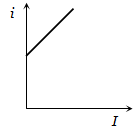
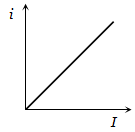
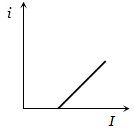
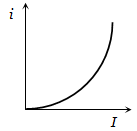
The graph between intensity of light falling on a metallic plate (I) with the current (i) generated is

(a)

(b)

(c)

(d)

The two ends of a spring are displaced along the length of the spring. All displacement have equal magnitudes. In which case or cases the tension or compression in the spring will have a maximum magnitude?
  1. The right end is displaced towards right and the left end towards left.
  2. Both ends are displaced towards right.
  3. Both ends are displaced towards left.
  4. The right end is displaced towards left and the left end towards right.
In case of a Van de Graaff generator, the breakdown field of air is:

A parallel plate air capacitor is charged and then isolated. When a dielectric material is inserted between the plates of the capacitor, then which of the following does not change

(a) Electric field between the plates

(b) Potential difference across the plates

(c) Charge on the plates

(d) Energy stored in the capacitor

The device is based on the principle of mutual induction is:

Assertion  :   A metal piece and a non-metal (stone) piece are dropped from the same height near earth’s surface. Both will reach the earth’s surface simultaneously.

Reason       : There is no effect of earth’s magnetic field on freely falling body.

(a) If both assertion and reason are true and the reason is the correct explanation of the assertion.

(b) If both assertion and reason are true but reason is not the correct explanation of the assertion.

(c) If assertion is true but reason is false.

(d) If the assertion and reason both are false.

Speed of electromagnetic waves in vacuum is:

An inductance L and a resistance R are first connected to a battery. After some time the battery is disconnected but L and R remain connected in a closed circuit. Then the current reduces to 37% of its initial value in

(a) RL sec 

(b)  

(c)              

(d)