MCQ
Atomic mass of an element is:
- AActual mass of one atom of the element.
- BAverage mass of an atom of different atoms of the element.
- CAlways a whole number.
- DNone of these.
Explanation:
Atomic mass is an average mass of different atoms of an element, as most elements have different isotopes. Atomic mass is usually not a whole number. It can be a fraction.
Generate a complete, print-ready paper with questions like this in minutes — across 16+ boards, with answer keys.
The transistors provide good power amplification when they are used in
|
(a) Common collector configuration |
(b) Common emitter configuration |
|
(c) Common base configuration |
(d) None of these |
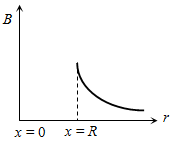
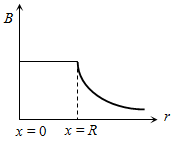
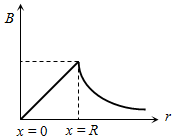
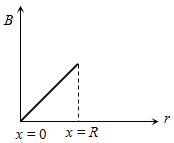
A long thin hollow metallic cylinder of radius 'R' has a current i ampere. The magnetic induction 'B'-away from the axis at a distance r from the axis varies as shown in
|
(a)
|
(b)
|
(c)
|
(d)
|
The force between the plates of a parallel plate capacitor of capacitance C and distance of separation of the plates d with a potential difference V between the plates, is
|
(a) |
(b) |
(c) |
(d) |
Amplification factor of a triode is 10. When the plate potential is 200 volt and grid potential is – 4 volt, then the plate current of 4mA is observed. If plate potential is changed to 160 volt and grid potential is kept at – 7 volt, then the plate current will be
|
(a) 1.69 mA |
(b) 3.95 mA |
(c) 2.87 mA |
(d) 7.02 mA |
The binding energy of deuteron  is 1.112 MeV per nucleon and an α - particle
  has a binding energy of 7.047 MeV per nucleon. Then in the fusion reaction
 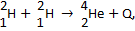 the energy Q released is
|
(a) 1 MeV |
(b) 11.9 MeV |
(c) 23.8 MeV |
(d) 931 MeV |
A proton and an electron both moving with the same velocity v enter into a region of magnetic field directed perpendicular to the velocity of the particles. They will now move in circular orbits such that
|
(a) Their time periods will be same |
|
(b) The time period for proton will be higher |
|
(c) The time period for electron will be higher |
|
(d) Their orbital radii will be same |