MCQ
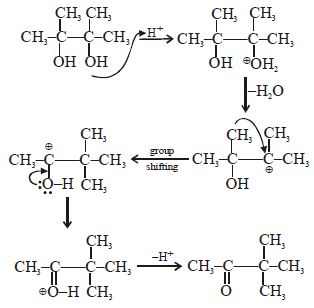
$\begin{array}{*{20}{c}}
  {\,\,\,\,\,\,C{H_3}\,C{H_3}\,} \\ 
  {|\,\,\,\,\,\,\,\,\,|\,} \\ 
  {C{H_3} - C - C - C{H_3}} \\ 
  {\,\,\,|\,\,\,\,\,\,\,\,|\,\,\,\,} \\ 
  {\,\,\,\,OH\,\,OH\,\,} 
\end{array}$ $\xrightarrow[\Delta ]{{{H^ \oplus }}}?$
  • A


  • C

  • D

Answer

Correct option: B.

b

Need a full question paper?

Generate a complete, print-ready paper with questions like this in minutes — across 16+ boards, with answer keys.

Start Generating Free

Similar questions

A metal is released in the electrolysis of a salt. It gets deposited on the :
Amides may be converted into amines by reaction named after
$(i)$ $F _{3} C - COOH$

$(ii)$ $CH _{3} COOH$

$(iii) $ $C _{6} H _{5} COOH$

$(iv)$ $CH _{3} CH _{2} COOH$

Correct order of $pK _{ a }$ value is :

$CH _3 COOAg + Br _2 \xrightarrow{ CCl _4} CH _3 Br + CO _2+ AgBr$
The above reaction is :
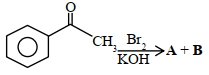
The major products formed in the following reaction sequence $A$ and $B$ are :
Match the compounds given in $column\, I$ with the hybridisation and shape given in $column\, II$ and mark the correct option.

 $\begin{array}{|l|l|} \hline Column\,\,I & Column\,\,II \\ \hline (A)\,XeF_6 & (i)\,\,distortedoctahedral \\ \hline (B)\,XeO_3 & (ii)\,\,square\,\,planar \\ \hline (C)\,XeOF_4 & (iii)\,\,pyramidal \\ \hline (D)\,XeF_4 & (iv)\,\,square\,\,pyramidal \\ \hline \end{array}$

Write the $\text{IUPAC}$ name of the given compound:$\text{HO}−\text{CH}_2​−\text{​CH}−\text{CH}_2​−\text{OH}​\\ \ \ \ \ \ \ \ \ \ \ \ \ \ \ \ \ \ \ \ \ \ \ ∣ \\ \ \ \ \ \ \ \ \ \ \ \ \ \ \ \ \ \ \ \ \ \text{CH}_3​​$
For a first order gas phase elementary reaction $A(g) \xrightarrow{k} 2(B)$  which of the following is INCORRECT
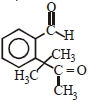
Identify $(A)$ in the following reaction sequence

$\mathop {(A)}\limits_{ gives\,\,positive ~\\ iodoform\,Test }  \xrightarrow[\begin{subarray}{l} (ii)\,{H^ + },{H_2}O +  ~\\ (iii)\,conc.\,{H_2}S{O_4}/\Delta \end{subarray} ]{{{\text{(i) C}}{{\text{H}}_{\text{3}}}{\text{MgBr}}}}(B)\xrightarrow{{{O_3}/Zn,{H_2}O}}$

Consider the coordination compound, $\mathrm{K}_2\left[\mathrm{Cu}(\mathrm{CN})_4\right]$.  A coordinate covalent bond exists between: