MCQ
$\begin{array}{*{20}{c}}
{O\,\,\,\,\,\,\,\,\,\,\,\,\,\,\,\,\,\,O}\\
{||\,\,\,\,\,\,\,\,\,\,\,\,\,\,\,\,\,\,\,\,||}\\
{C{H_3} - C - O - C - C{H_3}}
\end{array}$ (image) $(A)$

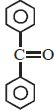
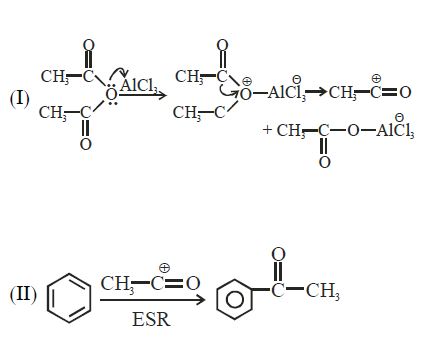
Product $(A)$ is


  • B

  • C

  • D
    $\begin{array}{*{20}{c}}
    O\\
    {||}\\
    {Ph - C - Ph}
    \end{array}$
Answer

Correct option: A.

a

Need a full question paper?

Generate a complete, print-ready paper with questions like this in minutes — across 16+ boards, with answer keys.

Start Generating Free

Similar questions

Which of the following isomers of $C_8H_9NO$ is the weakest base ?
Mark the steel in which carbon $\%$  is highest
The element which liberates oxygen gas from water is
When $S{O_2}$ is passed through acidified solution of ${H_2}S$
Compound $"x"$ having molecular formula $C_3H_6O$ , reduced by Red $P/HI$ to gives compound $'y'(C_3H_8)$ , but reduces tollen's reagent, what will be possible structure of $"x"$
The ammonia prepared by treating ammonium sulphate with calcium hydroxide is completely used by $\mathrm{NiCl}_2 .6 \mathrm{H}_2 \mathrm{O}$ to form a stable coordination compound. Assume that both the reactions are $100 \%$ complete. If $1584 \mathrm{~g}$ of ammonium sulphate and $952 \mathrm{~g}$ of $\mathrm{NiCl}_2 \cdot 6 \mathrm{H}_2 \mathrm{O}$ are used in the preparation, the combined weight (in grams) of gypsum and the nickelammonia coordination compound thus produced is $\qquad$ (Atomic weights in $\mathrm{g} \mathrm{mol}^{-1}: \mathrm{H}=1, \mathrm{~N}=14, \mathrm{O}=16, \mathrm{~S}=32, \overline{\mathrm{Cl}=35.5}, \mathrm{Ca}=40, \mathrm{Ni}=59$ )
How many grams of $C{H_3}OH$ should be added to water to prepare $150\,ml$ solution of $2\,M\,C{H_3}OH$
Consider the following sequence for aspartic acid

The $pI$ (isoelectric point) of aspartic acid

Among Na, Hg, S, Pt and graphite, which can be used as electrodes in electrolytic cells having aqueous solutions?
The correct description of the product in the above reaction is

$\begin{array}{*{20}{c}}
  {\,\,\,\,\,\,\,\,\,\,\,\,\,\,\,\,\,\,\,C{H_2}OC{H_3}} \\ 
  | \\ 
  {\mathop {C{H_3}CHBr}\limits_{(R)} } 
\end{array}$ $\xrightarrow[{acetone}]{{NaCN}}$ $\begin{array}{*{20}{c}}
  {\,\,\,\,\,\,\,\,\,\,\,\,\,\,\,\,\,\,\,C{H_2}OC{H_3}} \\ 
  | \\ 
  {\mathop {C{H_3}CHCN}\limits } 
\end{array}$