MCQ
Bohr’s model of atom explains :
  • A
    Zeeman effect
  • B
    Heisenberg’s principle
  • C
    Strak effect
  • None of these

Answer

Correct option: D.
None of these
d

Need a full question paper?

Generate a complete, print-ready paper with questions like this in minutes — across 16+ boards, with answer keys.
Start Generating Free

Similar questions

The ratio of number of water molecules in Mohr's salt and potash alum is $....\,\times 10^{-1}$
Assign $A, B, C, D$ from given type of reaction. $Na_2S + H_2SO_4\, (Conc.) \longrightarrow S \downarrow +SO_2 + Na_2SO_4$
A gas present in a cylinder, expands against a constant pressure of $1\, atm$ from a volume of $2\, litre$ to a volume of $6\, litre$. In doing so, it absorbs $800\, joule$ heat from surrounding. The change in internal energy of process is.....$ joule$
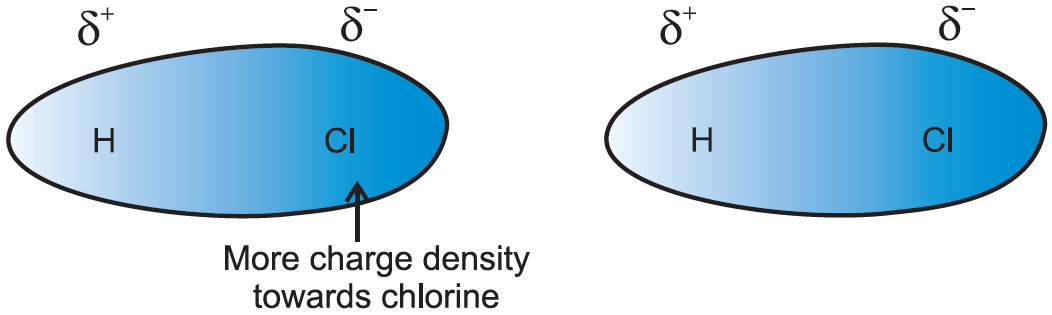
Consider the following figure :

Which one of the following interactions is shown between the two $\text{HCl}$ molecules?
$CrO_4^{-2}$ (Yellow) changes to $Cr_2O_7^{-2}$ (orange) in $pH = x$ and vice verses in $pH = y$, hence $x$ and $y$ are respectively
Halogenation of alkanes is an example of
The strength of acid is highest in :
Select equations having endothermic step

$(A)\,S_{\left( g \right)}^ - \,\, \to \,\,S_{\left( g \right)}^{2 - }\,$

$(B)\,Na_{\left( g \right)}^ + \, + \,Cl_{\left( g \right)}^ - \,\, \to \,\,NaCl\,(s)$

$(C)\,{N_{\left( g \right)}}\, \to \,\,N_{\left( g \right)}^ - $

$(D)\,Al_{\left( g \right)}^{2 + }\, \to \,\,Al_{\left( g \right)}^{3 + }$

$1\, L$ aqueous solution of $H _{2} SO _{4}$ contains $0.02\, m$ mol $H _{2} SO _{4} .50\, \%$ of this solution is diluted with deionized water to give $1\, L$ solution $(A).$ In solution $(A)$, $0.01\, m \,mol$ of $H _{2} SO _{4}$ are added. Total $m$ $mols$ of $H _{2} SO _{4}$ in the final solution is $......\times 10^{3}\, m\, mols.$
The state of equilibrium refers to :