MCQ
Born-Haber cycle is used to determine
- ACrystal energy
- BElectron affinity
- CLattice energy
- ✓All of these
Generate a complete, print-ready paper with questions like this in minutes — across 16+ boards, with answer keys.
image $\xrightarrow{{[O]}}A\xrightarrow{{SOC{l_2}}}B\xrightarrow{{Na{N_3}}}C\xrightarrow{{{\text{Heat}}}}D$
$(i)$ $H_{(aq)}^+ + OH^-= H_2O_{(l)} ,$ $\Delta H = -X_1\,kJ \,mol^{-1}$
$(ii)$ $H_{2(g)} + \frac{1}{2}O_{2(g)} = H_2O_{(l)},$ $\Delta H = -X_2\,kJ \,mol^{-1}$
$(iii)$ $CO_{2(g)} + H_{2(g)} = CO_{(g)} + H_2O_{(l)},$ $\Delta H = -X_3\, kJ\, mol^{-1}$
$(iv)$ $ C_2H_{2(g)}+ \frac{5}{2} O_{2(g)} = 2CO_{2(g)} + H_2O_{(l)},$ $\Delta H = -X_4\,kJ \,mol^{-1}$
Enthalpy of formation of $H_2O_{(l)}$ is
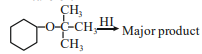
$CH_3CH_2-C \equiv CH+ HCl \rightarrow B \xrightarrow{{HI}} C$
| Bromine | $Na$ metal | Chromic acid | Lucas reagent | |
| Compound $X$ | decolourises | bubbles | Orange to Green | No reaction |
| Compound $Y$ | No reaction | No reaction | No reaction | No reaction |
Compound $X$ and $Y$ respectively are